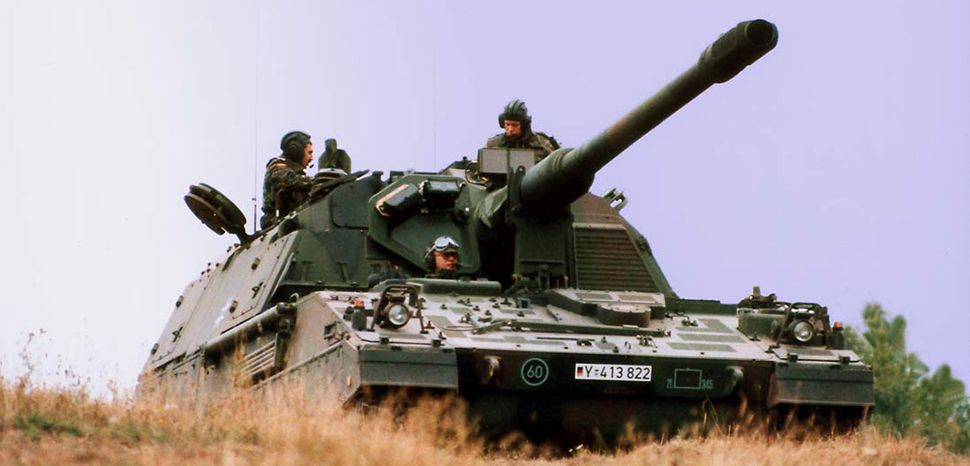
The outbreak of the Ukraine war went off like a bomb in the German foreign policy establishment, invalidating decades of a business-first approach that effectively placed German industry at the mercy of Russian energy blackmail. Amidst the uncertainty and danger of this Zeitendwende (watershed moment), German Chancellor Olaf Scholz declared a radical overhaul of German defense policy: Ukraine would be supplied with weapons, Germany would become more active and assertive in European security affairs, and most importantly, the Bundeswehr would receive some €100 billion in special funding to modernize outdated equipment and bring it into the modern age.
Commenters at the time were skeptical that Berlin would be able to reverse the systemic decline in Germany’s armed forces and bring military spending in-line with NATO’s 2% threshold. Recent events have only served to further validate their views.
A government spokesperson put it bluntly earlier this week: Germany will not be able to hit the 2% target over the next two years; however, it’s possible that the target could be reached by 2025. Conspicuously absent here is the note of urgency that characterizes Scholz’s February 2022 speech; indeed, it even diverges from a newer version, the ‘Global Zeitendwende,’ in which he portrays the Ukraine war as marking the end of a peaceful era and return of militant imperialism to Europe’s borders.
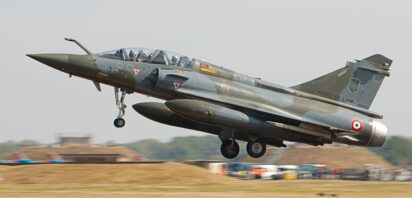
The delayed implementation is in large part down to the immensity of the task that lies ahead. For example, modernizing the German Air Force, which largely consists of Tornados from the early 1980s and Eurofighters from the early 2000s. These jets have been slowly deteriorating to the point of being unserviceable (for example, a 2018 Der Spiegel report found that only 10 of 128 Eurofighters were considered mission ready).
Thus, finding a replacement for Germany’s aging fleet is a top-order priority for any credible overhaul of the Bundeswehr. But this forces Berlin to make a decision between short-term and long-term solutions. Short-term options include Lockheed Martin’s F-35, which fell out of favor in 2019, and the Boeing F-18 Super Hornet. Yet pre-outbreak of the Ukraine war, Berlin seemed to be leaning toward the long-term option of developing a new, European-developed replacement of the Eurofighter under the Future Combat Air System (FACS) – a joint effort between the French, Spanish, and German defense giants to develop, among other things, a sixth-generation fighter. FCAS has the benefit of developing Europe’s industrial capacity in the field of various next-generation defense technologies, but it has been bogged down by delays since first being announced in 2017; moreover, since it seeks to develop, build, and test new platforms, the operational horizon stretches far into the future, with full deployment expected in 2040 (manufacturing begins in 2030).