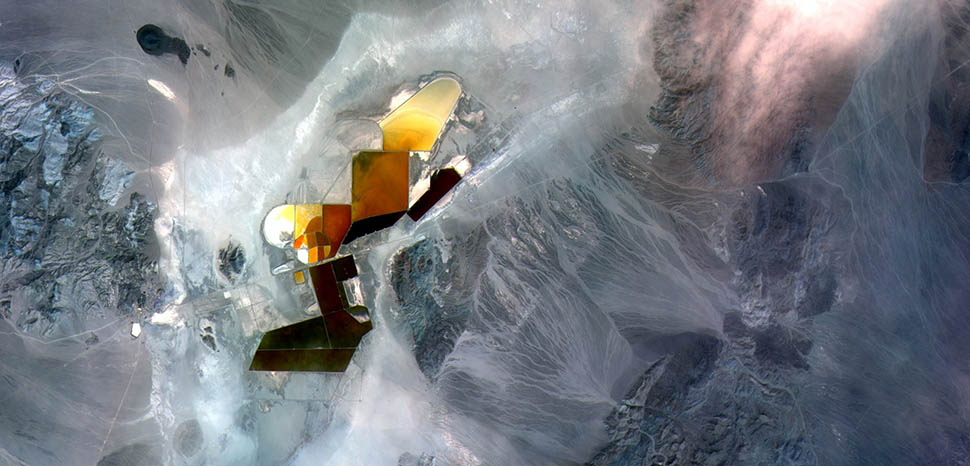
The ongoing struggle to bring Thacker Pass online reflects many of the political and economic imperatives underpinning US efforts to secure and develop its own supply chains, and in doing so catch up to China in the various strategic commodities expected to drive the ‘green’ industrial revolution.
Economically it’s a no-brainer: lithium, or ‘white oil,’ is a critical input in the production of lithium-ion batteries, which are an essential component in everything from electric vehicles to grid modernization efforts. It follows that global demand for the alkali metal is expected to explode over the next decade, growing from 500,000 metric tons of lithium carbonate equivalent (LCE) in 2021 to 3-4 million metric tons in 2030. This presents two policy dilemmas for Washington and its allies: 1) how to develop new sources of lithium to supply the market; and 2) how to ensure that these sources are secure and not subject to blackmail by state-backed adversaries.
The second question speaks to the fraught geopolitics surrounding the production of lithium and other strategic commodities (cobalt, nickel, graphite, iron, to name a few). Put simply: China dominates the market in a way that could pose problems for US industry in the (increasingly likely) event of a major breach between the world’s two largest economies. The country’s share of the lithium-ion battery market is estimated to be as high as 80 percent, with 6 of the 10 largest global EV battery producers based in China. This dominance also extends down the supply chain, with China controlling around two-thirds of global lithium processing capacity. Even lithium supply in a friendly jurisdiction such as Australia is dominated by China; for example, Tianqi Lithium owns a 51% share in the massive Greenbushes mine and Ganfeng Lithium owns a 50% share in Mount Marion.
China’s dominance in global lithium was decades in the making, but only now is it finally sinking in amid policymaking circles in Washington. The message is unequivocal: US industry lags far behind in supply and processing capacity for this (and other) strategic commodities, and catching up will require both time and billions in targeted investment. How much investment? One estimate puts the figure at $175 billion over three years for the United States to catch up to China in the field of battery production.
Enter the Thacker Pass complex, located in Humboldt County, Nevada – an approximately $1 billion open pit mine that received government approval during the final days of the Trump administration in 2021. The mine, owned by Canada’s Lithium Americas corporation, represents the largest known lithium reserve in the United States, and is estimated to be able to produce up to 80,000 tonnes per annum (tpa) over 40 years. For context, that’s roughly equivalent to the global output of lithium production in 2020. Processing facilities are also planned for the site, with a proposed extraction-to-battery-ready turnaround time of just 24 hours, thus helping to alleviate Washington’s processing gap with China.
In the wider context of US-China lithium competition, Thacker Pass would be a clear win for Washington.