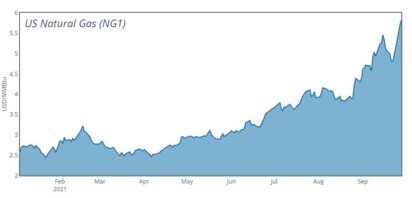
Natural gas is spiking in Europe, where prices are up almost five times since 2019, fueling fears of economic disruption when colder winter weather arrives later in the year. The supply crunch is the result of several trends unfolding simultaneously. First and foremost is reduced exports from Russia. Deliveries via the strategic Yamal pipeline are well below their normal rates: 20 million cubic meters (mcm) per day in mid-August, as opposed to the 81 mcm that’s expected this time of year.
Other inflationary factors include a temporary collapse in wind power generation due to abnormally placid weather; low storage levels across the continent, including in Russia, following last year’s cold winter; disruptions of US LNG exports due to extreme weather events; increased gas demand from Asia, diverting supply that would otherwise end up in Europe; and the scaling back of coal power generation which would previously have filled the gaps caused by natural gas shortfalls.
Indeed, as coal-based generation has waned, natural gas has cemented an increased role in continental electricity grids. This was made painfully apparent on Wednesday, when UK natural gas prices spiked by as much as 18% on reports of severe damage to an undersea cable that provides electricity imports from France. The affected cable isn’t expected to resume deliveries at full capacity until March of 2022. UK gas prices have doubled over the past month alone.
Record-high natural gas prices carry numerous economic risks. For one, they threaten to shutter industrial production, particularly within energy-intensive industries like pup and paper, chemical production, refining, and food production. Several fertilizer plants in England have already been forced to shut down for the time being due to prohibitively high electricity prices. Two, rising prices resonate directly on household energy bills to varying degrees based on the level of consumer exposure to market prices. Consumers in the UK, for example, are mostly on fixed tariffs and are seeing incremental cost increases. Those in Spain on the other hand have seen their electricity bills spike by as much as 35% year-on-year, prompting a strong intervention from Madrid. And finally, frothy energy prices threaten to sustain inflationary momentum on the continent, including food prices.