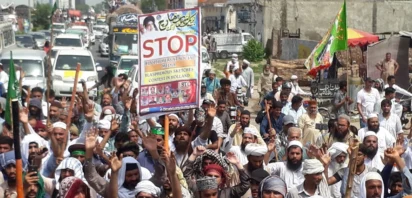
The prime minister has been removed from office amid a wave of violent COVID-19 protests, triggering a new constitutional crisis in Tunisia.
Some have decried the removal as a coup perpetrated by a power-hungry President Kais Saied. However, after enduring a decade of severe political and economic dysfunction, a circumvention of Tunisia’s moribund institutions seems to be precisely what many Tunisians are hoping for.
Background
Failed promise of the Arab Spring
The Arab Spring began in Tunisia in 2011 and though the revolution actually birthed durable democratic institutions in Tunisia, like other Arab Spring countries, it ultimately failed to deliver on its original promise, namely in terms of economic justice.
The advent of democracy brought political instability, with ten governments rising and falling in the decade following the Arab Spring. Each and every one of them failed to alleviate Tunisia’s chronic economic malaise. High unemployment has been a constant, with the rate hovering between 15-18% since the Arab Spring. Youth unemployment is even worse at 36-42%, representing an incendiary political dynamic in a country where over 50% of the population is under the age of 30.
Near universal disenchantment with the political class is now the norm, with politicians widely viewed as either corrupt or incompetent. In one 2019 poll, just 9% of Tunisians agreed that their country was on the right track; 30% believed that they could influence political decision-making via the ballot box.