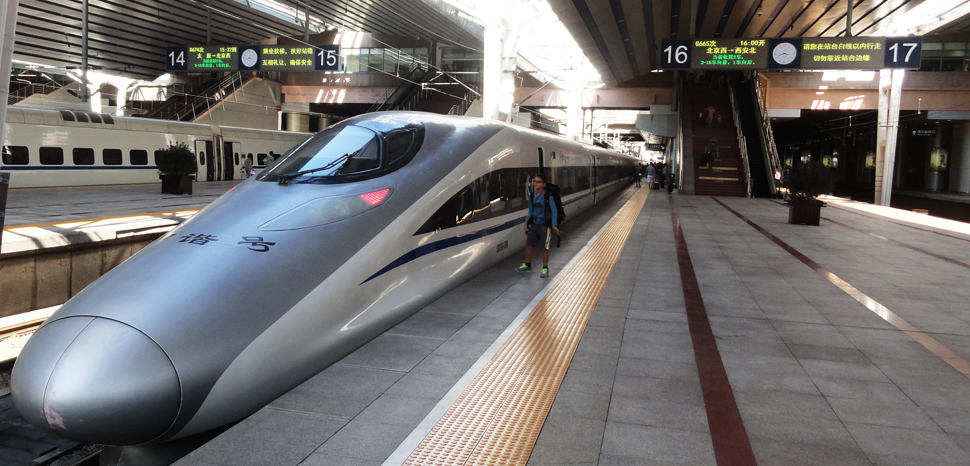
When thinking of the Belt and Road in Southeast Asia, contentious rail projects in Malaysia and Laos—forming part of an eventual overland route between southern China and Singapore—come to mind. Yet another project has gone under the radar in Indonesia, where the $6.07 billion Jakarta-Bandung High-Speed Rail Link is edging toward completion after five years under construction. The railway is just one of a rising number of Belt and Road-linked projects in Indonesia, from power plants to dams and ports.
On a two-day visit to Jakarta earlier in January, Chinese foreign minister Wang Yi, speaking alongside his Indonesian counterpart Retno Marsudi, said “we will work together to synergize the Belt and Road and the Global Maritime Fulcrum vision” of Indonesian president Joko Widodo. Since being elected in 2014, Widodo—more commonly referred to as ‘‘Jokowi’’—has pledged to boost infrastructure and transform his sprawling archipelago nation of 270 million people into Southeast Asia’s foremost maritime power.
Chinese investment is a key part of this strategy. Trade between the two nations expanded by 10% last year despite the onset of the COVID-19 pandemic, and at the recent foreign ministers’ meeting the two parties spoke of ‘‘removing trade barriers’’ to increase ‘‘market access’’ for key exports. How important are these growing trade ties, and Belt and Road-linked projects, to Indonesia’s economy? And what are the future prospects for Indonesia’s ever-closer relationship with China under Jokowi and Xi Jinping?
Analysis
Jakarta-Bandung railway project
Indonesia occupies a central strategic location in China’s idea of a Maritime Silk Road, which envisions expanded trade across the Indian and Pacific oceans. At the heart of Southeast Asia, Indonesia’s inland waters incorporate narrow sea lanes that are vital to regional shipping. In 2015, China outbid Japan to win the contract to build the 142km Jakarta-Bandung railway, in a joint venture with Indonesian firms, and it has since become the keynote project for Belt and Road in Indonesia. The high-speed line will serve four main stations, cutting the journey time from Jakarta to Bandung to 45 minutes from three hours.