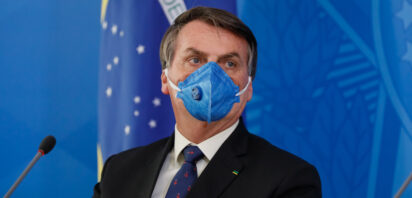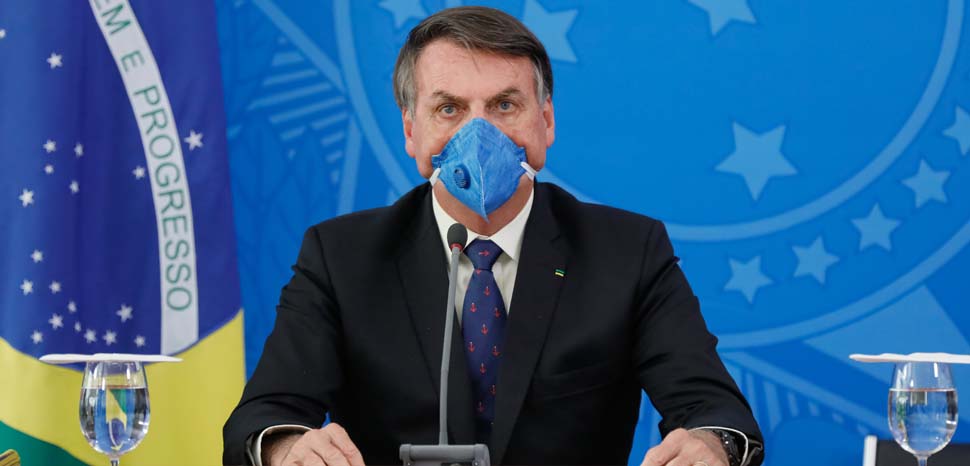
Brazilian President Jair Bolsonaro has emerged as a conspicuous figure during the COVID-19 pandemic, though unfortunately for all the wrong reasons. Unlike President Trump, Bolsonaro’s early skepticism regarding the threat posed by the virus has remained a constant. The president still refers to COVID-19 as a “little flu” and famously remarked that Brazilians “never catch anything.”
To be fair, Bolsonaro’s skepticism is based on the very real observation that the hunger and deprivation caused by economic shutdowns are also killers. Yet this ‘damned if you do, damned if you don’t’ scenario is similarly faced by governments the world over, and so far the overwhelming majority have opted to lock down in an effort to contain COVID-19, even at great economic cost.
It remains to be seen how long this intransigence can hold up at the highest levels of Brazilian governance (Bolsonaro’s laissez-faire approach is being roundly ignored by state and municipal authorities). Whatever the case, Brazil is not sufficiently prepared to weather the storm that’s gathering over its vulnerable economy.
Background
Brazil currently has 6,932 confirmed cases of COVID-19, up by 1,120 in the past day. However, like nearly everywhere in the world, the true number is likely significantly higher due to testing bottlenecks and asymptomatic/mild cases. This is up from just 291 confirmed cases on March 17. The country’s death count stands at 247, up 44 in the past 24 hours. The hardest-hit areas are São Paulo and Rio de Janeiro.
The Brazilian economy was vulnerable heading into the COVID-19 pandemic. On March 4 – just one week after the first confirmed case – the government released official data outlining a tepid 1.1% economic expansion over 2019. Pre-COVID growth forecasts for 2020 fell within the 1.5-2.1% range.
The economic picture has darkened considerably over the past month.
Brazil’s stock market, the Bovespa, plunged an eye-watering 51% over the first quarter, which was globally unmatched despite a competitive field of horrendous performers (Argentina and Greece came in second and third respectively).
Petrobras, the state-owned energy giant that the national economy sinks or swims on, was hit by sagging domestic demand and the bottom falling out of global oil prices; its shares shed 56% of their value over the same period. The company has recently announced a series of cost-cutting measures, including salary and production cuts, shortened workdays, and slashed capital expenditures.
Brazil’s real currency has fallen in tow, depreciating by 22.5% over the first quarter of the year (ending April 1). The decline came in spite of heavy central bank interventions, particularly in March.
The Brazilian central bank is now believed to be considering a quantitative easing program to ensure liquidity in the weeks ahead.