Turkey’s decision to purchase the Russia-made S-400 air defense system has driven another wedge between the country and its NATO allies in a period of already strained relations. In response, the United States removed Turkey from the F-35 fifth-generation stealth fighter program, and economic sanctions could also be implemented. Many are now questioning Ankara’s continued membership to the Atlantic Alliance. And while an expulsion remains unlikely, the S-400 issue will still have far-reaching repercussions for US-Turkey relations.
Background
Relations between Turkey and the US have been deteriorating over the past few years owing to a confluence of different events: the alleged involvement of US-based cleric Fethullah Gülen in the attempted 2016 coup against Erdogan; Turkey’s support for Qatar following a Saudi-headed blockade imposed on the small state; the detention in Turkey of an American pastor; and the killing of Saudi journalist Jamal Khashoggi in Istanbul, seemingly ordered by Riyadh’s pro-American strongman Mohammad bin Salman. Against this backdrop, there are also deeper geopolitical factors unfolding, notably Turkey’s worsening relations with key US allies in the Middle East (namely Saudi Arabia and Israel) and its rapprochement with competitors like Russia and Iran, as well as America’s support for the YPG Kurdish militias that Turkey regards as a threat.
Adrift in these turbulent diplomatic waters, Turkey concluded a $2.5 billion deal with Russia to purchase one battery of the S-400 Triumf air defense system (NATO codename: SA-21 Growler) in 2017, with the possibility of buying a second one. The affair has a quite long story dating back to the 1990s. America initially refused to provide the Patriot, thus prompting Turkey to search for alternatives and ultimately opting for the S-400. Washington then changed its mind and offered its best systems (notably the Patriot PAC-3, THAAD, and NASAMS-II), but Ankara continued along the chosen path.
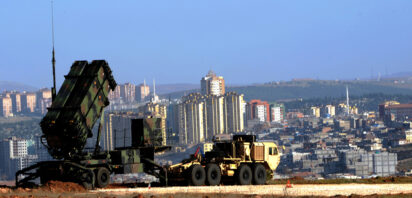
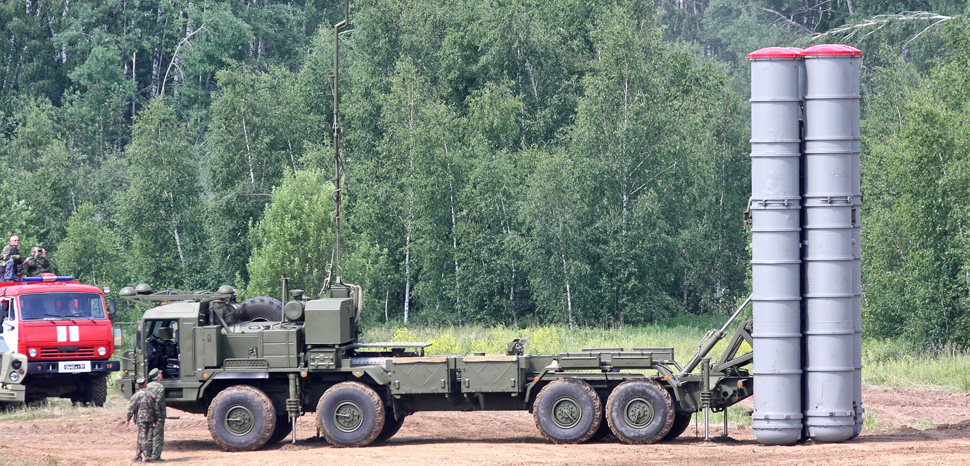
The S-400 is Russia’s premier anti-aircraft and anti-missile system, considered to be one of the most advanced in the world. It basically consists of the wheeled four-tube vertical missile launchers (TEL, standing for transporter erector launcher), high-performance radars (each specialized in a specific task), and a command & control suite. The system boasts several advantages. First, its low-cost compared to equivalent Western hardware ($500 million against $1 billion for the US-made Patriot PAC-2). Second, its good mobility, further enhanced by automation: The S-400 can be rapidly set up for launch and engage targets “within minutes”; and then be moved quickly. This is an important feature that increases its survivability by making it harder to track and detect, thus complicating hostile SEAD (suppression of the enemy air defenses) operations. Third, it is a highly modular system that can fire various types of missiles of different range whose speed varies from Mach 2.3 to 6.2; and the S-400 can carry a mix of them depending on the threat type. Apart from the ammunition of the older S-300, four new missiles have been developed for the Triumf. The 9M96E and 9M96E2 are optimized for neutralizing precision ammunition and defense suppression weapons. Their estimated range is of 40 and 120 km respectively, and they are claimed to have a kill probability of 90% against aircraft and 70% against missiles. Each TEL can carry up to 16 of them. The 48N6E3 missile is a more advanced variant of an older type and can hit targets up to 230 km away. The last model is the 40N6. It is the weapon with the longest range in use on the Triumf, reaching 400 km. it is designed for destroying high-value targets such as AEW&C (airborne early warning and control) and ISTAR (intelligence, surveillance, target acquisition, and reconnaissance) planes or electronic warfare aircraft. All in all, the S-400 is a very powerful system that can track multiple targets at 600 km of distance and engage them simultaneously once in range of its weapons. It can attack fighters, bombers, cruise or medium-range ballistic missiles; and the Russians claim that it can engage 5th generation stealth aircraft as well. The actual effectiveness of the S-400 against low-signature planes is uncertain, but even if partially confirmed it would be a major feature; as it would sensibly complicate any offensive air operation. Moreover, the prospect raises significant security concerns among Turkey’s NATO allies, as the country has also been involved in the F-35 program until Washington’s decision to exclude it as a punishment for having purchased the S-400.
Analysis
Politically, Turkey’s procurement of advanced Russian weaponry such as the Triumf was regarded as the sign of its clear drift away from its transatlantic commitments. On the military plane, operating both the F-35 and the S-400 would have put Turkey in a position to have first-hand detailed information on both platforms, including how they perform against each other. It is unclear whether the maintenance of the S-400 would be assigned to Turkish or Russian teams, but the latter option is considered “highly likely” and it is reasonable that Russia will have a primary role in the system’s operation. This raised the risk that Turkey could transmit – voluntarily or not – vital tactical data to Russia. It’s worth noting that the opposite is also possible: as NATO could obtain precious knowledge on the actual capabilities of the S-400, but the discourse around the issue has mainly focused on the risk of leaks concerning the F-35 rather than the opportunities for obtaining info about the Triumf (moreover, it is possible that the system provided to Turkey is an export version with reduced capabilities, even though this is unknown).