The gradual melting of the ice cap due to global warming is creating a unique mix of opportunities and challenges in the Arctic. This is increasing the region’s importance in geopolitical and geoeconomic terms, attracting the attention of many non-Arctic states such as China, which has expanded its activities in the region. However, this has in turn raised concerns in the United States and other countries about Beijing’s real intentions. As a matter of fact, even though the PRC adopts a discourse based on mutual cooperation and goodwill, its actual initiatives in the Arctic could also have important implications for regional security and long-term relations with Arctic states.
Background
The Arctic’s Importance for China
The reason behind China’s interest in the Arctic stems from the opportunities that are emerging as a result of higher global temperatures, which are causing the Polar ice to gradually disappear.
The economic consequences of this gradual opening of previously impenetrable terrain are twofold:
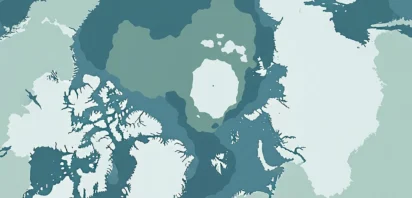
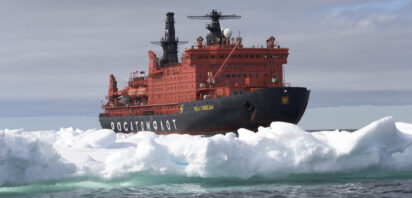
First, the maritime lanes crossing the Arctic are becoming navigable. The most relevant of them is the Northern Sea Route (NSR), which stretches along Russia’s northern coast to connect the Bering Strait with the Norwegian Sea, and its opening means new prospects for trade between East Asia and Europe. While it is still underdeveloped at the current stage, Russia, China and other powers are working to build the necessary infrastructure and make it a commercially viable solution. Shipping along the NSR takes much less time than the traditional southern courses that pass through the Pacific and Indian Oceans. In addition, it is often claimed that the NSR presents another advantage for the PRC, namely that it avoids the critical chokepoints of Malacca and Suez that the US Navy could easily block to cripple China’s economy in the event of war. However, this is only true to a limited degree: the NSR simply transfers the “chokepoint dilemma” northwards to the Bering Strait (whose strategic importance will therefore increase in the years ahead), and also the Norwegian Sea and the GIUK Gap (the relatively narrow strait between Greenland, Iceland, and the UK that was a major hotspot during the Cold War). As such, while the NSR can be considered safer than the current routes as long as China maintains positive relations with Russia, the US military can still disrupt maritime traffic along its course.