Following their 2008 war, Russia-Georgia relations have been stable for over a decade. However, the recent election of Salome Zurabishvili as president in Georgia threatens this delicate equilibrium. The reason is nothing new: Zurabishvili is advocating for Georgia to join the EU and NATO, and this may to push Russia to act preventively in defense of its interests, similar to its past actions in Ukraine.
Background
Like many other former Soviet Republics, Georgia has grappled with sectarian tensions within its borders since achieving independence in 1991. Specifically, the regions of Abkhazia and South Ossetia are home to independence movements and both experienced upheavals, mass migrations, conflict, and rampant human rights violations in the immediate aftermath of the collapse of the Soviet Union. By 1992, a ceasefire agreement had been negotiated, and a peacekeeping force that included Georgians and Russians was deployed. Yet neither issue was definitively settled, and the two regions remained largely under the de facto control of secessionist administrations.
The situation started deteriorating once again in 2004, when Mikheil Saakashvili became president of Georgia following the so-called Rose Revolution. Saakashvili wanted to solve the disputes with the two separatist regions and bring them back under full Georgian control, but the task proved to be a difficult one. In both areas the local authorities were actively supported by Moscow, which had several interests at stake. For Russia, controlling Abkhazia and its coast meant improving its strategic posture in the Black Sea; but most importantly, the two regions were regarded as useful “tools” to maintain influence over Georgia and protect Russian interests in the Caucasus. Under Vladimir Putin, Russia’s ultimate objective was (and still is) to keep Georgia in its sphere of influence as a southern buffer zone, which means avoiding any inroads from the West and Georgian membership in the two organizations that Moscow considers a threat to its national security: the EU and NATO.
In this light, the two secessionist territories afforded Russia a key and ongoing role in Georgia’s domestic affairs.
After a string of diplomatic failures, the conflict came to a head in 2008. President Saakashvili, who had been fostering closer ties with the United States, declared his intention to bring Georgia into NATO, a move openly endorsed by the White House and by the Organization itself. In March, Russia’s ambassador to NATO declared that if Georgia joined the Alliance then Moscow would fully recognize the independence of Abkhazia and South Ossetia, and shortly after the Duma demanded that the government consider going ahead with recognition. Still, at the NATO summit held in Bucharest in April 2008, then-president George W. Bush proceeded to offer Georgia and Ukraine full membership in the Alliance. The statement triggered an immediate reaction from Moscow. President Putin himself stated that any further eastward enlargement of NATO “would be taken in Russia as a direct threat to the security of our country.”
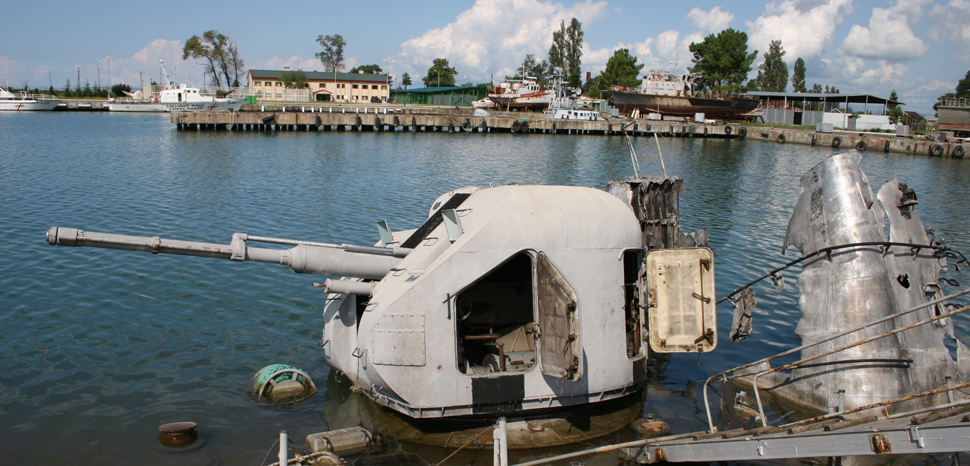
Unsurprisingly, war broke out in Georgia a few months later (as it did in Ukraine in 2014). When South Ossetian separatists began shelling Georgian positions in August 2008, President Saakashvili ordered the army to counterattack. Russia then intervened militarily in support of the rebels on August 7, defeating the Georgian forces in a five-day campaign. The war ended on August 12 with a EU-brokered ceasefire; nevertheless, Russia recognized the two breakaway republics and established military bases on their territory. Since then, the conflict remains frozen.