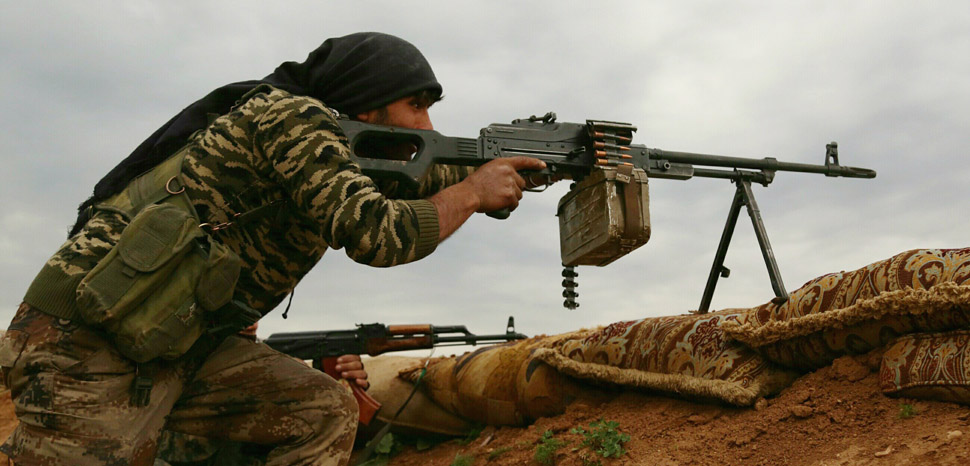
The Syrian civil war is now entering in its final stages. Russian-backed government forces have retaken much of the territory that the rebels conquered. The area controlled by the self-proclaimed Islamic State is also reduced to almost zero, prompting US President Donald Trump to announce the withdrawal of American forces from Syria. Yet an important point remains unresolved: the future of the Kurds. Having been America’s most effective allies in the fight against the Islamic State, they now risk finding themselves alone against Turkey, who considers their armed branch (the YPG) a terrorist group, and whose long-term foreign policy dictate has been to prevent the creation of any Kurdish territorial entity in its immediate neighborhood.
Background
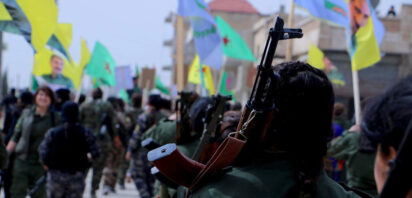
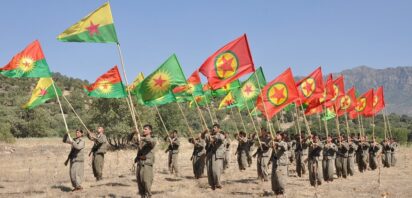
Though the Syrian civil war has now been raging for almost eight years, the situation on the ground still remains fragmented. The government, actively supported by the Russians with supplies and airstrikes, has restored its control over much of the country. The Islamic State, which once ruled over large swathes of territory, today only dominates a small zone in central Syria. The rebels, which include both pro-democratic forces and jihadist groups, are now confined to a relatively small pocket around Idlib in the Northwestern part of Syria, close to Turkey’s Hatay province. Just north of this rebel-held area, the Turkish military and its allied Arab militias control a strip of land forming a buffer zone between Syria and Turkey. Ankara has sided with the rebels during the conflict, but its main reason for intervening militarily in Syria has been to keep the Kurdish People’s Protection Units militia (YPG) and its Arab allies at bay. This Kurdish-Arab coalition, known as Syrian Democratic Forces (SDF), managed to extend its control over a large zone in northeastern Syria, representing around 30% of the country. Yet Turkey considers the YPG a terrorist organization and accuses it of supporting the Kurdish Worker’s Party (PKK), which has been waging an armed insurrection within Turkey for decades.
For these reasons, Turkey has been conducting a series of military operations to counter the YPG. After driving it away from Afrin one year ago, it recently declared that it was preparing to launch an operation east of the Euphrates river. The Kurds responded by affirming their readiness to fight the Turkish military. This happened as the United States, which has been supporting the YPG as a major partner in the fight against Islamic State, announced its intention to withdraw troops from Syria. Yet, the Kurds were apparently not totally forgotten: the US government soon warned Turkey against attacking the YPG, and President Trump even threatened to “devastate Turkey economically if they hit the Kurds.” Turkey replied that it “will not fear or be deterred by any threat.” The two sides are trying to solve the issue by creating a safe zone along the Syrian-Turkish border. Ankara announced a readiness to establish one by sending in its own troops, but it is unlikely that the Kurds will accept such a scenario.
Impact
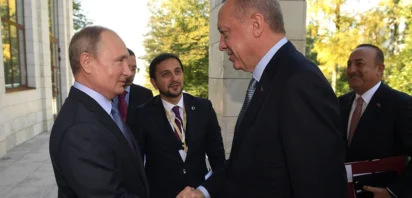
The Kurds are not simply one of the numerous armed factions taking part to the Syrian civil war. They are a population of around 40 million people living in a vast area spanning across Turkey, Iran, Syria, and Iraq. They also control oil-rich areas in northern Iraq, and after the rise of the Islamic State, the US-backed Kurdish militias proved a powerful combat force in Iraq and Syria. Yet their quest for an independent state has always been frustrated by wider geopolitics, and it’s unlikely to be any different this time. The 2017 independence referendum was a resounding victory for the Iraqi Kurds on paper, but in practice it has meant nothing. In Syria, Turkey has been acting to counter the YPG and prevent the creation of any kind of Kurdish territorial entity. US support and the presence of US troops on the ground have been sufficient to protect the Kurds until now, but the outlook is now shifting. With the Islamic State having lost virtually all its territory, US forces appear intent on abandoning Syria, leaving the YPG vulnerable to military operations by a Turkish force that is far superior in terms of manpower and materiel. The mere presence of US military forces was sufficient to deter attacks against the Kurds; the risk of hitting American armed personnel and sparking a diplomatic crisis was enough to dissuade Turkey (or other players) from striking the YPG. In these sense, the main reason for keeping a US military presence in Syria was not fighting the declining Islamic State, but protecting the Kurds and blocking Turkey’s regional plans. As far as Russia and the Syrian government are concerned, they have adopted a pro-Turkey stance on the Kurdish question. Ankara supports the rebels, and for this reason Moscow and Damascus need its cooperation to secure a definitive end to the civil war. Moreover, the Kurdish wedge issue is a good way to encourage divergences between Ankara and Washington. For this reason, Russia has accused the Kurds of fomenting separatism and is not to expected to step in to protect them.
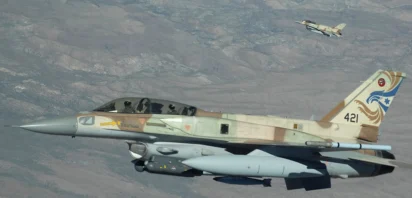
But the whole issue has broader geopolitical implications. For Turkey, controlling the north of Syria is a means of securing its eastern flank and preventing the establishment of a safe haven for Kurdish militias attacking its territory. Moreover, Turkey wants to prevent the construction of a pipeline connecting Iran to Europe via Syria, since this would threaten its role as the essential energy crossroad between the East and the West. Naturally, Iran favors this project, and wants to expand its influence in Syria, much to the detriment of Israel’s security outlook. Russia needs a stable and united Syria to keep its base in the Middle East, which allows it to operate with greater ease in the Eastern Mediterranean and access the sea’s hydrocarbon resources. It is notable in this sense that Russia obtained the exclusive right to develop oil and gas in Syria in February 2018. Finally, for the U.S., the issue is about countering Russian and Iranian influence plus maintaining its ties with a useful ally in the Kurds. Their cooperation is necessary to stabilize the region and as a safeguard against the resurgence of Islamic State or another similar group, which is a possible scenario as long as Sunnis in Iraq and Syria feel marginalized. In this complicated context, it will be virtually impossible to put an end to the war without first solving the Kurdish issue.
Forecast
Unfortunately, solving the Kurdish problem is no easy task. Neither Washington nor Ankara can reach their preferred outcome. The US cannot simply impose some form of territorial autonomy (and even less independence) for the Kurds; this would alienate Turkey, which remains an important ally for power projection in the Middle East and a barrier against Russian influence in the Middle East and the Mediterranean. Standing with the Kurds would push Turkey even more into Russia’s arms. In fact, the Kurdish question is only one of the various factors that have been driving Ankara away from Washington and closer to Moscow and Teheran in recent years. At the same time, Turkey cannot launch a military offensive against the YPG with impunity. Even though the U.S. is withdrawing its troops, it is still backing the Kurds diplomatically and this is not void of importance. Washington would surely retaliate in diplomatic and economic terms if Ankara decided to play hardball, something President Erdogan wants to avoid if he wants to continue his triangular arrangement between the West and Moscow.
Thus, a compromise must be reached, but it is not going to be easy. Creating a safe zone along the Syrian-Turkish border is the solution currently being discussed. But if Turkish soldiers were charged with establishing it, the Kurds would likely perceive this as a de facto military operation threatening their security. Similarly, there have also been rumors about shifting responsibility to another Kurdish militia, one that’s opposed to the YPG (the Iraq-based Peshmerga), to set up the safe zone. But again, it is unlikely the YPG will accept this, which will view it as good for granting Ankara’s interests and nothing more. The Kurds would still feel that they have gained nothing in spite of their efforts against the Islamic State, except for the preservation of the status quo. While this is also a result of some value, Syria’s Kurds are hoping for more. They have largely accepted the need for being re-integrated in post-war Syria, but the mild autonomy they seek is unacceptable to Ankara.
In the short term, setting up a safe zone will be useful in stabilizing northern Syria and paving the way to a definitive settlement of the conflict. But this solution will only work if it is established by third-party forces like UN peacekeepers. There have been yet to be any serious talks in this direction, and it remains an unlikely option. Government troops may be employed in theory, but Turkey seems willing to control the area directly and in any case the Syrian army is focused on retaking the last rebel-held areas in the north-west, so it will not be available for several months at least (hence the impatience to get started on the part of the Erdogan regime). But apart from this, a safe zone will not be sufficient to end the war, as this will require a broader agreement on the post-conflict order in Syria. The government is winning, but to ensure peace in the long term a satisfying settlement for the Kurdish issue must be reached. Doing so remains a daunting challenge due to the trans-national nature of the problem and Turkey’s firm opposition to giving them autonomy.
Any comprehensive deal would also have to integrate another important group: the Sunni Arabs, who are a majority in Syria but have little political power, as the state is controlled by the Shia Alawites. Without a deal that addresses the rights and interests of the Sunnis, renewed sectarian conflict will remain a distinct possibility in the future.
It is difficult to anticipate in precise terms what kind of polity and regional order will emerge once the war ends, but it is certain that the Kurdish issue must be dealt with. Otherwise, the Kurds (more specifically the YPG) may turn into a destabilizing factor themselves; and, from Washington’s perspective, abandoning them would mean losing a useful ally on the ground and the ability to influence future events. But solving the stalemate with Turkey over the Kurds will take time, and most importantly this may further deteriorate the already strained relations between Washington and Ankara. This is America’s real problem in Syria today: finding a good compromise between a valuable and trusted but local-level partner (the YPG) and a turbulent but strategically-relevant ally (Turkey) which has been cozying up to competitors like Russia and Iran of late. This is a complex task that will require much pragmatism and diplomatic creativity.