Climate change and its consequences is one of the most debated issues in today’s world. The phenomenon will affect virtually all countries, but some are particularly exposed to its effects. Due to its position and its peculiar geographic configuration, Vietnam is considered to be among the most vulnerable to global warming, and as such it will face a variety of challenges in the upcoming decades. Besides the obvious environmental consequences, climate change risks hampering the country’s economic development and causing resource shortages that could result in massive migration movements and a surge in piracy in Vietnam’s coastal waters. All of this would have broad and lasting security implications for the wider region.
Background
Vietnam is a Southeast Asian country that falls within the equatorial belt, and like all states located in this area it is particularly exposed to the effects of climate change. In fact, Vietnam is constantly listed among the countries that will suffer the most from changing weather patterns. According to a FAO report, by 2050 Vietnam’s annual mean temperatures are expected to grow between 0.8 and 1.5 °C, with the most marked increase to take place in the north. Similarly, rainfall will rise between 3.8 and 4.1% in northern areas, and by 0.7-1.7% in southern ones. This will naturally have important repercussions on agriculture. It must be said that higher temperatures and more abundant rains will benefit some regions. For instance, tropical crops will increase due to the greater number of warm days, and more rain will help maize crop output surge in the north (around the Red River delta). However, taken as a whole, the effects are clearly negative: in 2050, Vietnam’s agricultural yield will drop by at least 3% (and in some models much more) in all regions. The spring rice crop will be the most badly affected, with production declines reaching up to 12.48% in the north.
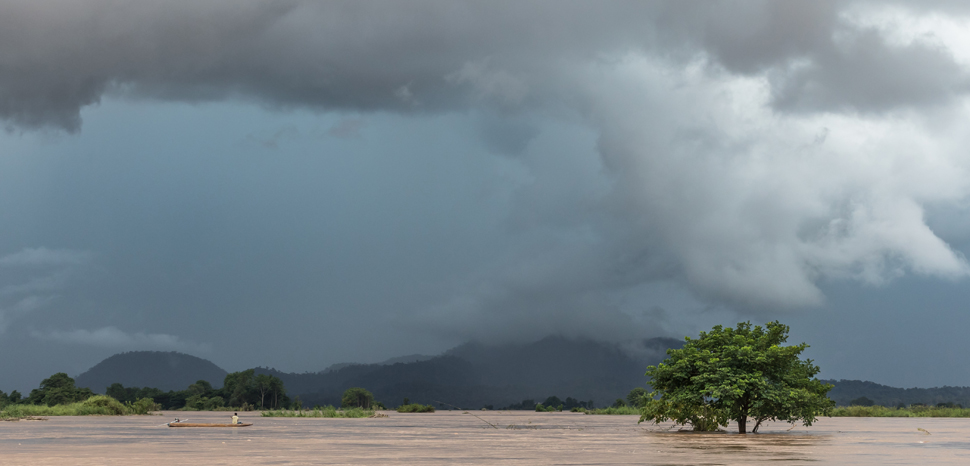
Moreover, higher temperatures bring with them extreme weather and health/sanitation problems. In terms of weather, the main threat is an increase in violent hurricanes and floods, both of which can cause severe material damage and loss of life. In terms of health and sanitation, warmer weather favors the proliferation of pests that can harm crops and livestock, thus putting further downward pressure on food production, with all its economic and humanitarian drawbacks. Pests can also spread new diseases, increasing the risk of epidemic.
Yet what truly makes Vietnam particularly vulnerable to the effects of global warming is not its agriculture, but its extremely long coastline, which stretches 3,200 kilometers along a north-south axis. The long coastline makes the the country extremely susceptible to rising sea levels caused by the melting of the Polar ice caps. According to the same FAO report, the sea is expected to rise between 28 and 33 cm by mid-century, with more negative consequences for agriculture, since “arable lands […] will be significantly reduced.”