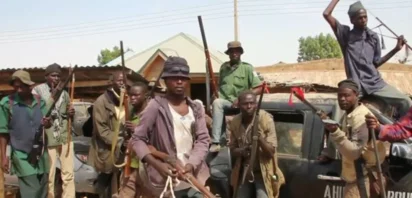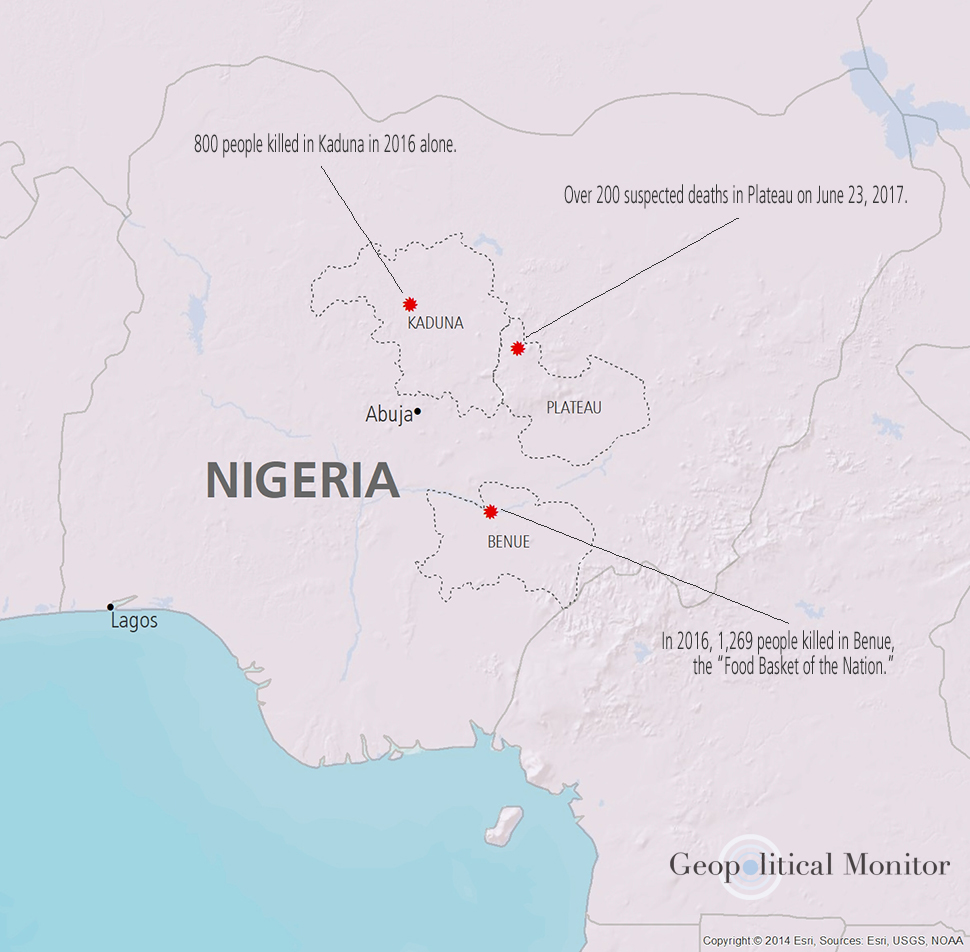
It would be no exaggeration to declare that amongst all the countries in West Africa, Nigeria is the one plagued with the most serious security threats, even when one takes the increasing volatility of Cameroon’s burgeoning civil war into account. Though the remnants of Boko Haram are still of great consequence in terms of regional stability (in particular the Sahel region), and restless murmurs of another secessionist movement are brewing among young and idealistic Igbo separatists who did not live through the Biafra war, what seems to have enraptured Nigerian society of late is the rampant violence perpetrated by Fulani herdsmen. Or rather, the escalating conflict between nomadic Fulani herdsmen and local farmers, which has unfolded over the course of several years, with each new year proving to be more deadly and destructive than the last. In the past year alone, the clashes between the two groups have resulted in the deaths of more Nigerians than civilians killed by Boko Haram since 2016. The culmination of these attacks can be seen in the most recent clash in Plateau State, where anywhere from 80-200 Nigerians lost their lives in the carnage.
At the precipice of a conflict that threatens to engulf the entire country, the Buhari administration has remained surprisingly silent on condemning the acts of either parties, nor has it offered any effective military or political solutions to deescalate tensions. Given Buhari’s battered political image, and his own tribal ties to the Fulani, it appears that the government hopes to ride out the ensuring turmoil till the national elections next year. But given spiking violence in northwest Nigeria, that plan could well backfire.
Background
This longstanding conflict revolves around disputes between Fulani herdsmen and local farmers over land access. Though some analysts and media outlets have been quick to label it as a conflict between two warring religious groups divided among ethnic tribal lines, this is a pastoral conflict at heart. Its roots trace back to the economic activities of the Fulani group, of whose livelihood is based around the raising and use of cattle. In the northern states, the nomadic Fulani would find pasture for their cattle to graze upon during the dry season. However, cattle rustling has begun to wane over time due to rapid urban development and the expansion of larger-scale agriculture across the central ranges the country. As a result, the once free pastures that Fulani herdsmen used for grazing have increasingly been claimed by local farmers who use the land to raise crops. It is this dynamic that laid the groundwork for the current crisis. Violent incidents are usually triggered when nomadic herdsmen are prevented from grazing on crop farms. Climate change is also playing a pivotal role by forcing the nomadic Fulani from their traditional grazing lands, and the conflict overall is contributing to a growing food crisis across the country. Farms have been destroyed and farmers have been fleeing their land throughout the last year; the impact of these events is only now starting to manifest in harvest time.