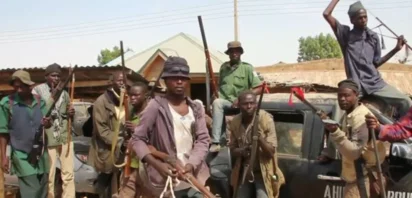
A security vacuum is slowly widening in Nigeria, though its severity and extent have been largely obscured by media tunnel-vision on singular tragedies (the kidnapping of 200 schoolgirls in Chibok); the shocking advances made by Islamic State in Syria and Iraq; and most recently the presence of an Ebola cluster in Africa’s most populous country.
Boko Haram’s advances over the past few months mirror those made by Islamic State in Syria and Iraq. It’s only the immediate economic stakes that are lower. Unlike Islamic State, Boko Haram has yet to capture the oil fields which could fund a rapid expansion of the group’s recruitment, materiel, and geographic reach (the group operates in the largely agrarian northeast, far from Nigeria’s energy heartland in the southwest).
But, in light of the eerily familiar string of victories from Boko Haram of late, the stakes might be increasing exponentially in the very near future.
Boko Haram on the Offensive
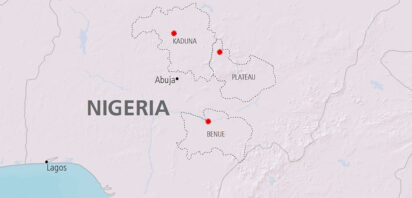
Boko Haram (lit ‘Western education is forbidden’) is the centrepiece of a jihadist insurgency seeking the implementation of sharia law in Nigeria. Operating since 2009, the group came to the world’s attention in early 2014 with the kidnapping of over 200 schoolgirls from Chibok in northeastern Nigeria, the majority of who are still missing. Yet beyond the emotional pull of this headline, speak nothing of the total lack of concrete international response generated by it, Boko Haram has continued to advance on all fronts. On the very same day of the Chibok kidnapping, the group bombed a crowded bus station in Abuja, central Nigeria, killing 88 people. Two weeks later another bomb in Abuja killed 19. And then there are the near-constant raids on villages up and down Borno State, where the kidnappings and executions never make it into the headlines.
Looking at the statistics, it becomes obvious that Boko Haram still has the operational capacity to carry out attacks on the local level. More unsettling, however, is the ease with which the group turned away a recent government offensive, and the slow creep of Boko Haram-controlled territory outward from Borno and into the commercial heartland of Nigeria.
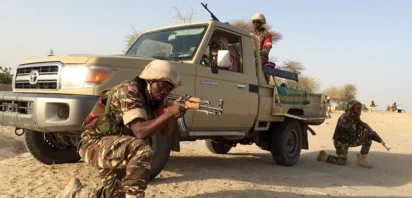
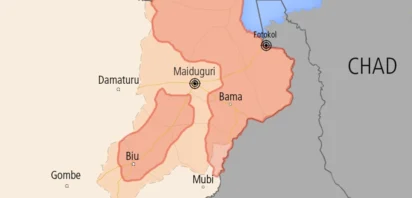
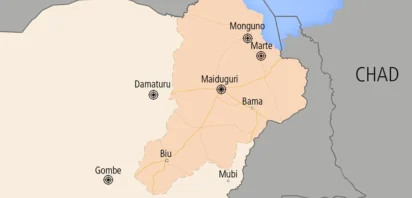
The military offensive of the past few months has so far been a stellar failure. Far from achieving its goal of pushing Boko Haram back into the forests of the northeast, the offensive seems to have actually accelerated the group’s advances. At time of writing, the militant group is in control of Bama, the second-largest city in Borno, as well as the smaller cities of Michika and Mubi, though there have been conflicting reports over the extent of their control.