In a major reversal, President Trump has said that he’d be open to rejoining the Trans-Pacific Partnership (TPP), the 12-nation free trade agreement that Trump railed against on the campaign trail and withdrew from on his first day in office. Trump followed up the initial revelation, which came during a meeting with Republican lawmakers, with a clarifying tweet: “Would only join TPP if the deal were substantially better than the deal offered to Pres. Obama.” These statements mirror earlier suggestions from President Trump in Davos that the U.S. would join if there was a ‘substantially better’ agreement.
Now over a year into his presidency, Trump may be coming around on the original economic and geopolitical rationale that birthed the TPP in the first place: the need to set new trade rules and forestall China’s economic domination over the Pacific. But even if the president has had a genuine change of heart, the United States’ (re)ascension to the agreement is far from a sure thing.
Impact
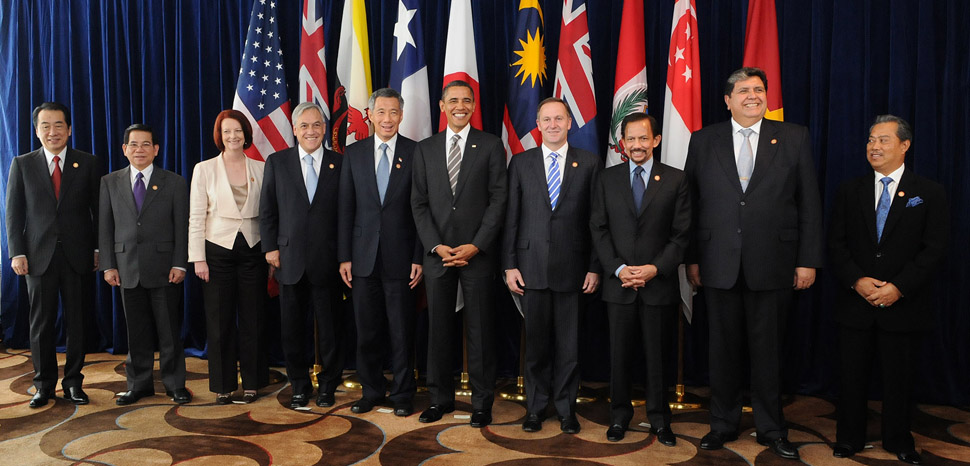
Hope springs eternal for the TPP-11. The TPP in its original form could not come into effect without participation from the United States. Following President Trump’s withdrawal, the remaining 11 members agreed to keep the agreement alive as the Comprehensive and Progressive Agreement for Trans-Pacific Partnership (CPTPP). This new agreement is almost identical to the old TPP with the exception of a few amendments. These amendments mostly fall in the intellectual property section, and many of them had originally been insisted on by the United States. The removals include 70-year copyrights after the death of an author; protections for biologics, a type of pharmaceutical; and a ban on set-top satellite cable decryption boxes. The TPP-11 also watered down the investor-state arbitration system, a controversial mechanism meant to settle damages caused by national legislation.