Chinese foreign policy has undergone a notable shift since President Xi Jinping took over. Gone are the days of the low-profile, ‘peaceful rise,’ replaced with the more assertive policies of a global power. In the South and East China Seas, in new global institutions such as the Asian Infrastructure Investment Bank, and in the unprecedented One Belt, One Road strategy – China has been making its presence felt on the world stage, and the Xi administration’s ‘Chinese dream’ of a powerful country with a strong military seems well on its way to coming true.
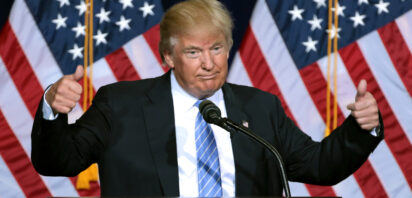
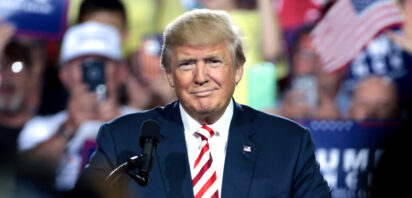
Then Donald Trump was elected president of the United States.
This surprising development has undoubtedly given rise to some quick introspection in a Chinese government expecting to deal with the known quantity of Hillary Clinton. Trump’s victory reshuffles the deck of bilateral presumptions, those of a stable trade relationship, passive ‘FONOPS’ resistance in the South China Sea, climate cooperation, and even the long-practiced dance of unofficial relations with Taiwan.
New dynamics on the US side of the bilateral equation could alter the course of the Xi administration, either by forcing Beijing to pump the brakes on its newfound superpower assertiveness or by kicking the nationalist forces underpinning it into overdrive.
Impact
All eyes on the South China Sea dispute. The South China Sea is the frontline of China’s newly assertive foreign policy. Securing full and internationally recognized sovereignty over the area would allow China to push out its defense perimeter toward the infamous nine-dash line. It is here where the Xi administration’s policies diverge the most from his ‘peaceful rise’ predecessor, Hu Jintao.
The Obama administration tackled the South China Sea dispute by stressing freedom of navigation for the US Navy and international shipping, and by indirectly supporting allies and stakeholders in their own disputes with Beijing. The Trump administration could take a much more confrontational approach, becoming more directly involved in the regional web of territorial claims. There are signs that this is already happening, as Senator Marco Rubio introduced a bill earlier this week that would allow for punitive sanctions against Chinese individuals and entities over activities in the East and South China Seas. The bill has a long way to go before becoming law, but it definitely stands as a departure in tone from the Obama years. A Trump administration will also benefit in theory from unified Republican control of Congress, which means it won’t encounter the same level of resistance to its foreign policy that President Obama did.
Where does this leave China? It depends. First off, China is not going to drop its push into the South China Sea wholesale. Doing so isn’t even an option given the nationalist groundswell that the CCP itself helped nurture on the issue. Expect China to continue its current course and slowly build and develop dual-use facilities on the islets it controls in the South China Sea, irrespective of the views of rival claimants. There won’t be any sudden game-changers coming from the Chinese side, at least at the onset of the Trump presidency. To an extent, both sides will adopt a ‘wait and see’ approach to the bilateral relationship in the early days.
However, it’s worth bearing in mind that this is a serious flashpoint that’s only made more combustible with President Trump’s win. The South China Sea could be the stage where a major crisis plays out, with both sides unwilling to back down. For China this is now a ‘core territorial interest’ and its defense is intertwined with the golden goose of CCP legitimacy: guaranteeing China’s sovereignty. For the United States this is the frontline of China’s dangerous new policy of aggressive expansion, and failing to counter it would be more of the ‘leading from behind’ decried by Republicans on the campaign trail.
There’s also the Navy rebuilding program that Trump championed during the election, which would certainly receive added impetus from a flare-up in the South China Sea.
Mutually assured tariff destruction. Before delving into this topic, a reminder is in order: nearly every presidential candidate in the past 20 years has demonized China and made promises on China that are ultimately not kept. One of the most memorable examples is Bill Clinton, who campaigned on not granting China most favored nation status (we all know how that turned out). So although Trump’s promises should be taken seriously, they shouldn’t be taken too seriously.
That said, one gets the feeling that Trump will want to differentiate himself and maintain his outsider credentials, in style if not substance. Trump campaigned on cracking down on China’s ‘cheating’ practices and has said that he will brand China a currency manipulator (again a common refrain on the campaign trail in US politics). President Trump could label China a currency manipulator without Congressional approval (done through the Treasury Department), and after doing so he could apply tariffs to specific Chinese exports at his own discretion.