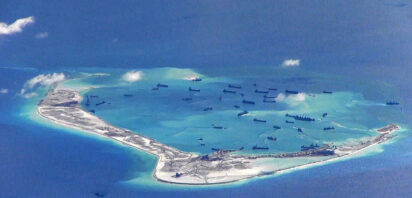
China’s recent construction on disputed atolls in the South China Sea has accelerated the stop-start cycle of dispute there. This series of surveillance photographs from the Asia Maritime Transparency Initiative gives some idea of the expanding scope of the effort. Only last July the decision of the Chinese authorities to withdraw the HYSY-981 oil rig a month early from Vietnamese-claimed waters diffused ongoing physical confrontations at sea between their respective ships. What particular set of circumstances prompted Beijing to climb down then, having made its point about China’s territorial claims, is debatable. It may have had more to do with the weather than diplomacy, though a wish to avoid driving Hanoi too far into the arms of Washington will have played a part in its calculations. Now however China is revealed to be rapidly expanding its physical infrastructure, and consolidating its presence in the region it provoked a storm in less than a year ago.
China’s neighbors have also engaged in construction projects on land masses they have declared to be within their Economic Exclusion Zones (EEZs) and therefore sovereign territory. The difference is that while other claimants have built upon or modified existing land masses, Beijing has been dramatically upgrading the size and structure of physical land features under its control. It has also been busy adding an airstrip in the Spratly islands, whereas it had previously been the only major claimant without one. This suggests that Beijing has decided that the time has come to make a major push for recognition of its claim over major parts of the disputed waterway. The new construction is a prelude to new physical incursions with greater capacity behind them.
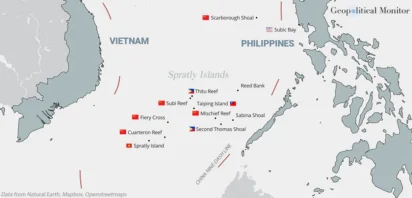
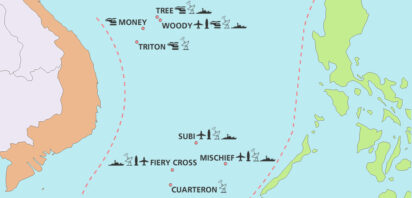
It is important to state here that in some ways Beijing is merely following where others have already led. Taiwan first staked a claim to the Spratly Islands in 1946 for example. Vietnam, the Philippines, and Malaysia all first stationed troops in the area in the 1970s. Although China claims the whole of the Spratly and Parcel island chains, it actually controls just seven features of the Spratly archipelago, while the Philippines controls eight and Vietnam has twenty. Moreover the sea lanes to the west of the Spratly islands carry the trade, energy and raw materials that fuel China’s development as a modern economy. They are vital to the Communist Party’s chances of staying in power, but are presently guarded by the United States Navy – China’s greatest competitor state. It is easy to see why a China that has sacrificed Maoist self-reliance for economic growth might find the situation uncomfortable.