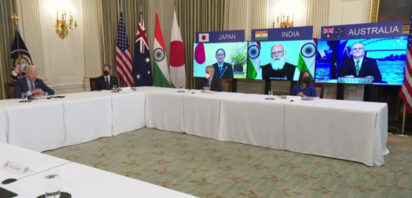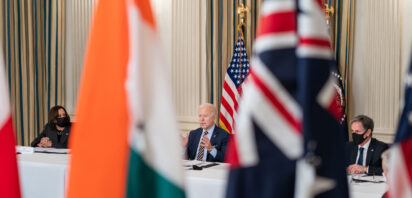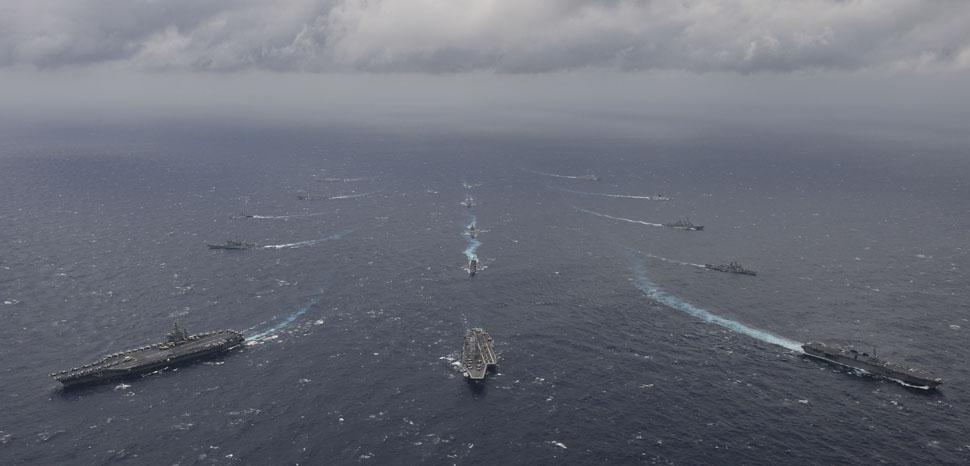
The Quadrilateral Security Dialogue, more commonly called the QUAD, is an informal grouping composed of the United States, Japan, Australia, and India, which is becoming an important diplomatic forum to foster security cooperation between these powers, particularly in reaction to China’s rise and activities in the Indo-Pacific. As concern over the PRC grows, other powers may decide to join the group, which will inevitably have repercussions on the Quad’s inner security dynamics, allowing it to evolve into an official security platform or, given enough time, even a collective security organization.
Analysis
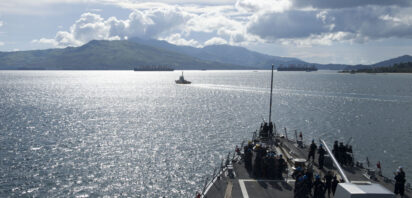
The QUAD was first established in 2007 under Japan’s initiative with the purpose to promote security cooperation between members in the Indo-Pacific region via dialogue and joint military exercises. As a matter of fact, the four members all have pressing security and economic interests at stake in the region. The area is vital for international maritime trade between Asia, Europe, and the rest of the world, including the import of the Middle Eastern oil that fuels the economies of Asian states. However, the region is also a complex security environment. Most notably, the four QUAD members are concerned by China’s rise and its assertive territorial claims. The PRC is involved in the multilateral territorial and maritime dispute on the South China Sea (SCS) and its hydrocarbon resources; it claims Taiwan as part of its own territory, as well as the Senkaku/Diaoyu islands currently administrated by Japan. For its part, India has stakes in maritime trade in the region and is embroiled in territorial disputes with the PRC along its long Himalayan border.