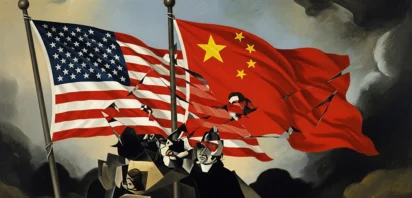
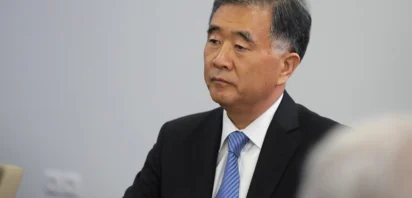
The April 6-7 Xi-Trump summit at Mar-a-Lago will be an important one for both leaders.
For President Trump, it’s an opportunity to defy the narrative of an administration in disarray and set the tone on one of the U.S.’ most important bilateral relationships. Supporters and detractors alike are questioning whether some of the president’s more explosive campaign soundbites will once again come to the surface.
President Xi on the other hand will be trying to guide the relationship back into the familiar territory of previous US administrations, where trade and defense issues are far more likely to elicit grumbling complaints rather than biting policy reprisals. President Xi’s diplomatic calculations will be dominated by the upcoming 19th Party Congress, which will determine the make-up of future Chinese governments – possibly ones headed up by Xi beyond the conventional two-term limit. Thus Xi will be trying to assuage the trade and defense concerns of an unpredictable President Trump without rocking the boat so much that it would impact his own domestic calculus in the fall.
Background
The subtext for the summit is disorganization and diplomatic schizophrenia on the part of the Trump administration. Much of this has to do with the fact that the necessary players aren’t in place yet: the new US ambassador to China, Terry Branstad, still hasn’t assumed office, and the State Department is still understaffed and underutilized.
Trump is going into the summit without a comprehensive strategy on the Asia Pacific, and without an understanding and/or appreciation of the historical dynamics in US-China relations. So much was on display in Secretary of State Rex Tillerson’s parroting of CCP talking points in Beijing and the choice of venue of Mar-a-Lago – which the Chinese side specifically requested, likely because of the optics of it putting Beijing on the same level as a longtime US ally Japan. The decision was made by Trump’s son-in-law and advisor Jared Kushner, who is in constant contact with the Chinese ambassador and is working on the wording of the summit’s closing statement.
This is not terribly surprising given that the summit is happening just 70 days into the Trump presidency, leaving not much time to conduct a comprehensive policy review. What is surprising however is that the summit was OK’d in the first place.
Impact
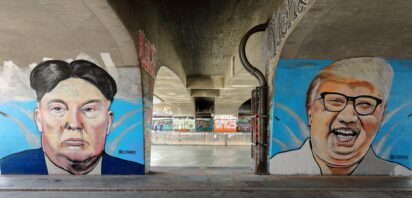
North Korea will be the elephant in the opulent room. The North Korea situation has been heating up since last year’s US presidential race, and the possibility of the Kim regime getting a hold of nuclear-armed ICBMs has put the Korean Peninsula on the top of the summit’s agenda. Trump has been tweeting to this effect in the lead-up to the summit: “If China is not going to solve North Korea, we will.” Tillerson also brought up the military option against Pyongyang during his trip to Seoul in March. K.T. McFarland, Trump’s deputy national security adviser, further compounded the gloom by claiming there’s a ‘real possibility’ that North Korea would be capable of hitting the U.S. with a nuclear missile by the end of Trump’s first term.