As widely predicted, in Myanmar’s election on 9 November, Aung San Suu Kyi’s ruling National League for Democracy (NLD) repeated its feat of 2015 and won a landslide victory, taking 396 of the 476 seats being contested in the national legislature. Though another 166 seats in parliament are constitutionally reserved for Myanmar’s powerful armed forces, known as the Tatmadaw, the military-aligned Union Solidarity and Development Party (USDP) performed poorly against the NLD and suffered losses at the ballot box.
In the days after the poll, the USDP lodged unsubstantiated complaints of electoral fraud and pushed for a re-run of the vote. The claims were strongly denied by the NLD and delegitimized by the Union Election Commission (UEC), which said the poll was conducted ‘freely and fairly’ and in a ‘transparent’ manner, with no evidence of irregularities. The Tatmadaw has also distanced itself from the allegations, recognizing that its uneasy five-year alliance based on accommodation with the NLD has become Myanmar’s new normal.
The NLD expands its 2015 majority
The build-up to the election was beset by controversy. As COVID-19 cases soared, much local campaigning was cancelled, disadvantaging smaller and less-established parties up against the well-oiled NLD machine and veteran Tatmadaw propagandists. Despite 92 political parties fielding more than 6,900 candidates for 1,171 seats at national, regional and township level, Myanmar’s first-past-the-post system meant the poll was always going to be a battle between the two major parties: the NLD, and the USDP some way behind.
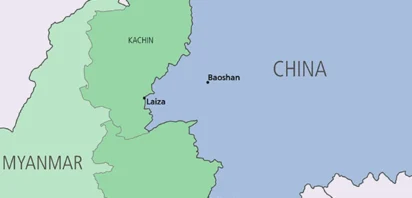
Voting went ahead despite calls to delay it amid the pandemic; although not everywhere. In late-October, the UEC announced that polls would not open in some border areas where armed conflict and separatism persist, citing security concerns. Across parts of Rakhine in the west, and Shan and Kachin in the northeast, more than 1.5 million people were denied a vote, provoking disenfranchisement among ethnic minorities who felt excluded. Rohingya Muslims, denied citizenship for decades, were also unable to participate.
Among the 35.5 million remaining eligible voters, the vast majority chose the NLD when polling day came. The party increased its share of parliamentary seats from 79% in 2015 to 83% this time around, cementing its majority, while the USDP claimed just 33 seats in the national legislature, representing only 7% of seats in parliament and totaling eight fewer than in 2015. The NLD hailed another ‘landslide’ but the opposition USDP labeled the result as ‘unfair’ and demanded a new vote arranged by the military, which stayed quiet.