Rumors that the United States might imminently attack Caracas have emerged, less from a concrete invasion plan than a shift in language and posture. When a US president proclaims a “total and complete blockade” of oil tankers linked to a sovereign nation and justifies it by claiming that nation has “stolen” US oil and land, beyond questions of whether sanity has taken a break from the Oval Office, the United States is no longer in the realm of conventional sanctions policy. Rather, Washington is rehashing an older grammar of power, in which legality follows force rather than restrains it.
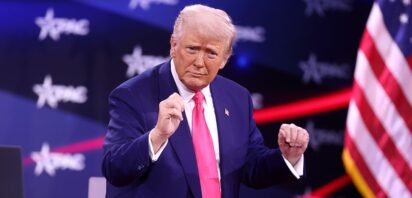
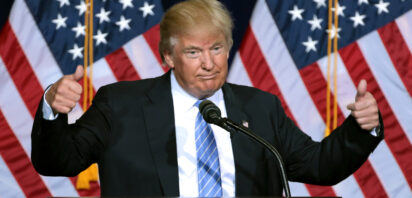
As of now, President Donald Trump has not launched a full-scale invasion of Venezuela. Instead, he has announced a sweeping naval blockade targeting sanctioned oil shipments entering or leaving the country, overseen the seizure of at least one tanker, and ordered a visible US naval buildup in the Caribbean. According to Reuters, Trump framed the move as necessary to reclaim assets he claims Venezuela “previously stole from the United States,” a formulation that immediately drew criticism for collapsing legal disputes over nationalization into an assertion of ownership by force. This is not the story of tanks rolling into Caracas. It is something more ambiguous, and therefore more dangerous: coercion without conquest. Maritime interdiction, financial pressure, and rhetorical maximalism, to put it kindly, are being substituted for occupation. The risk lies not only in escalation, but in normalization.
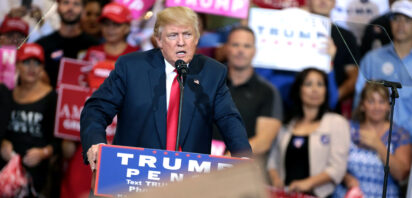
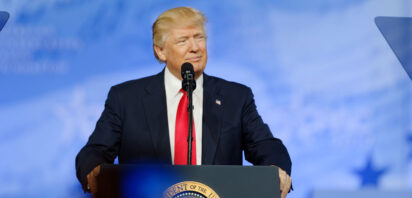
The historical rhyme is hard to miss. Chile in 1973 did not begin with the coup. It began with economic strangulation, diplomatic isolation, and sustained pressure aimed at making Salvador Allende’s government unworkable. Declassified US documents later confirmed that Washington sought to “make the economy scream.” Venezuela today is not Chile in 1973, but the method is recognizably similar: punish from afar, delegitimize sovereignty, and wait for internal fracture to do the rest. Trump’s recent national address confirmed this pattern. He offered no declaration of war, no timetable for invasion, but doubled down on the blockade and the language of theft. Coverage of the speech emphasized its domestic political tone and its lack of concrete military escalation, even as the administration expanded sanctions and enforcement actions.
The legal audacity of the blockade deserves attention. Nationalization of foreign-owned assets, however controversial, is not theft; it is a sovereign act that gives rise to arbitration, compensation claims, and legal dispute. To redefine it as criminal expropriation justifying maritime seizure is to revive a pre-Westphalian logic of power. Even Time magazine, hardly hostile to American power, has noted that critics reject Trump’s “stolen oil” framing as legally incoherent. The maritime campaign has already had lethal consequences. US forces have destroyed vessels labeled as drug-trafficking ships in Caribbean waters, actions that US officials describe as counter-narcotics operations but which critics argue blur into economic warfare. Spanish-language reporting has detailed how these strikes and seizures are increasingly difficult to disentangle from the oil blockade itself.
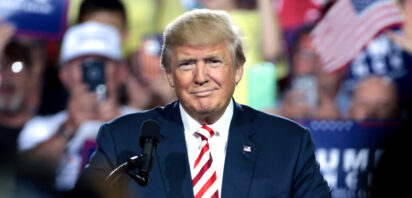
For Trump, this approach offers the optics of strength without the political cost of occupation. A ground war would be disastrous; a naval chokehold is politically cheaper and rhetorically easier to sell. Markets have already responded. Oil prices edged upward following the blockade announcement, reflecting uncertainty about supply disruptions and tanker insurance risks. For Nicolás Maduro, the strategy is grimly familiar. Venezuela has lived under sanctions long enough to adapt. External pressure becomes internal justification: for repression, for tighter control, for portraying opposition as foreign proxies. Caracas has denounced the blockade as an illegal act of “piracy” and appealed to the United Nations, while regional leaders — including Mexico’s president — have warned that the escalation risks bloodshed and regional instability.
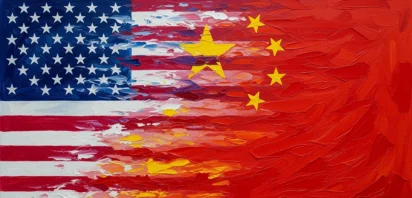
Beyond geopolitics lies a deeper philosophical regression. The Monroe Doctrine began as a warning to European empires; it evolved into a claim of hemispheric primacy. Its logic has ancient antecedents. In the Greco-Roman world, imperium meant not merely power over land, but authority over seas and trade. Rome called the Mediterranean Mare Nostrum not as metaphor, but as jurisdiction. When modern powers assert special rights over maritime routes and resources, they are not innovating; they are reverting. Russia and China understand this perfectly. Moscow is unlikely to confront Washington directly over Venezuela, but it will use the episode as evidence of American hypocrisy when lecturing others on sovereignty. Beijing has already denounced what it calls “unilateral bullying” and will quietly assist Caracas in rerouting trade while incorporating the episode into its broader Global South narrative. A Chinese foreign-ministry statement following the blockade framed US actions as destabilizing and illegitimate, reinforcing Beijing’s long-standing emphasis on non-interference.
Projecting forward to 2026, the most realistic scenario is not regime collapse or foreign occupation, but hardened endurance. Venezuela will be poorer, more informal, more authoritarian, and more dependent on opaque trade networks. The United States will have leverage, headlines, and a show of force — but also legal ambiguity, diplomatic resentment, and the moral residue of coercion disguised as principle. Chile reminds us how these stories usually end: not in triumph, but in long shadows. The true danger in Venezuela is not that war breaks out tomorrow, but that the world grows accustomed to a language in which force becomes legality, seizures become justice, and the sea, once again, belongs to whoever sails it with the biggest guns.
The views expressed in this article belong to the author(s) alone and do not necessarily reflect those of Geopoliticalmonitor.com.