On 6 April 2020, President Donald Trump signed an executive order outlining his country’s stance on the exploitation of natural resources in outer space. This is the latest in a series of steps pointing to a renewed interest in space exploration that directly involves both the public and the private sectors, with several companies making and attracting considerable investments in commercial space activities ranging from communications to mining. In view of these recent developments and plans for the years ahead, plus the interest demonstrated by other prominent powers in reaching the stars, it seems that we are heading to a new phase of international relations, one that has already been dubbed as ‘astropolitics.’ This raises two questions with far-reaching consequences: Are we at the dawn of space colonization? And: Will astropolitics be driven by a cooperative or a competitive dynamic?
Analysis
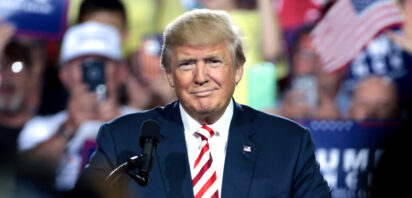
The executive order signed by President Trump on 6 April bears the formal name of Executive Order on Encouraging International Support for the Recovery and Use of Space Resources. Its denomination seems to suggest America’s desire to cooperate with other states for the common benefit, but while this element is indeed present, the document looks primarily designed to promote US interests by setting in motion a public-private synergy in space exploitation. It states that “commercial partners” will take part into a US-led program to send human missions to the Moon, Mars, and “other destinations.” Participation of commercial entities is considered essential for the success of the enterprise, notably “to recover and use resources, including water and certain minerals”; and thus the document seeks to address the problem of legal incertitude in outer space, which has dissuaded firms from investing in the sector.
In particular, the executive order stresses that the 1979 Agreement Governing the Activities of States on the Moon and Other Celestial Bodies (known as the “Moon Treaty”) has only been signed and ratified by 18 countries, and that the U.S. is not among them. It also notes the differences between it and the 1967 Treaty on Principles Governing the Activities of States in the Exploration and Use of Outer Space, Including the Moon and Other Celestial Bodies (“Outer Space Treaty”), which counts 108 members, including the U.S. On this basis, the document declares that “the Secretary of State shall object to any attempt by any other state or international organization to treat the Moon Agreement as reflecting or otherwise expressing customary international law.” This position – which is legitimate, given the low number of ratifying states – has important policy consequences, since it implies that the Moon Agreement is not a source of legally-binding norms. Most notably, the document states that “Americans should have the right to engage in commercial exploration, recovery, and use of resources in outer space, consistent with applicable law,” adding that “the United States does not view it [outer space] as a global commons.” This is a fundamental point: Even though space law is still in the making and largely theoretical, there is a general consensus that space and extra-terrestrial bodies are indeed global commons and therefore – just like the open sea – accessible to anyone for peaceful activities and economic exploitation. According to this logic, enshrined in the Outer Space Treaty, no state can claim its sovereignty on the Moon or any other space body; but Trump’s executive order might suggest that the United States now has a different view on the issue. In any case, norms are much more blurred in regards to private companies and their activities in space, including the exploitation of resources and the ownership of space assets; but space law establishes that states are responsible for the off-Earth activities of their citizens.
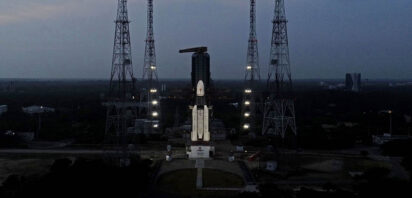
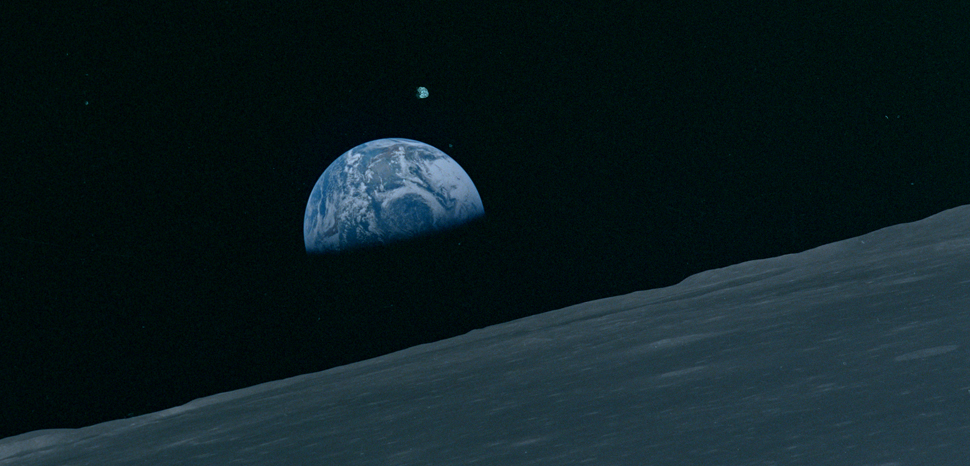
This brings to the reasons behind Washington’s renewed interest in space. As a matter of fact, the aforementioned executive order is only the last of a series of actions to give new impulse to US off-planet activities. It reiterates a bill approved by the Congress in 2015 and officially labelled the U.S. Commercial Space Launch Competitiveness Act, which enabled firms to own and sell material extracted on space bodies and therefore remove a major legal concern keeping investors from financing the nascent industry. With the Space Policy Directive-1 of 2017, Trump set the framework for the Artemis program, whose objective is to bring US astronauts back to the Moon in 2024 and set up a sustainable base by 2028 that will be used for launching manned exploration further beyond our satellite. In fact, establishing a lunar base and developing the necessary know-how to sustain long spacefaring missions via the Artemis program would pave the way for America’s (and probably mankind’s) first manned mission to Mars in the 2030s. On 27 May 2020, the Demo-2 mission will employ the reusable Crew Dragon capsule developed by Elon Musk’s SpaceX to bring US astronauts in orbit from Kennedy Space Center for the first time since the end of the Space Shuttle programme in 2011, thus ending America’s almost decade-long dependency on Russian Soyuz vehicles launched from the Baikonur Cosmodrome. But the most well-know initiative undertaken by the Trump administration in regards to space policy is certainly the creation of the United State Space Force (USSF), established in February 2019 with the Space Policy Directive-4.