- Pelosi visit just latest in a series of events altering the longstanding diplomatic status quo surrounding cross-Strait relations.
- The visit will enrage Beijing, but its response is likely to be more symbolic than kinetic.
- An invasion of Taiwan remains highly unlikely in the short-term.
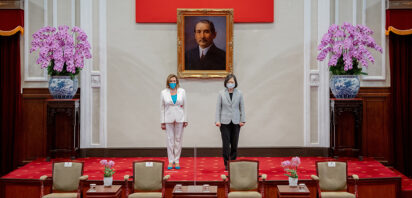
From the moment that Nancy Pelosi’s trip to Taiwan was leaked, the current US-China tensions were essentially pre-ordained. For the US Speaker of the House – a lifelong thorn in the side of the Chinese Communist Party (CCP) – a reversal in the face of CCP threats would send the wrong signal to regional allies, many of whom have begun to question the strength of Washington’s security commitments going forward. For Beijing, such a visit could not be allowed to have the optics of ‘business as usual’ given the growing perception among the Chinese population that China is now a superpower demanding commiserate levels of global respect, speak nothing of the domestic political sensitivities involved in the lead-up to 20th Party Congress later this year.
The Pelosi visit – the first from a sitting US Speaker of the House since 1997 – marks another blow to the status quo which has governed cross-Strait relations for nearly 30 years. In simplest terms, this status quo involves two elements: first, accepting idea that there is ‘one China with two different interpretations,’ with those interpretations being the People’s Republic of China (current China government) and the Republic of China (the government-in-exile-turned-government-of-Taiwan that fled the mainland after losing the civil war in 1949), both of which lay claim to being the rightful ruler of China – this is generally referred to as the ‘1992 Consensus.’ The second and oft-unstated element is that, following abortive attempts to intimidate Taiwan with shows of force in the mid-90s, Beijing has favored enticement over coercion in its efforts to bring Taiwan under its control, namely via economic incentive and cultural interchange.
This status quo has come under extreme stress in recent years for numerous reasons, including Xi Jinping’s pivot from the previously stated goal of ‘peaceful unification,’ the death of ‘One Country, Two Systems’ following the subjugation of Hong Kong’s political independence (this was held out as a model for Taiwan’s eventual absorption), the Ukraine war and how it has put annexation-by-force back on the menu in international relations, and finally and arguably most importantly: the simple fact that the status quo dynamic has only served to push Taiwanese people further away from China in the spheres of politics, identity, and culture.