South Caucasus News & Analysis

The Syrian Clock Is Ticking in West Azerbaijan
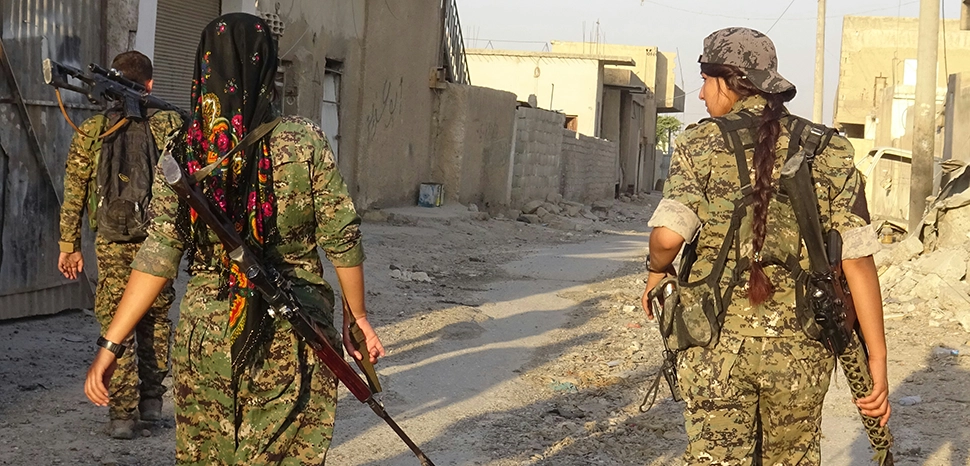
cc Kurdishstruggle, modified, Two YPJ fighters and a YPG fighter with rifles over their backs / https://commons.wikimedia.org/wiki/File:Two_YPJ_fighters_and_a_YPG_fighter_with_rifles_over_their_backs.jpg

As IRGC authority degrades in Iran’s West Azerbaijan Province, will Azerbaijani organizational structures follow the same arc as those of the Kurdish YPG during the Syria civil war?

Power TRIPP: The Trump Route and the Logic of Transactional Diplomacy

TRIPP-Armenia-Azerbaijan

The Trump Route for International Peace (TRIPP) perfectly encapsulates the US president’s preferred style of foreign policy: power exercised through transactional deals rather than institutions, profits rather than principled values, and ultimately the erosion of the US-led liberal order.

Trump NSS Reshapes US Engagement in the South Caucasus

cc White House, modified, https://www.whitehouse.gov/gallery/president-donald-trump-signs-a-trilateral-joint-declaration-with-president-ilham-aliyev-of-azerbaijan-and-prime-minister-nikol-pashinyan-of-armenia/

The 2025 US National Security Strategy shifts the United States decisively away from expansive regional engagement in the South Caucasus, instead favoring selective, interest-driven involvement.

The Zangezur Corridor: A Key Trade Link in the South Caucasus

cc Clay Gilliland, modified, Line of trucks from Georgia and Armenia waiting to enter Russia Just south of Kazbegi; https://flickr.com/photos/26781577@N07/37109052573/in/photolist-YxcAtg-ezBaKz-oGJozX-oJt7qU-Zhzo9C-ZhznCs-2aTLqxG-CfJVAj-2aDbPpB-PRyLHG-gNSGzW-2aB2NVF-Zj3kMj-2bZC4UX-2bXuoHC-2nLvHZc-Zj3fxS-EnMPfs-DsohWo-DRC6vX-2kLVsmD-2kLRMmw-2iJ7FcS-2iJ7FgK-2iJ7Ffx-fhe3Cf-7orsHx-7ovmwS-PcL7bb-rm2mVZ-noiDg9-edhvaJ-2mcAJW2-2mcx3AR-edbRVF-ee7k1G-edbRQe-ecxge3-2gCFPBb-ee4wud-LVthDD-ecrCW2-KKgAvs-2gCFPGX-2gCFPEN-edbRCn-ecrD4X-dVgj8x-2mcWBES-afDKNz

The Zangezur Corridor is a transformative initiative that hopes to reshape trade and economic landscapes across Eurasia, but it’s not without it’s challenges.

Washington’s Gambit: How the US Is Rebooting the Geopolitics of the South Caucasus

August 8, 2025 peace deal signing ceremony / cc White House, https://www.whitehouse.gov/articles/2025/08/president-trump-brokers-another-historic-peace-deal/

The recent Armenia-Azerbaijan peace deal underscores the new geopolitics of the South Caucasus, one where the region is no longer merely a post-Soviet periphery but a pivotal crossroads in broader global strategic competition.

How Incremental Diplomacy Built the Armenia-Azerbaijan Peace Agreement

Azerbaijan Armenia flags, Generated by Google Gemini AI on August 15, 2025. All flags, maps, and likenesses contained within this image are not necessarily accurate representations of reality.

The Armenia-Azerbaijan peace agreement illustrates the critical role that incremental diplomacy can play in conflict resolution. It’s also one where middle powers can take the lead.

A Tale of Two Tragedies: Azerbaijan Airlines Flight 8243 and Malaysia Airlines MH17

cc JurgenNL, modified, The sea of flowers at the airport for the victims of the disaster of Flight MH17. / https://commons.wikimedia.org/wiki/File:Bloemenzee_op_Schiphol_voor_slachtoffers_MH17_2.JPG

Though separated by a decade, these two high-profile air tragedies invite a comparative analysis of both the technical circumstances and geopolitical consequences surrounding them.

Denied Europe: The Dynamics Fueling Georgia Protests

Georgia protests in April 2024 against a new law criminalizing foreign NGOs,cc Jelger Groeneveld, modified, https://commons.wikimedia.org/w/index.php?search=georgia%20protest&ns0=1&ns6=1&ns12=1&ns14=1&ns100=1&ns106=1#/media/File:2024_Georgian_Protests,_April_21_(3).jpg

The current protest movement represents a crossroads for Georgia, with one path leading toward Brussels and the other Moscow.

Historical Echoes: The Partition of Poland and the South Caucasus
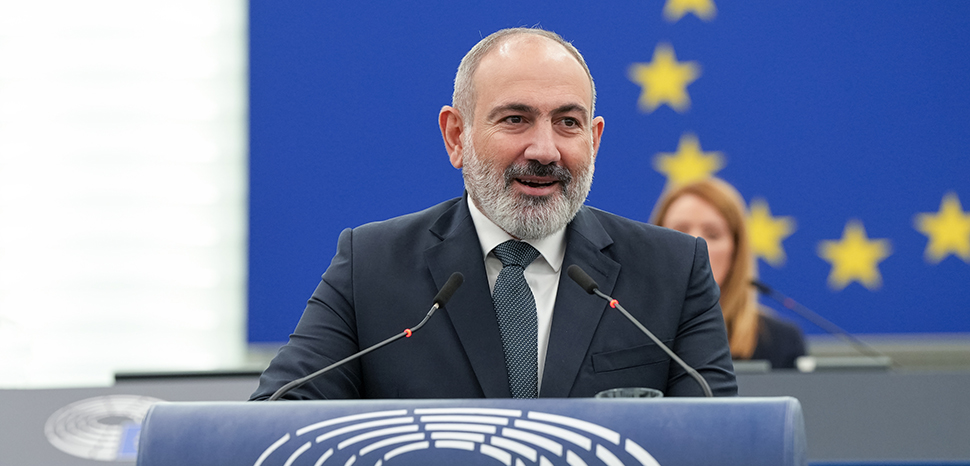
cc European Parliament, modified, https://flickr.com/photos/european_parliament/53271694274/in/photolist-2pH9iu6-2fJxX9Z-2hRgpDo-2nPpJnV-2nPppBc-2nPo8zY-2papxpG-2parmKu-2hRdTU9-2parmPN-2parmNF-2pajXKb-2paqZZ5-2pX2KJX-2ewMNJC-2par1ey-2par19J-2parmQE-2pajXDE-2pajY5Q-2papxra-2papx6v-2prDwkP-2qhnHwa-2pgtsKB-2pgr9dm-2pgDm1i-2pgDhio-2pgjYsq-2pgsiqu; The Prime Minister of Armenia Nikol Pashinyan addressed MEPs in the European Parliament’s hemicycle in Strasbourg on Tuesday. In his address, Mr Pashinyan expressed his staunch defence of democratic principles against the backdrop of the multifaceted crises Armenia has been confronted with in recent years, particularly highlighting the turbulent aftermath of the 2020-2021 war and border conflict with Azerbaijan. He sought to defy those claiming that Armenia is suffering because it is a democracy, instead saying that his country would be paralysed and lose its independence and sovereignty if it was not democratic. Referring to Azerbaijan’s recent attack and recapture of the breakaway region of Nagorno-Karabakh, he said that Baku did so in “fulfilment of its long-standing policy of ethnic cleansing”. He also described the horrible humanitarian situation created by Azerbaijan’s long blockade of the Lachin corridor and offered a sharp rebuke to Moscow after Baku’s latest offensive.

A parallel can be drawn between the 1939 partition of Poland and the contemporary geopolitics of the South Caucasus. And like the 1939 crisis, the current situation could have profound effects on regional stability and global security.

What are France’s Motives in the South Caucasus?
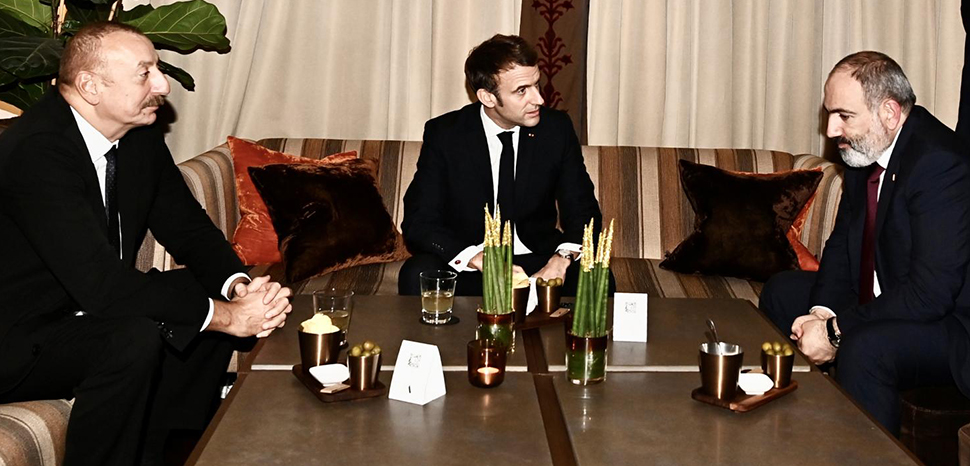
Trilateral meeting in 2021; cc president.az, modified, https://president.az/en/articles/view/54638/images

Recent weapons sales to CSTO-member Armenia are being justified under the pretense that the country is breaking away from Russian security architecture. But is this really the case?

Azerbaijan’s Actions in Nagorno-Karabakh Represent Its ‘Russia’ Moment
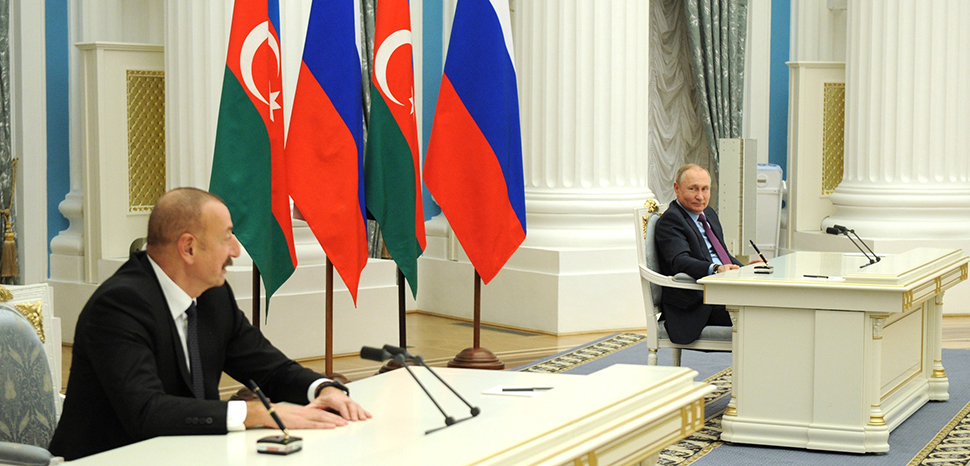
cc kremlin.ru, modified, http://en.kremlin.ru/events/president/news/67837

The EU must sanction Azerbaijan, even if the time for action has already passed for the indigenous Armenians of Nagorno-Karabakh.

Why Washington Is Reluctant to Help Armenia
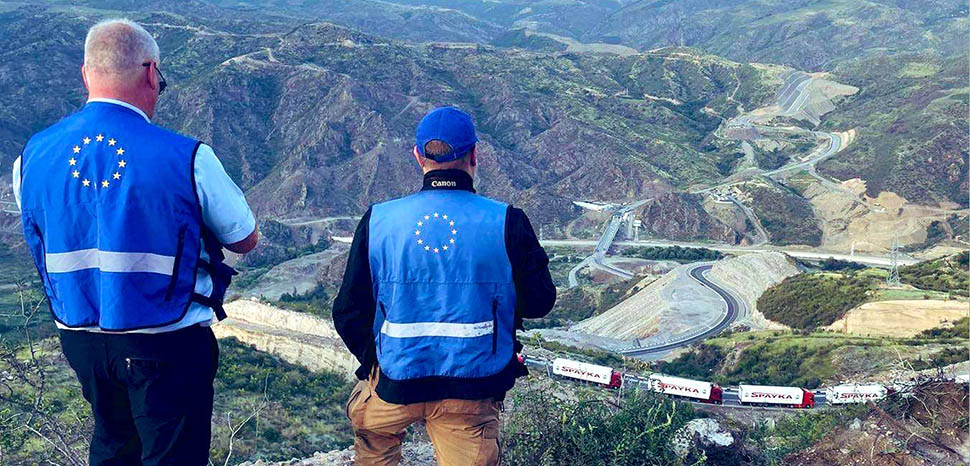
EUMAs monitor within Armenia looking at Azerbaijan's military checkpoint on the Lachin corridor and the blocked humanitarian convoy of trucks that was sent to Artsakh (Nagorno-Karabakh), modified, cc EU Mission in Armenia (EUMA), an entity of the European-Commission; https://commons.wikimedia.org/wiki/File:EUMA_monitors_within_Armenia_looking_at_the_Azerbaijani_military_checkpoint_and_the_humanitarian_convoy_of_trucks_is_blocked_on_the_Lachin_corridor_into_Artsakh_(Nagorno-Karabakh).jpg

Geopolitical considerations are keeping Washington from extending a helping hand to Yerevan amid a punishing blockade of Armenians living in Nagorno Karabakh.

Armenia-Azerbaijan Clashes Hint at New Order in South Caucasus
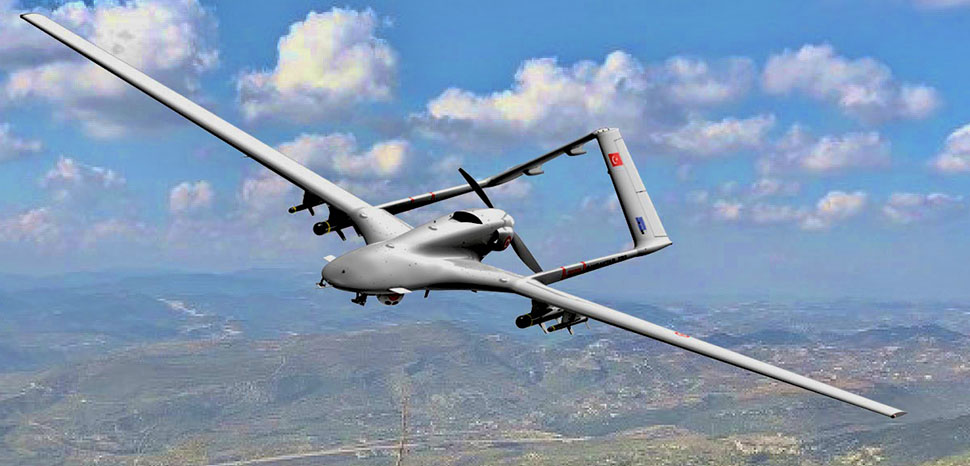
A Turkish-made Bayraktar TB2 drone; cc Army.com.ua, modified, https://commons.wikimedia.org/wiki/File:Bayraktar_TB2.jpg

New clashes over Nagorno-Karabakh suggest that Russian influence is breaking down in the South Caucasus, with long-term implications for the region.

A Geopolitical Reshuffle in the South Caucasus
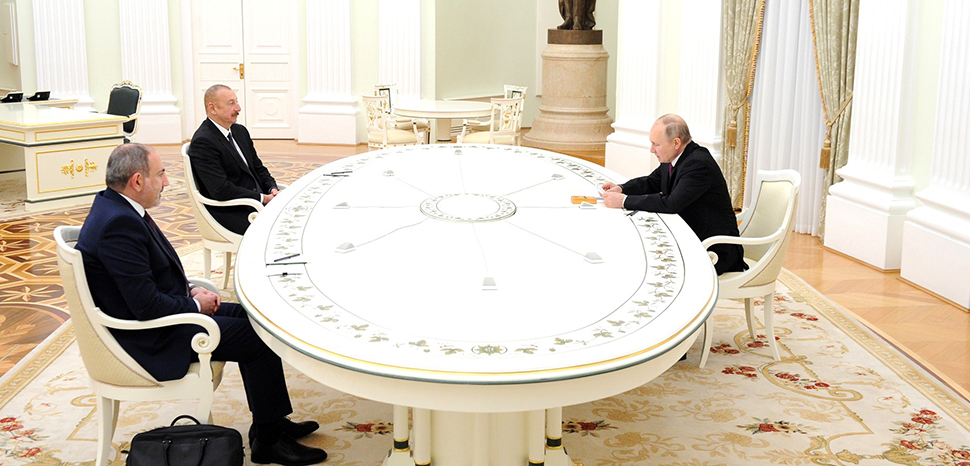
At Vladimir Putin’s initiative, the Kremlin hosted trilateral talks between the President of the Russian Federation, President of the Republic of Azerbaijan Ilham Aliyev and Prime Minister of the Republic of Armenia Nikol Pashinyan. (January 2021)cc kremlin.ru, http://en.kremlin.ru/events/president/news/64877

Fallout from the Second Karabakh War is overhauling old geopolitical certainties in the region.

A Flare-Up Long Foretold in the Armenia-Azerbaijan Conflict
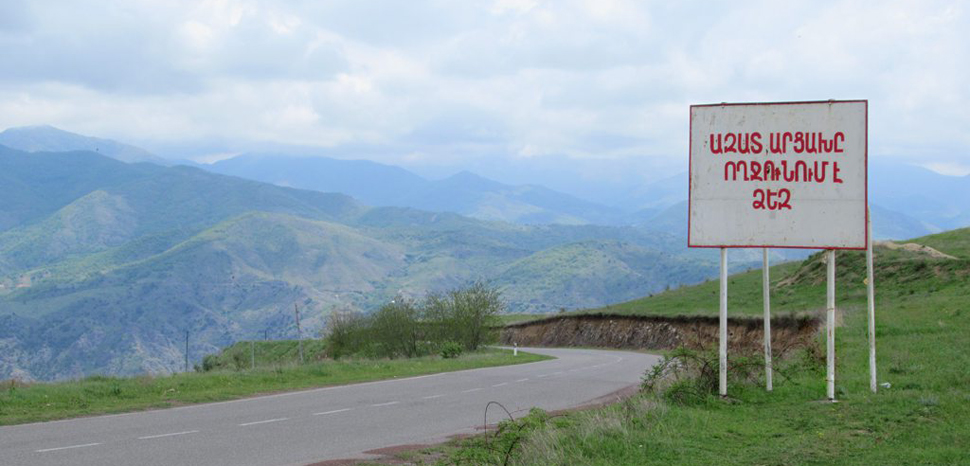
A roadside sign welcomes travellers arriving in the Republic of Nagorno Karabakh from Armenia.,cc Flickr David Stanley, modified, https://creativecommons.org/licenses/by/2.0/

The fuse lit on August 5, 2019, finally detonated earlier this month.

More South Caucasus Articles