Last week’s surprise announcement of a China-brokered deal to reestablish diplomatic ties between Saudi Arabia and Iran became the latest signal of China’s geopolitical prowess and capacity to replace the United States as the region’s mediator. As the largest trading partner of both countries, China’s foray into conflict resolution is backed by its capacity as an importer of the region’s commodities, as well as its standing as a critical growth market for the Saudis and as an economic lifeline for Iran amid sanctions.
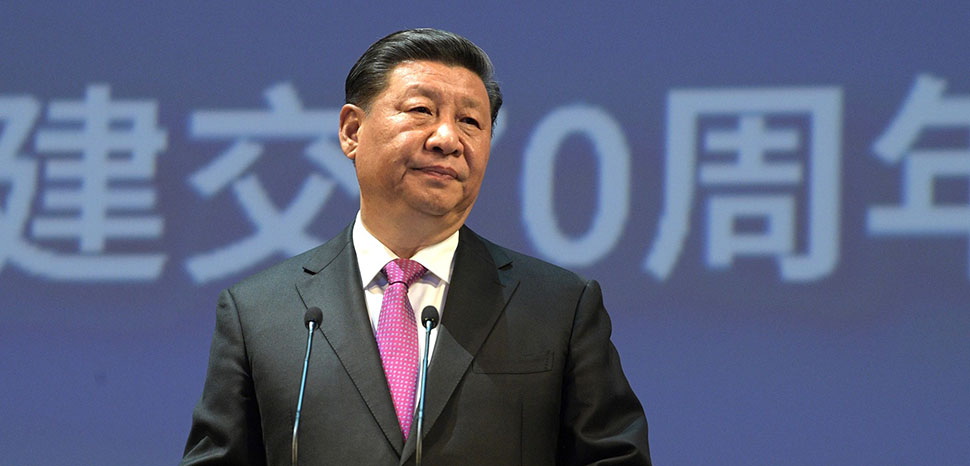
China’s role as a mediator in the region follows President Xi Jinping’s visit to Riyadh last December during a Gulf Summit, as well as a state visit to Iran made last month. In Riyadh, Xi’s visit emphasized and encouraged yuan-denominated trade, citing benefits against an appreciating dollar that has led to currency volatility among Gulf exporters. Last month’s visit with Iranian President Ebrahim Raisi concluded with a joint statement to lift sanctions imposed upon Iran as a prerequisite to re-implementing the Joint Comprehensive Plan of Action (JCPOA), the landmark agreement that had curbed Iran’s nuclear program in exchange for sanctions relief.
In addition to highlighting China’s pervasive influence, the Saudi-Iran deal reverses over 5 years of momentum around a US-Israel-Arab coalition that saw Israel launch a historic and successful diplomatic offensive that normalized relations with various Arab League states, including the United Arab Emirates, Bahrain, Morocco, and Sudan. Though rumors of normalized ties between Israel and Saudi Arabia have lingered for years, the latter’s resumption of ties with Tehran will likely shelve the possibility.
Furthermore, as the Israeli government grapples with growing public protests over controversial judicial reforms, and the Biden administration resists calls to lift sanctions on Iran, China has created ample room to further reorient the region toward its grander ambitions at the multi-lateral level. Next month, Iran is expected to formally become a full member of the Shanghai Cooperation Organization (SCO), making it the bloc’s 8th member and the latest to join since India and Pakistan in 2017. Although the benefits of SCO membership for Iran remain subject to debate, the willingness of the bloc’s members to admit Iran hints at improved alignment and collective political will on behalf of SCO members, particularly Russia & China, to enhance coordination of common trade and security objectives throughout Eurasia. The SCO also counts the sanction-ridden states of Afghanistan and Belarus as observers, providing a pathway to scale membership and bring it closer to the ambition of countering NATO.