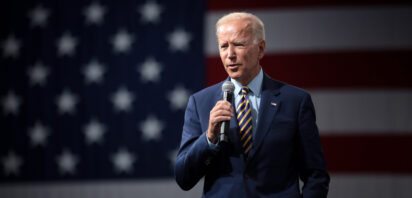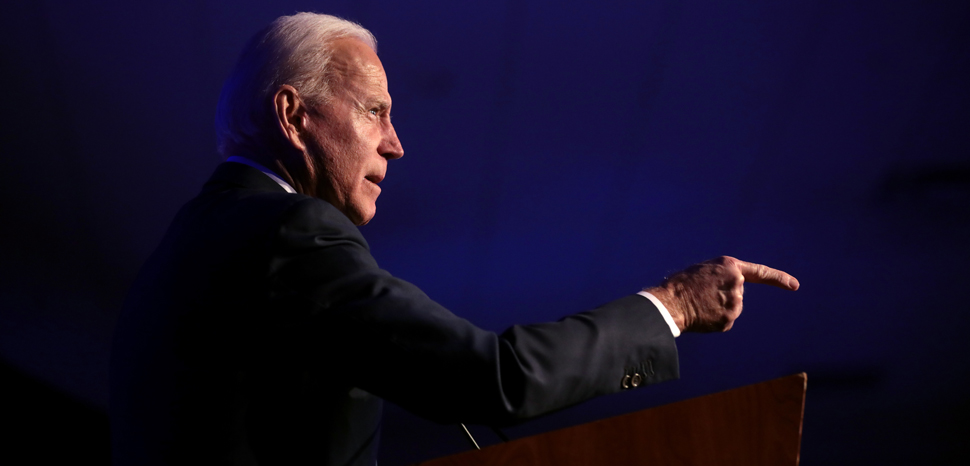
With the US elections approaching, observers wonder what US foreign policy will look like in the next four years, especially if Democrat challenger Joe Biden was elected President. Commentators generally agree that it would mark a ‘return to normalcy’ after Donald Trump’s direct and undiplomatic style of promoting an ‘America First’ agenda. However, while Biden will indeed seek to mend ties with US allies in Europe and Asia, he will also adopt a confrontational stance toward competitors like Russia. As a long-time supporter of NATO and its enlargement eastwards, who has in the past advocated for deploying more troops along Russia’s borders, a president Biden could be expected to act energetically to counter Moscow, leading to new lows in bilateral relations.
Analysis
US-Russia Relations after the Cold War
Together with China, Russia is now considered one of the United States’ primary strategic competitors. Immediately after the collapse of the Soviet Union and the end of the Cold War, there was a widespread optimistic belief in US foreign policy circles that relations with Russia would improve. Many expected that the country would liberalize its economy and democratize its political system, thus paving the way for its integration in the Western world. It followed that Russia would lack the ideology or capacity to pose the kind of threat that it used to.
The 1990s marked the high tide for such optimism. As Russia faced a severe economic recession, socio-political disarray, and separatist movements in regions like Chechnya, it was forced to cut its military spending and reduce its activities abroad in order to focus on domestic problems. Under Yeltsin’s presidency, Russia no longer opposed Western initiatives as before and even cooperated with the US and its allies by reaching the Strategic Arms Reduction Treaty (START) agreements on nuclear disarmament and by participating in various new forums for dialogue.
At first, it seemed that this trend would continue when Vladimir Putin became Russia’s president in 2000. He managed to stabilize Russia’s economy and society – though at the price of reversing the democratization process – and cooperated with the US-led ‘War on Terror’ initiated by President George W. Bush after the 9/11 attacks.
However, there was one domain where Russia continued to express its opposition: NATO’s enlargement to former communist countries in Eastern Europe. Poland, Hungary, and the Czech Republic had already been admitted in 1999. The ‘color revolutions’ in Georgia (2003) and Ukraine (2004-2005), which brought pro-Western leaders to power, were regarded by the Kremlin as US-backed machinations to bring these countries out of Russia’s orbit and pave the way for them to join NATO.