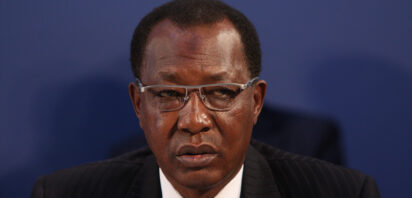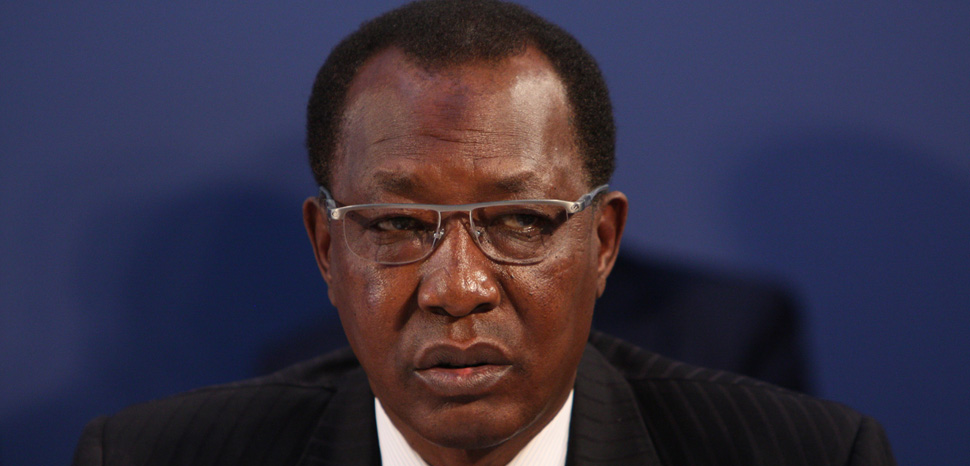
Long-serving president Idriss Déby has died in clashes with rebel forces, according to a statement issued by the Chadian military on state television: “Mr Déby breathed his last defending the sovereign nation on the battlefield.” He was 68 years old.
The president had just secured his sixth term in office in last week’s elections, taking 80% of the vote in a contest roundly boycotted by the opposition. A military council headed by Déby’s son has now taken over control of the government, and intends to rule for an 18-month period.
Needless to say, the abrupt departure of this national symbol does not augur well for the stability of Chad and neighboring states in the Sahel region, especially when fragile political institutions are already under strain from the public health and economic fallout of COVID-19, not to mention the numerous simmering conflicts along Chad’s borders.
Analysis
Note that all information concerning the fate of President Déby originates from statements issued by the now-governing Chadian military. The specifics of the president’s fate remain a mystery – and they will probably stay that way. We do know that President Déby was visiting Chad’s northern border when a sizable raid by the Libya-based Front for Change and Concord in Chad (FACT) was launched, apparently intent on seizing the capital of N’Djamena. The perceived threat to the capital was enough for US officials to call for the evacuation of embassy staff family members last week. Tanks were also temporarily deployed on the outskirts of the city, according to reporting from AFP.
The president reportedly died from injuries suffered during clashes between the Chadian military and FACT rebels.
FACT split from another Libya-based armed opposition group, the Union of Forces for Democracy and Development (UFDD), in 2016. Since then, it has operated primarily within the context of the Libyan civil war and has been associated with militias based in Misrata (often referred to as a ‘third force’ between Haftar and Tripoli). In 2017, FACT’s strength was estimated at over 1,000 fighters and 200 vehicles.
This cross-border foray by FACT is just the latest episode in a long history of ethnic and political conflict along the northern borderlands – an area that is inhabited by the Teda ethnic group in a band spanning three different states: Libya, Niger, and Chad. Some of the area was annexed by Libya from 1973-1994; it was also the site of another large-scale rebellion launched by the Movement for Democracy and Justice in Chad (MJDT) from 1997-2011. Broadly, the northern and northwestern regions are home to a plethora of armed militias – ethnic, political, and criminal – and Chadian state institutions, notably the military, maintains a relatively weak presence, as evidenced by the stunning success of the FACT raid over the weekend.
This widening band of instability in the north is one of the contexts in which President Déby’s death must be viewed – but it’s not the only one. Chad has also been riven by violence in its southern and eastern borderlands, fueled in large part by cross-border attacks by Islamist outfits like Boko Haram, and its western borderlands, which have tended to involve the Sudan-based Janjaweed and allied militias moving in and out of West Darfur. Chad still hosts some 370,000 Sudanese refugees who were displaced during the Darfur crisis of 2003-4.
Though Chad’s conflicts have diverse contexts, actors, and geographies, they are uniformly impacted by two factors: porous international borders, which produce safe havens outside the reach of the Chadian military and invite potential arms and support from neighboring governments; and the diminishing presence of the Chadian state, which allows local armed outfits to the fill power vacuum.