A hefty slate of diplomatic talks is now scheduled for January: one track between Russian leaders and NATO, and another with the Organization for Security and Cooperation in Europe (OSCE). At issue will be the ongoing Russian military build-up on Ukraine’s eastern borders, as well as a list of security guarantees recently circulated by the Kremlin. Whether the build-up turns out to be an act of diplomatic brinkmanship or an actual prelude to Russian invasion, two things are clear: 1) the post-Cold War geopolitical environment of Eastern Europe is transitioning toward something entirely new; and 2) the fate of Ukraine will figure prominently in how this transition continues to unfold.
Outlook
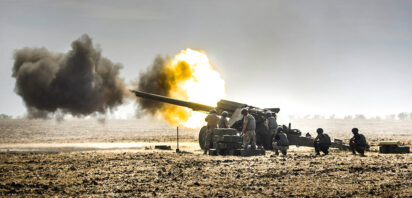
Now in the final days of 2021, there’s still no signs of de-escalation along Russia and Ukraine’s shared border. Over the past few months, and particularly in the immediate aftermath of the Biden-Putin talks, military units have been re-deployed to Russian bases proximate to the Ukraine border. The current estimate is that anywhere from 70,000-100,000 Russian troops now stand at ready, with an additional 75,000 in irregulars and supporting forces also available in the event of an invasion of Ukraine. In total, the deployments amount to over 100 battalion tactical groups, incorporating tank, artillery, and missile units as well.
Russia’s diplomatic goals were laid out plainly in mid-December. They include a ban on Ukraine’s future entry into the NATO alliance; rolling back NATO troop levels in Eastern Europe to 1997 levels, including in NATO member countries such as Poland and the Baltic states; and removing forward-deployed US nuclear weapons from Europe.
Both Russian troop movements and the naked ambition of the security demands suggest that this amounts to an attempt to change the post-Cold War status quo in Eastern Europe, whether by diplomacy or by military action. It is, in effect, a gamble whereby the Kremlin seeks movement on one its long-overlooked core interests – exclusive influence over its ‘near abroad’ – at a time when the Western security focus is shifting toward to Asia. It all boils down to the question of how much diplomatic, economic, and military resources NATO is willing to deploy in support of Ukraine, a non-member state whose defense is not legally guaranteed by the alliance. The status of the Nord Stream II expansion – and the surrounding energy price crisis in Europe – stand as a persistent reminder of the economic stakes involved should Russian concerns go unaddressed, even as the Kremlin maintains that recent supply disruptions over the preexisting pipe network are purely economic in nature. (Nord Stream II will not pump at full capacity until it receives regulatory approval from the German authorities, a process that’s expected to stretch into next year).