Central Asia is rapidly becoming a new arena for global strategic competition—not over oil, gas, or critical minerals alone, but increasingly over clean energy. With abundant hydropower potential, Kyrgyzstan seeks to position itself as a key player in the international energy transition, offering both a source of sustainable electricity and a platform for regional cooperation.
The landlocked Central Asian nation of around seven million people has long relied on fossil fuels, particularly coal, for electricity generation. However, the country’s hydropower potential is enormous – more than 90% of its electricity could theoretically come from renewable sources. Recognizing this opportunity, Kyrgyzstan now seeks to balance its energy narrative, emphasizing renewables while gradually reducing dependence on coal.
Fully aware of the former Soviet republic’s green energy potentials, the European Union has committed €900 million ($1.04 billion) to the construction of the Kambarata Hydroelectric Power Plant – a major hydroelectric dam in Central Kyrgyzstan. This ranks among the largest EU investments beyond its borders. The project falls under the €12 billion ($13.8 billion) Global Gateway initiative – the EU’s strategy to invest in infrastructure projects worldwide – more than half of which is dedicated to hydropower and climate action.
“We are proud to support the future construction of the Kambarata-1 hydropower plant that is key to energy production in Central Asia,” European Commissioner for International Partnerships, Jozef Síkela, recently said, pointing out that the EU’s new investments strengthen the strategic partnership between Brussels and Central Asian countries.
For the 27-nation bloc, the stakes are geopolitical as well as environmental. Supporting Kyrgyzstan’s hydropower sector strengthens the nation’s energy security, advances decarbonization, and deepens political ties in the region where Russia’s influence has declined. The EU undoubtedly sees the project not just as infrastructure but as a cornerstone of a broader strategy to shape Central Asia’s future energy landscape.
The Kambarata‑1 hydropower project perfectly exemplifies this strategy. Beyond generating clean electricity, it strengthens Kyrgyzstan’s regional significance by regulating water flows, ensuring irrigation, providing flood protection, and contributing to climate adaptation. In the region projected to face severe water scarcity in the coming years and decades, strategically managed reservoirs and hydro cascades will be essential for maintaining both energy and water security.
It is, therefore, no surprise that Kyrgyzstan’s ambitions to become a regional clean energy hub have drawn unprecedented international attention and investment. Kambarata‑1 alone has mobilized not only the European Union and the European Investment Bank, but also a broad coalition of financial stakeholders, including the World Bank, the Asian Development Bank, the Islamic Development Bank, and the OPEC Fund.
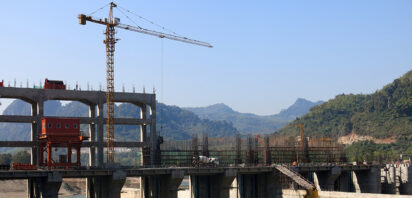
Besides the Kambarata‑1, Bishkek is also focused on the ongoing development of the Kulanak hydropower plant, intended to significantly contribute to regional energy security. As Kyrgyzstan’s President Sadyr Japarov emphasized in 2022 at the launch of the construction of the facility, ensuring the energy independence and security of the country is one Bishkek’s main priorities.
“We are currently using only 10 percent of our total energy potential. If we develop the remaining 90 percent, we will be able to sell electricity not only to the Central Asian countries, but also to Europe and China,” Japarov stressed, signaling that Kyrgyzstan’s energy strategy is not just about national development, but is also a tool for regional stability.
While pursuing its strategic goals, Kyrgyzstan may also have the opportunity to reinforce its image as a dependable partner in the global clean energy transition. By hosting and initiating transboundary water and energy projects, the country likely aims to establish itself as a leader in advancing cooperation and regional resilience. Indeed, in the region where historical rivalries and seasonal fluctuations in electricity demand have created chronic energy shortages, hydropower offers a sustainable solution that benefits multiple countries.
Projections indicate that Central Asia’s energy demand will increase by 40% by 2030 and triple by 2050. Hydropower projects like Kambarata‑1 and Kulanak are, therefore, critical not only for meeting this demand but also for mitigating environmental and social risks associated with fossil fuel dependence. By reducing reliance on coal and gas, the projects can cut air pollutant emissions by an estimated 31.4 tons per year while contributing to the region’s broader decarbonization goals.
At the same time, Kyrgyzstan’s investment in hydropower and other renewables strengthens regional energy stability, reduces dependence on imported fuels, and enhances the country’s strategic role in Central Asia’s evolving energy landscape. This combination of environmental and geopolitical significance sets the stage for intensified global competition over the region’s clean energy resources.
That is why Kyrgyzstan’s hydropower sector is increasingly becoming a platform for global competition. Just as the United States and China vie for influence across Central Asia through trade, infrastructure, and investment, the EU is asserting its own strategic presence via the energy transition. For all these powers, Kyrgyzstan’s renewable resources are not only environmentally significant, but are also politically and economically strategic.
Still, the nation’s hydropower development is most important for Kyrgyzstan itself, as it can, in the long term, ensure energy independence, support sustainable economic growth, and reinforce Bishkek’s role as a reliable partner in regional and global energy cooperation.
The views expressed in this article belong to the author(s) alone and do not necessarily reflect those of Geopoliticalmonitor.com.