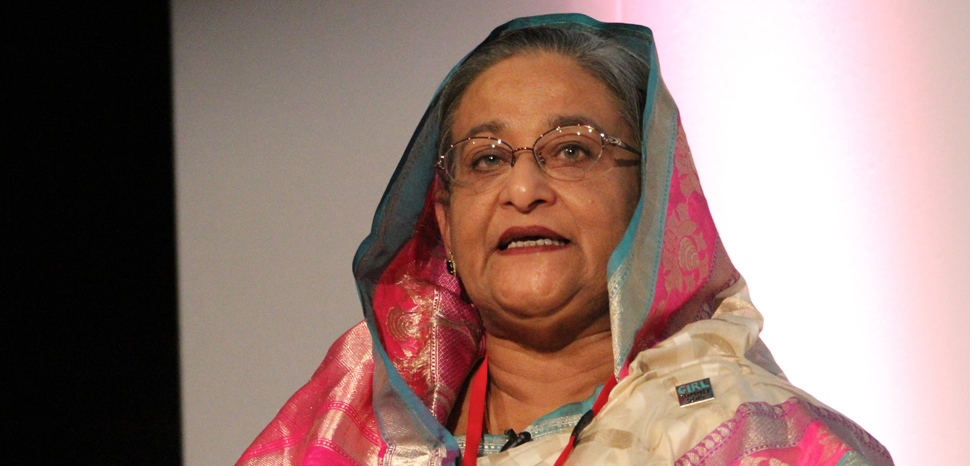
Democracy appears to be shifting into reverse in Bangladesh, where a decades-long battle between the country’s two leading political dynasties seems to have finally ended decisively in favor of current Bangladeshi Prime Minister Sheikh Hasina. Since 1981, she has headed the ruling Awami League, a party that has been in power since late 2008. Sheikh Hasina is one half of the infamous “Battling Begums,” and she has just managed to jail her longtime rival Khaleda Zia, leader of what was once Bangladesh’s second national party, the Bangladesh Nationalist Party (BNP). The trial also took care to sentence Zia’s son and political heir, Tarique Rahman, to ten years in prison should he ever be foolish enough to return to Bangladesh from London (where he has been in hiding since 2008 to avoid a raft of criminal charges).
Neither the Zia/Rahman dynasty nor the BNP have clean hands, but the decapitation of the main opposition party signals the collapse of Bangladesh’s traditional two-party system as it has existed since democracy was restored there in 1991.
Background
The jailing of Khaleda Zia represents a culmination of events that began with Sheikh Hasina and the Awami League winning general elections in December 2008. Since then, Sheikh Hasina has moved decisively against her political enemies, using a controversial war crimes tribunal set up in 2010 to decimate the leadership of the Jamaat-e-Islami party (a key BNP ally) with a slate of executions. Hundreds of Bangladeshis were killed during violent rioting between protestors marching for and against the tribunal’s verdict.
The BNP has also seen its leadership cadres targeted ahead of upcoming elections in 2018, with BNP spokesman Rizvi Ahmed claiming that some 3,500 opposition activists and officials were swept up by security forces seeking to head off a violent response to the conviction of Khaleda Zia.