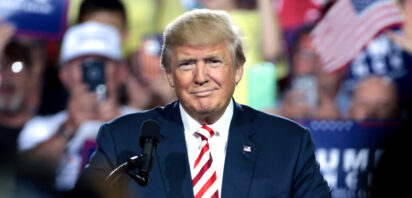
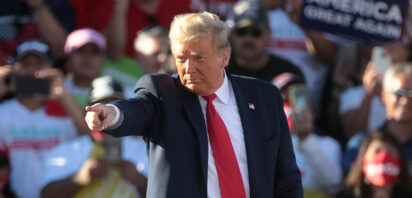
Trump, transactionalism and tariffs – much of the recent and ongoing analysis about global affairs and geopolitics seem to revolve around these few phrases. The manifestation and relentless commentary on these ‘catch-phrases’ through trade relations, diplomatic engagements, and the whimsical demeanor of President Donald Trump have only reinforced their centrality in framing the discourse on global geopolitics. Yet, discourse must go beyond run-of-the-mill commentaries that exploit ongoing, clichéd narratives, endlessly reproducing similar arguments. This resembles a reductionist paradigm of traditional natural sciences. A field as robust and diverse as international relations warrants a more interlinked approach—one that refuses to treat prevailing idioms and arguments surrounding complex topics, such as the policies of the current US administration, as conclusive. This ensures the discourse remains open to construction and interpretation, notwithstanding the strength of dominant narratives.
Against this backdrop, a review of the United States’ strategic posture across presidencies, a rereading of the China factor, and options for India navigating a world where moral filters are eroding and questions of survival and self-interest are resurfacing, is merited.
Transactionalism in US Foreign Policy
In the conduct of their foreign policy, US presidents have often employed transactional methods. In the early 20th century, Theodore Roosevelt, to ensure debt payments to US creditors, pledged security guarantees to governments in Latin America against external (mostly European) and internal interventions. In the mid-20th century, President Eisenhower used diplomatic and financial pressure to force Britain and France to withdraw their forces from Egypt after its nationalization of the critical Suez Canal. Britain, blocked from IMF assistance, eventually caved to US pressure and withdrew its troops after accepting a US-brokered ceasefire. Noteworthy here is that the United States also publicly denounced Britain’s and France’s actions—pressing the United Nations to condemn the military action of its closest allies.
In recent years, President Joe Biden put in place export controls and tax incentives to harmonize policies on emerging technologies with those of allies. Japan and the Netherlands have limited the sale of advanced semiconductor equipment to China. These steps continued President Trump’s first-term measures, such as banning US companies from dealing with Chinese telecom giant Huawei. While Trump’s abrasive policies require separate inquiry, here we see notable policy continuity across administrations. Strategic interest remains paramount for the United States, and the optics around its current policy blitzkrieg, amplified by incessant media coverage, should not be seen merely as a rupture. Considering strategic interest, it is vital to take stock of the all-pervasive China factor, especially amid today’s geopolitical upheavals that could alter the global power equation. As the two largest economies, the trajectory of US-China relations toward the decade’s end and beyond demands further analysis.
Cautious Belligerence: The China Factor
US-China rivalry and competition have been a pervasive factor in global politics and a unit of popular analysis for the past two decades. But in the post-COVID era, the analysis has intensified as hitherto less discussed issues like supply chain management, critical minerals, and industrial policy took center stage owing to vulnerabilities exposed during COVID. Ideological connotations surrounding intensifying US-China tensions aside, it also became apparent that both countries share a degree of interdependence. To put into context, China’s GDP stands at around $18 trillion dollars, behind the $28-29 trillion dollars of the United States. This is a different scenario from the Cold War era where the economic disparity between the U.S. and Soviet Union was nearly as wide as the ideological gap between them.
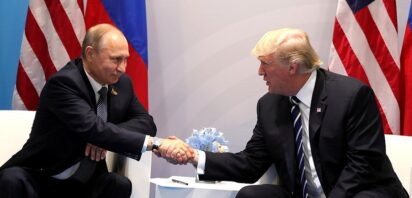
The case with China is different insofar that the economic disparity between the two apex powers is not nearly as significant. In the Cold War rivalry, economics and security drifted as priorities, but today they are increasingly coalescent in US-China relations. To cite another statistic, both countries, owing to their economic might, are emerging as leading technology hubs globally. Of the nearly 4,500 technology and intelligence companies in the world, about 2,000 and 1,300 operate in the U.S. and China respectively. This helps to explain the narrowing gap between US and Chinese national power, and also Trump’s extension of tariff deadlines and sparing Beijing the moral rhetoric directed at India concerning the Ukraine war. The purely doctrinal analysis of great power rivalry that assumes belligerence between rival great powers—as theorized by scholars like John Mearsheimer—apart, it must also be noted that considerable interdependencies exist between the U.S. and China. This feature of global politics holds implications for India, much like many other countries.
A Way Forward for India
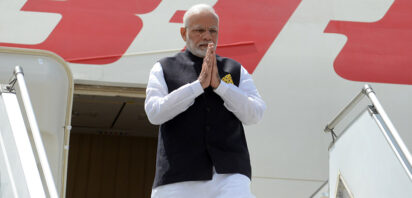
India’s diplomacy and foreign policy must strike a cautious balance between substance and symbolism. This is especially critical when global developments or new initiatives involving India are often followed by unperceptive analysis across media and academia. A clear example is the discourse around multi-alignment, now a celebrated idea in India’s strategic discussions. Its fair success aside, it must still translate into an actionable blueprint that enables India’s space to maneuver in today’s world. A case in point is the maintenance of strong ties with Russia even as relations progressively improved with the U.S. over the past two and a half decades.
Once questioned by many, this approach is proving beneficial today. While mainstream analysis fixates on the US-China rivalry, Russia has real anxieties about China exerting disproportionate influence in Asia and Eurasia. Under the academic construct of ontological insecurity—pertaining to a state’s perception of its place in the regional or international setting—Moscow is wary of Beijing’s expanding strategic and demographic influence in Central Asia and the Far East. In such a scenario, a strong India provides Moscow a reasonable counterweight to China, just as the U.S. views India similarly in the Indo-Pacific.
Moreover, the relative parity in US-China relations necessitates reviewing India’s ties with another formidable middle power, Japan. Both share maritime and land borders with China, making them more vulnerable to its assertive behavior, unlike the geographically distant U.S. Hence, while security ties with the U.S. remain valuable, over-reliance on US assurances would be counterproductive for both Asian powers. Augmenting their comprehensive national power (CNP) is the only realistic way ahead. The recent joint declaration on security cooperation is more than a formal step; it presciently understands the far-reaching implications such cooperation will hold in the 2025-2035 period.
France is equally vital to this security calculus owing to its historical skepticism of US foreign policy. Its decision to develop its nuclear deterrent, the ‘force de frappe,’ partly stems from that skepticism. As a resident Indo-Pacific power and one of India’s most reliable strategic partners, France is indispensable. Given today’s geopolitical upheavals, a France-India-Japan trilateral can emerge as a vital pillar of security in the Indian Ocean and adjoining regions.
Takeaways
The study of international relations and geopolitics ought to stay rooted in historical patterns, even as rapid technological changes and 24/7 news cycles challenge critical thinking. US foreign policy, despite shifts in tone across administrations, has persistently pursued national interests—a reality that will shape its dealings with major powers, including India. US-China rivalry, though marked by competition, is also marked by interdependence, a duality that shall define their relationship in the coming years.
For India, 2025-2035 will be decisive in piloting its economic growth and future stature as a major world power. With the right mix of proactive and corrective policies, gains made during this period can be stabilized later, ensuring consolidation of its comprehensive national power. Navigating this phase will require institutional wisdom, quiet capacity building, and application of emerging technology—while avoiding triumphalism. Indian commentators must move past flattery and engage in critical analysis of policies. As Winston Churchill once remarked: “The more you can look back, the farther you can look ahead.”
The views expressed in this article belong to the author(s) alone and do not necessarily reflect those of Geopoliticalmonitor.com.