Geopolitics Weekly contextualizes emerging geopolitical trends around the world, distilling the cacophony of global events into one easy reader. It lands in the inbox of Geopolitical Monitor subscribers every week.
Middle East
US B-2 Bombers Strike Iran Nuclear Sites
What Happened
On June 22, the United States launched a coordinated military strike on three key Iranian nuclear facilities: Fordow, Natanz, and Isfahan. The strikes followed more than a week of sustained Israeli bombardments that commenced on June 13 and targeted Iranian missile launch sites, air defense systems, and nuclear infrastructure. The U.S. action, which was not preceded by Congressional authorization, was confirmed hours later by President Donald Trump in a public statement on Truth Social and through a nationally televised address.
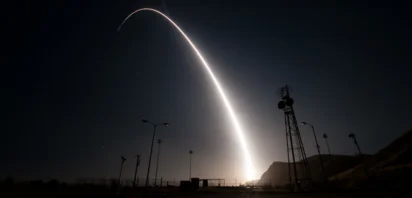
The US Air Force deployed B-2 Spirit stealth bombers (long-range aircraft capable of evading sophisticated radar systems) to deliver multiple GBU-57 Massive Ordnance Penetrator (MOP) bombs against the Fordow Fuel Enrichment Plant. This facility, embedded deep within a mountain and fortified to withstand conventional attacks, had been beyond the reach of Israeli munitions. Simultaneously, 30 Tomahawk Land Attack Missiles (TLAMs) were launched from submerged US Navy platforms against the Natanz and Isfahan nuclear installations. These locations were previously damaged by Israeli strikes but had remained partially operational.
Iranian state media acknowledged that the sites had been struck and claimed that critical materials and personnel were evacuated in advance, suggesting some level of early warning or anticipation. They further asserted that no radiation leaks had occurred and insisted that Iran’s technical capacity and scientific knowledge base remained untouched. In official communiqués, the Atomic Energy Organization of Iran emphasized that while hardware may be rebuilt or replaced, the expertise of Iranian scientists is impervious to physical destruction.
In reaction to the US escalation, the Houthi movement in Yemen announced the termination of its ceasefire with Washington and declared a resumption of military operations in the Red Sea theater. Iranian-aligned Shiite militias operating in Iraq and Syria issued similar threats, warning of retaliatory attacks on US interests in the region. In anticipation of such responses, US forces stationed at military installations across the Gulf (particularly in Iraq, Bahrain, Qatar, and Kuwait) were placed on the highest defensive posture.
Why It Matters
The US strike marks a strategic rupture in the structure of the Israeli-Iranian conflict. What began as a limited Israeli operation aimed at degrading Iranian military capabilities has now escalated into a two-front war with US participation. This shift fundamentally alters the deterrence landscape in the region and signals a recalibration of US strategic posture in the Middle East.