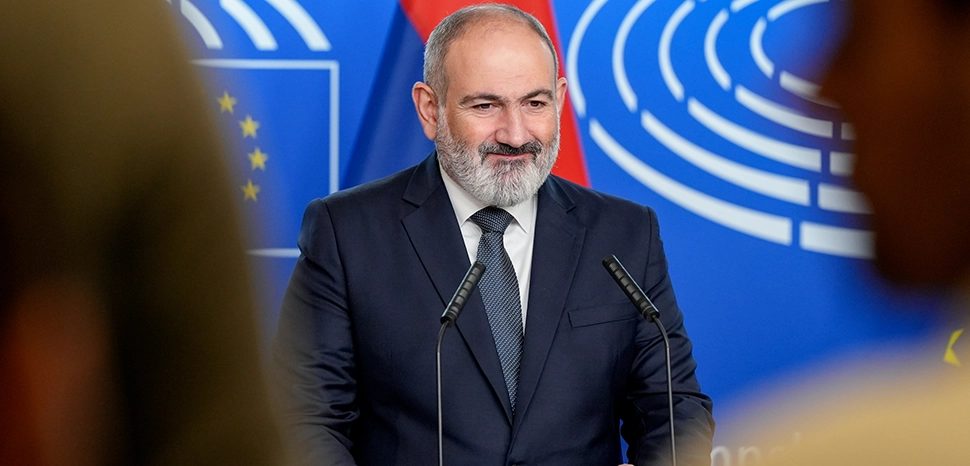
As Armenia prepares for parliamentary elections on June 7, many observers view the vote as a potential turning point not only for the country’s domestic politics but also for its foreign policy trajectory. The elections could also prove decisive for the fate of the prospective peace treaty with Azerbaijan. The military and political consequences of the 2020 war, the subsequent peace process, and the deep-seated sense of security anxiety within Armenian society have increasingly linked Yerevan’s diplomatic maneuvering to domestic political dynamics and electoral calculations.
The impact of Armenia’s electoral climate on peace negotiations, border delimitation, and the unblocking of regional transport routes with its long-time adversary, Azerbaijan, demonstrates how internal political competition can shape broader regional stability. In the run-up to the elections, political debate has largely revolved around a contrast between the incumbent government’s self-proclaimed peace agenda and what its supporters describe as the revanchist rhetoric and populist discourse of the opposition.
In this context, the ballot box may ultimately determine the outcome of several critical questions: whether Armenia continues its gradual turn toward the West or reorients itself toward Russia, and whether the peace process with Azerbaijan advances or faces renewed uncertainty.
Geopolitical Choices at the Ballot Box: The West–Russia Divide
Electoral politics in Armenia have increasingly moved beyond conventional socio-economic debates, turning the domestic political arena into a contest over the country’s geopolitical future. At the heart of this struggle lies the growing polarization between advocates of closer ties with the West—the United States and the European Union—and supporters of maintaining Armenia’s traditional strategic partnership with Russia.
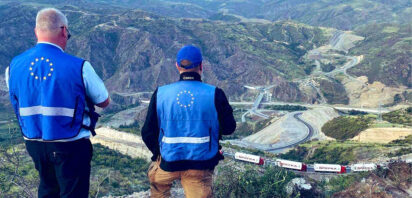
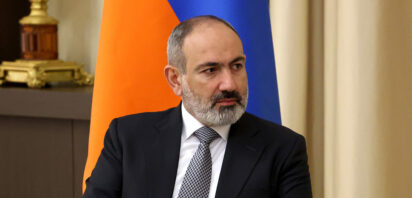
Prime Minister Nikol Pashinyan and his ruling team have pursued a policy of closer engagement with Western actors, presenting it as an effort to diversify Armenia’s security architecture. The suspension of Armenia’s participation in the Collective Security Treaty Organization (CSTO), the deployment of the European Union Mission in Armenia (EUMA) along the border with Azerbaijan, and the expansion of cooperation with Western institutions are frequently cited as evidence of this course. For government supporters, deeper engagement with the West is portrayed as the most viable path toward strengthening Armenia’s sovereignty and strategic autonomy. Yet Yerevan has shown no intention of withdrawing from other Russia-led structures, most notably the Eurasian Economic Union (EAEU), highlighting the pragmatic limits of its geopolitical reorientation.
On the other side of the political spectrum stand the principal opposition forces, including representatives of the former political establishment associated with former president Robert Kocharyan, influential figures within the Armenian Apostolic Church, business elites with strong ties to Russia, and nationalist groups. Separately, they advocate preserving Armenia’s close strategic relationship with Moscow and argue that distancing the country from Russia would have severe security consequences. Opposition leaders accuse Pashinyan of transforming Armenia into a vehicle for Western geopolitical interests and of weakening the country’s traditional security partnerships.
Public opinion surveys reveal a deeply divided society, with significant differences in attitudes toward Russia and the West. As a result, Armenian elections are increasingly becoming contests not merely between competing policy platforms but between rival geopolitical visions of the country’s future.
Ideological Polarization and the Peace Process
Under the banner of a “Real Armenia”—one that abandons aspirations tied to historical territorial claims—Prime Minister Nikol Pashinyan and his Civil Contract party are campaigning in support of a final peace agreement with Azerbaijan. Their objective is to bring an end to decades of conflict through the mutual recognition of territorial integrity and the normalization of regional relations. Such an outcome could pave the way for the opening of borders with both Azerbaijan and Turkey, Azerbaijan’s closest ally, while facilitating Armenia’s integration into emerging regional connectivity initiatives like the Middle Corridor.
Pashinyan’s vision may be described as a model of “pragmatic peace.” It is based on acknowledging existing geopolitical and military realities, recognizing Azerbaijan’s territorial integrity, and unblocking regional transport and communication links, including through Armenia’s proposed “Crossroads of Peace” initiative. Presented domestically under the concept of “Real Armenia,” this approach seeks to redefine Armenian statehood within its internationally recognized borders and move beyond longstanding territorial disputes with both Azerbaijan and Turkey.
Accordingly, the ruling party portrays the peace process as a strategic opportunity to secure stability, economic development, and regional integration. At the same time, government representatives warn that a victory by opposition forces could undermine ongoing negotiations and increase the risk of renewed confrontation between Armenia and Azerbaijan.
The opposition advances a markedly different understanding of peace. The predominantly pro-Russian opposition argues that any agreement reached with Azerbaijan and Turkey without a robust Russian security presence would jeopardize Armenia’s long-term security and sovereignty. In this view, stability is achieved not primarily through reconciliation and cooperation, but through the preservation of a favorable balance of power.
Yet despite sharply criticizing Pashinyan’s negotiations with Azerbaijan and accusing his government of making excessive concessions, opposition forces have struggled to articulate a coherent alternative strategy. While advocating what may be termed an “honorable peace,” they have provided few concrete details regarding the terms of such a settlement or the mechanisms through which it could realistically be achieved under current regional conditions.
Three Election Scenarios in Armenia
Against this backdrop, three broad scenarios can be envisioned regarding the impact of Armenia’s election outcome on the future of the peace process and regional stability:
Scenario 1: Pashinyan Secures a Constitutional Majority
A decisive victory by Prime Minister Nikol Pashinyan and the Civil Contract party, resulting in a two-thirds parliamentary majority, would provide the government with the political capital necessary to advance its peace agenda. Most importantly, it could enable the authorities to initiate a constitutional referendum—an issue closely watched by Azerbaijan. Baku expects the removal or revision of constitutional provisions that it interprets as containing territorial claims against Azerbaijan. Widely regarded as one of the final major obstacles to a comprehensive peace agreement, successful constitutional reform could significantly accelerate the normalization process and create more favorable conditions for lasting peace.
Scenario 2: Pashinyan Wins a Simple Majority
A second scenario would see the incumbent government retain power but without a constitutional majority. While such an outcome would preserve the current political course, it would leave the government with fewer instruments to address constitutional issues that have become central to negotiations with Azerbaijan. As a result, the future trajectory of the peace process, border delimitation, transport connectivity, and broader regional normalization would remain uncertain. Negotiations could continue, but progress might become slower and more politically contested.
Scenario 3: Opposition Victory and a Shift in Strategic Orientation
A victory by a coalition of the principal pro-Russian opposition forces could significantly alter the current trajectory of the peace process. Such a government might seek to reassess or suspend aspects of the existing negotiations while prioritizing closer security cooperation with Moscow. This could deepen mutual distrust between Armenia and Azerbaijan and increase tensions along the border. Efforts to restore a more traditional Russia-centered security framework could also lead to a prolonged stagnation of peace talks, raising the risk of periodic crises and localized confrontations.
The Risk of Post-Election Instability
Beyond these electoral outcomes, another possibility deserves consideration: a period of prolonged domestic instability. A fragmented election result, disputed outcomes, or dissatisfaction among political actors could trigger mass protests and political paralysis. Radical groups on the political margins may attempt to exploit uncertainty and social tensions. Reports and speculation regarding the possible mobilization of Armenian citizens residing abroad, particularly in Russia, have further contributed to concerns about potential post-election turbulence. While such scenarios remain speculative, they underscore the extent to which domestic political developments may influence not only Armenia’s internal stability but also the broader regional security environment.
The views and opinions expressed in this article are those of the author alone and do not represent those of Geopoliticalmonitor.com