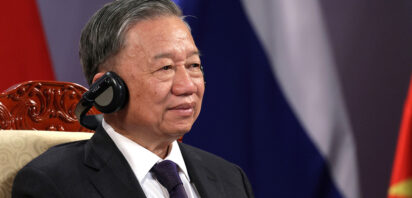
To Lam has done what few Vietnamese leaders have managed in decades: he has gathered the levers of party and state power firmly into his own hands. Re-elected as general secretary and poised to assume the presidency, Lam now presides over Vietnam’s most centralized leadership structure since the postwar era — a consolidation that could redefine Hanoi’s trajectory at home and recalibrate its delicate balancing act with Washington.
The implications for US–Vietnam relations are profound.
Lam’s ascent signals the end of Vietnam’s more diffused collective leadership model and the rise of a concentrated power structure designed to accelerate decision-making. The newly selected 19-member Politburo, Vietnam’s top decision-making body, reflects this shift. While no formal announcement has yet confirmed Lam’s presidency, its composition strongly suggests that executive and party authority will soon reside in a single pair of hands.
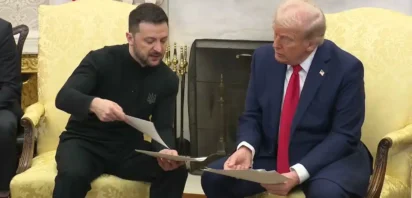
For Washington — particularly under a second Trump administration that openly favors dealing with powerful, centralized leaders — this may not be unwelcome.
Lam’s consolidation is not simply about political dominance. It is tied to an ambitious economic blueprint. Hanoi has set a bold target: annual growth of 10% or more between 2026 and 2030, driven by high-tech manufacturing, digital transformation, and private-sector expansion. To achieve it, Vietnam must secure capital, technology and market access from abroad — especially from the United States.
That economic imperative explains Lam’s pragmatic foreign policy posture. Despite periodic trade frictions and persistent US concerns over Vietnam’s trade surplus, currency management, and market access barriers, Lam has pursued flexibility over ideology. His swift acceptance of a US invitation to join a “Board of Peace” — a move considered unusually rapid by Hanoi’s typically cautious diplomatic standards — underscored his readiness to engage Washington, including under President Donald Trump.
The message was clear: Vietnam’s economic modernization requires stable ties with the United States.
Yet Lam’s consolidation also introduces complexity. Vietnam has long practiced a careful balancing act between Washington and Beijing. A more centralized leadership structure could either sharpen that balancing strategy or narrow the space for internal debate that previously moderated policy swings.
“Until Vietnam gets market economy status from the US or its tariffs lowered, economic friction will impose a limit on the US-Vietnam partnership,” says Dr. Khang Vu, a visiting scholar in political science at Boston College.
Lam’s political instincts suggest continuity rather than rupture. He understands Vietnam’s structural reality. China remains Vietnam’s largest trading partner and a dominant geographic and strategic presence. The United States is Vietnam’s largest export market and an indispensable source of advanced technology and investment. Vietnam’s prosperity depends on both relationships.
The difference now lies in execution. With authority concentrated at the top, Lam may move more decisively on reforms that previous consensus-driven leadership circles approached cautiously. That could include deeper regulatory adjustments to attract US semiconductor and artificial intelligence investment, greater clarity on digital governance rules that have unsettled American firms, and expanded energy cooperation — including long-term US liquefied natural gas contracts that would help narrow the bilateral trade gap.
Such steps would align with Washington’s economic and strategic priorities. The United States seeks supply chain diversification away from China, stronger semiconductor ecosystems in Southeast Asia, and reliable Indo-Pacific partners willing to balance Beijing’s influence without provoking open confrontation.
Lam’s consolidation may enable Vietnam to move faster in that direction.
At the same time, the optics of a stronger, more centralized Vietnamese leadership resonate with Trump’s own governing style. The US president has often expressed admiration for leaders who project authority and control. In Lam, he will find a counterpart who commands his political system and can deliver on commitments.
But strongman symmetry should not be mistaken for strategic alignment.
Vietnam’s foreign policy doctrine remains rooted in independence, self-reliance, and multilateralism. Hanoi will resist any appearance of becoming a formal US ally or a frontline state in great power rivalry. Lam’s power may allow him to negotiate confidently with Washington, but it will not make him subordinate to it.
There are also risks. A highly centralized leadership can accelerate reform, but it can also narrow policy feedback channels. Vietnam’s remarkable economic rise over the past three decades has been built on cautious, iterative experimentation. If political consolidation dampens internal debate, policy missteps — particularly in areas like financial regulation or digital governance — could carry greater systemic consequences.
For the United States, the challenge will be to engage Lam’s Vietnam in ways that support economic reform without triggering nationalist backlash. Pressuring Hanoi aggressively over trade imbalances or currency issues could complicate Lam’s reform agenda and strengthen more conservative voices within the system.
Conversely, constructive engagement — particularly in technology transfer, clean energy, maritime security cooperation and education — could reinforce Vietnam’s trajectory toward higher-value growth and deeper global integration.
Lam’s consolidation ultimately reflects confidence rather than insecurity. Vietnam’s leadership believes the country is ready to move into a new phase of development — one that requires speed, coherence and political authority at the top.
Whether that model delivers sustained 10% growth remains uncertain. What is clear is that US–Vietnam relations are entering a more personalized phase. Decision-making in Hanoi will increasingly flow through a single political center. Washington will find a leader capable of decisive action — and equally capable of defending Vietnam’s strategic autonomy.
In an era of strongman diplomacy, To Lam’s Vietnam is not tilting toward Washington or Beijing. It is positioning itself to bargain with both — from a position of consolidated strength.
For the United States, the opportunity lies in recognizing that strength not as a threat, but as a platform for partnership.
James Borton is a non-resident senior fellow at Johns Hopkins SAIS Foreign Policy Institute and the author of Harvesting the Waves: How Blue Parks Shape Policy, Politics, and Peacebuilding in the South China Sea.
The views expressed in this article belong to the author(s) alone and do not necessarily reflect those of Geopoliticalmonitor.com.