A new security deal between China and the Solomon Islands is the latest reflection of a global order in flux.
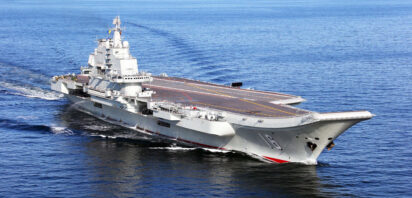
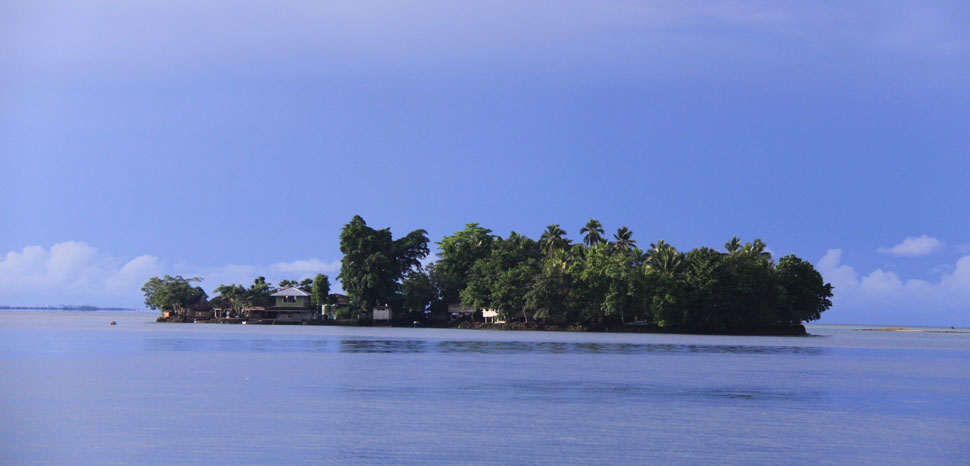
While some of the specifics of the deal remain unclear, it’s evident that China has been granted the authority to station security personnel on the tiny Polynesian archipelago. This includes both police and military personnel, allowing for the possibility of a PLA Navy military base some 2,000 km off the east coast of Australia at some point in the future.
The deal represents three geopolitical developments worth noting. First of all is the secrecy surrounding the negotiations. This was an agreement that, despite persistent local rumors, no one even knew about until a draft text was leaked in March – including members of the political opposition. The nature of the text was also fairly one-sided, with rights being extended to Beijing for seemingly nothing in return (though in fairness, the quid-pro-quo involved might extend into other areas/agreements not obvious at this time). In sum, given the secrecy of the deal and its corresponding direct deployment of security forces, it allows for Beijing to become directly involved in the domestic politics of the archipelago.
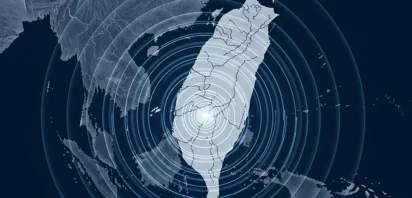
This leads into the second development of note: the domestic bent of the deal makes sense given the domestic threats posed to ethnic Chinese in the Solomon Islands. Recall that the Solomon Islands used to be situated squarely outside the orbit of the People’s Republic of China, and was one of the handful of countries that extended official diplomatic recognition to Taiwan. This changed in 2021, after which a protest movement broke out in the Islands against the decision by Prime Minister Manasseh Sogavare to switch diplomatic recognition. These protests quickly took on a conspiratorial dimension focused on the supposed malign influence of Beijing, eventually spinning out of control into riots directed at the local ethnic Chinese population. In the heat of the unrest, Beijing was given permission to dispatch an armed squad of soldiers in order to secure the Chinese Embassy in Honiara. Such riots are far from the historical exception, too, as anti-Chinese and anti-Asian violence has been hardly uncommon in the Solomon Islands and wider Polynesia.
Thus, the new security agreement should be assessed in light of these two trends in the domestic politics of the Islands. First is the threat posed to ethnic Chinese; this is a problem for Beijing because, similar to Russia, it has staked its political legitimacy on representing the interests and protecting ethnic Chinese around the world. Second, anti-Chinese suspicion runs deep in the Solomon Islands, a tendency that’s only likely to increase in light of this recent revelation of a top-secret security deal that was negotiated outside the normal channels of political deliberation.
The development that’s attracting the most attention however is the potential for the deal to pave the way for a PLA Navy base in Polynesia, right in the middle of Australia and New Zealand’s geopolitical backyard. Note here that the key word is potential – this is likely by design because, as argued above, there are domestic political considerations that are arguably of a higher order than the foreign security interests that would be served by a military base. Moreover, the two-tiered nature of the agreement allows Beijing to assess the international fallout before committing itself to building a new military base.
China’s projection outward into the Pacific is a foregone conclusion, necessitating as it does the accompanying refueling and support facilities that such a projection capacity brings. In other words, if not the Solomon Islands, it will be somewhere else eventually. Still though, the move is nothing if not bold given the Islands’ proximity to New Zealand and Australia, and their historically falling within the latter’s sphere of influence. But one can’t help but wonder about the timing of the official signing of the agreement two weeks ago. Not only has China’s support of Russia’s Ukraine war reinforced the Cold War framing of global politics, but Australians are about to head to the polls in a general election, with news of the security deal being viewed by many as a vindication of Prime Minister Morrison’s hawkish China stance. The Cold War frame is also glaringly obvious in Washington’s response to the deal. A US delegation recently visited the island and issued ambiguous warnings of some kind of US response in the event of a permanent Chinese military facility being established. For his part, Prime Minister Sogavare has maintained that no such facility is being planned, but we know that under the terms of recently-signed deal, such a facility has now become legally possible.
In the statements of the US delegation and the election platforms of Australian political parties, there’s an implicit suggestion that the West ‘lost’ the Solomon Islands by allowing China to offer it a better economic deal and, by extension, the solution is to lure the archipelago back into the fold by sweetening the deal. If not, there’s a risk of an ideological antagonist establishing a military base nearby. Could there possibly be a more Cold War dynamic than this?