At the foundation of modern strategic behavior lies an unavoidable dilemma: no state, regardless of its territorial expanse or military ambition, can allocate equal vigilance to all frontiers. The imperatives of geography, resource scarcity, and threat immediacy compel states to concentrate force where perceived danger is most acute. The recent leak of an internal report from Russia’s Federal Security Service (FSB), detailing Chinese espionage activities on Russian soil, brings this logic into sharp relief.
Russia’s decision to shift counterintelligence resources from its eastern territories to the western theater, primarily Ukraine, has resulted in a visible degradation of surveillance and defensive posture in the Far East. The Ukraine war has precipitated the redeployment of high-grade intelligence assets, including signals intercept units, field operatives, and technical analysts, at significant cost to active monitoring capabilities in the Far East, and notably in sparsely populated but strategically vital regions adjacent to China. This mass relocation of military assets and counterintelligence personnel creates an exploitable window for Beijing, a vacuum with immediate consequences.
Moscow has wagered that China’s current incentives (economic cooperation, diplomatic restraint, and a shared interest in counterbalancing the West) will forestall any overt challenge to Russian sovereignty in the east. However, this is a bet, and one that assumes inertia in a strategic actor whose doctrine prizes long-term geopolitical advantage.
The essential insight: short-term crisis management can produce long-term vulnerabilities. China’s approach proceeds with cumulative precision, exploiting the invisible costs of Russia’s structural overextension.
Public Marriage, Privately Preparing for Divorce
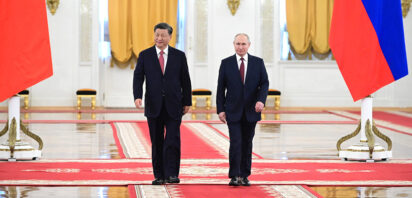
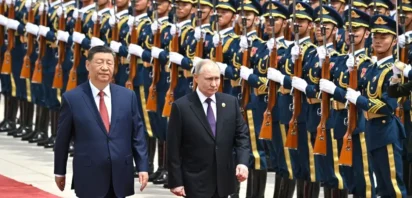
The FSB document discloses a central paradox: Russia’s intelligence services categorize China as an active threat, while its political leadership publicly affirms a “no-limits” strategic partnership. This divergence is not a failure of coherence. Rather, it is a deliberate feature of alliance management under conditions of asymmetry and necessity.
The duality rests on two governing principles:
- Russia Needs Friends: Openly labeling China as a hostile actor would fracture the diplomatic veneer of unity and risk triggering retaliatory measures by Beijing. Russia, isolated by Western sanctions and in need of Chinese economic support, cannot afford to provoke the one great power that currently enables its strategic breathing space.