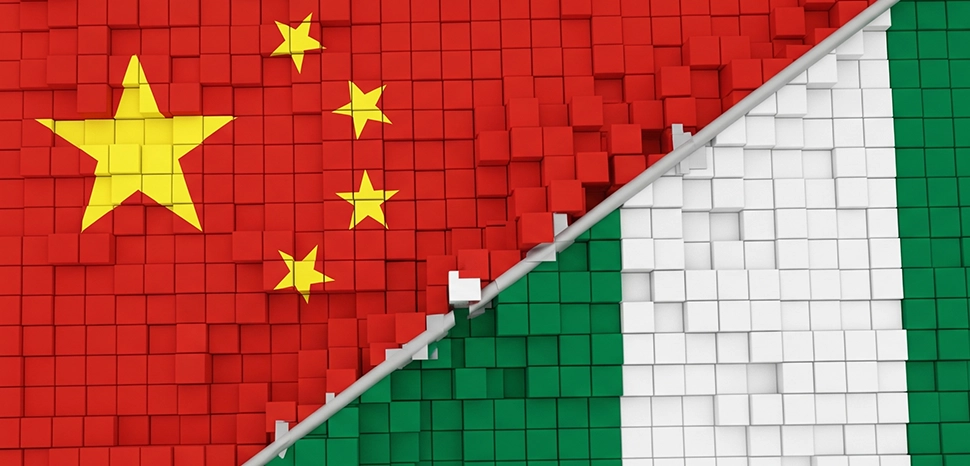
According to a 2011 survey from the Pew Research Centre, 76 percent of Nigerians have a generally positive view of China. And with Beijing providing moral and material assistance at a level most Western countries can’t compete with, it’s not too difficult to see why. Yet relations between these two countries may not always go so smoothly, for theirs is a trade dynamic full of structural challenges.
Analysis
At the risk of turning away from the shrill tone that has become par for the course of late in analyzing China’s ‘selfish’ policies towards Africa, it must be said that the trade relationship that exists between China and Nigeria is mutually beneficial in several key ways. First and foremost, the trade flows in question are substantial. Total trade volume stands at over $18 bn USD, and in terms of investment, Nigeria is China’s second-largest FDI destination on the continent after South Africa. Much of this investment goes into large-scale infrastructure projects that have the dual benefit of increasing Nigeria’s economic competitiveness and ensuring Chinese access to Nigerian resources, largely in the form of oil and gas. Thus, the list of Chinese corporations operating in Nigeria contains no surprises: Sinopec (energy), CNPC (energy), SEPCO (energy), CCECC (construction), CSEC (construction), CNOON (offshore energy), and the list goes on. There are also a handful of Chinese telecom companies vying for a piece of Nigeria’s lucrative and growing mobile phone market. Notably, there has also been a lack of large scale purchases of agricultural land, or ‘land grabs’ that have been occurring in some other African countries. Chinese companies have also displayed a sensitive attitude towards local labor at times through the adoption of relatively large local managerial quotas in co-managed special economic zones.
Thus, the first piece of the puzzle of China’s golden approval ratings in Nigeria is their ballooning trade relationship. The second piece refers to the infrastructure projects that China can take on in Nigeria. Whether the Chinese company in question is private or state-owned, they all have access to cheap and plentiful credit through China’s state-owned banks. This allows Chinese companies to outbid foreign competitors who are beholden to more risk-averse private creditors. The end result: roads, rail, air, and port links, all financed by the Chinese government.