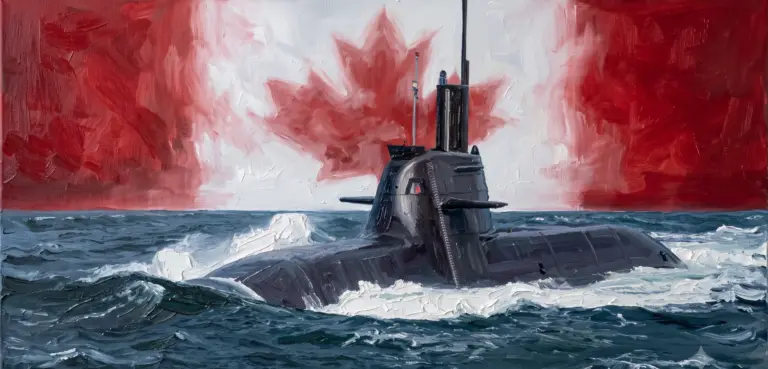
The model chosen – the 212CD class – was jointly developed for the Norwegian and German navies. The Canadian subs will be built in German shipyards at Kiel and Wismar, with first deliveries as early as 2034.
In the end it was likely geopolitical considerations that swayed Ottawa’s decision-making, the choice being long-horizon industrial cooperation with the new partner in the Indo-Pacific or the NATO partner in Europe. The TKMS bid slots the CPSP into pre-existing supply chains that route through a known quantity, rather than having to set up new ones running through a state that is still technically at war with its northern neighbor. Germany was the safer choice in this regard.
But more than anything, the TKMS bid synergizes with other recent Canadian initiatives to solidify industrial (and cultural) relations with the EU. Examples include the Carney administration joining the EU’s SAFE joint defense procurement program and the more recent establishment of the Defence, Security, and Resilience Bank (see below). The numerous joint European R&D and procurement programs developing next-generation armaments to expand the 212CD’s tactical footprint are another consideration. The TKMS bid gives Ottawa the option to join these programs outright and deepen EU-Canada cooperation or purchase the resulting armaments in full knowledge they will be compatible with the 212CD.
Europe
NATO Ankara Summit Passes with Alliance Intact
What Happened
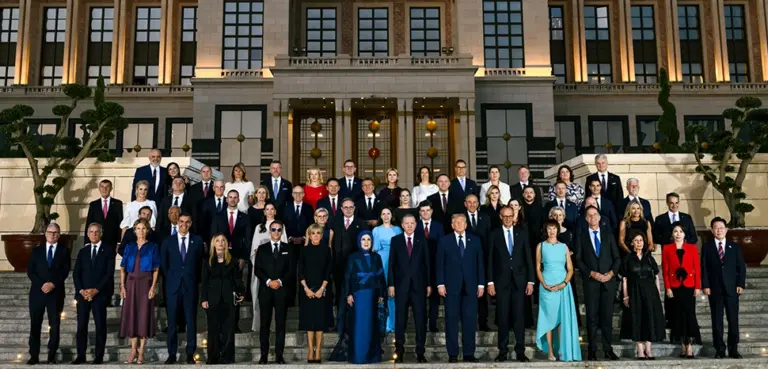
A two-day NATO Ankara summit concluded on July 8. The proceedings were at times hostile and the meeting’s scant joint declaration reflects the sharply narrowed scope of alliance business during the second Trump administration.
Why It Matters
Trump’s animus toward the transatlantic alliance is by now well established, but the evolution of the summit communiques offers a stark illustration of how NATO is viewed across different administrations. The Biden-era Washington summit in 2024 issued an expansive 38-point declaration, not including a special addendum on support for Ukraine. The Ankara summit could only muster five, one more than the Hague summit last year. And after removing cursory graciousness to the hosts and affirmations of Article 5, all that remains is a joint commitment for increased defense spending; a pledge for €70 billion in military assistance to Ukraine in 2026; and a vague nod toward adapting to ‘pervasive instability, hybrid threats, and recurrent shocks.’ In a win for US diplomacy, the declaration ends with: “Allies reiterate that Iran must never have a nuclear weapon and call on Iran to fully respect freedom of navigation in the Strait of Hormuz.”
Other developments at the summit:
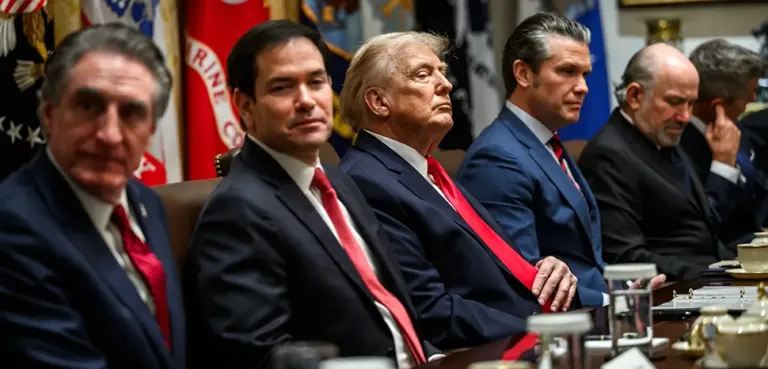
Another Trumpian NATO summit. President Trump arrived at the summit in no mood for reconciliation. At different points the US president decried the lack of NATO help with Iran, singled out Spain for its supposed betrayal, and warned that European civilization was being imperiled by immigration and energy flows. Bonhomie prevailed at the wrap-up press conference however, where Trump affirmed ‘a lot of unity’ among NATO allies at the meetings.
Greenland is back on the menu. President Trump brought Greenland back into the top-level conversation, arguing that the US ‘needs [Greenland] for the protection of the world.’ The return of the talking point likely has less to do with imminent invasion and more about leverage in ongoing talks to expand the US military and diplomatic footprint in southern Greenland.
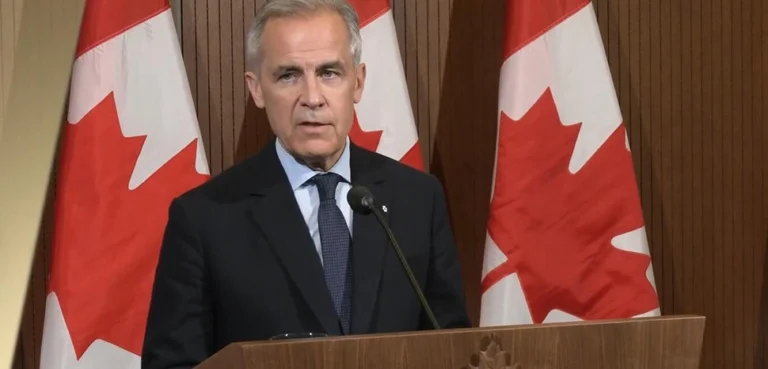
Canada proposes a new NATO bank to expedite rearmament. It’s no mistake that the phrase ‘European allies and Canada’ is conspicuously well represented in an otherwise curt summit text. The wording reflects Prime Minister Carney’s efforts to realign the Canadian military-industrial complex with Europe as a hedge against strategic overreliance on the United States. The Defense, Security, and Resilience Bank (DSRB), a new joint defense financing vehicle proposed by Carney at the Ankara summit, is the latest manifestation of this push. The DSRB is explored in greater depth in an article from earlier this week.
All told, the Ankara summit produced nothing especially new or consequential, and this is an acceptable outcome for the Europeans, whose modus operandi remains one of long-term capacity-building while working to avoid a profound breach in transatlantic relations in the short-term.
Middle East
MOU Talks Collapse as Iran and US Launch New Attacks
What Happened
The US-Iran ceasefire collapsed over the course of the week:
- Three commercial ships were struck while traversing the Strait of Hormuz on July 6, one of which was a Qatari LNG carrier, the Al Rekayyat, which is now immobilized and at risk of exploding. Details remain scant but the location of the vessels suggests that they were veering from the IRGC-approved path for traversing the Strait. The IRGC is pushing for tanker traffic to skirt the northern Iranian coast where the conventional route skirted the southern coast of Oman. The two routes lie in close proximity, with the deepwater navigable part of the Strait a mere 9.5 km wide.
- The US launched a round of strikes on southern Iran on July 7, hitting over 80 targets according to CENTCOM. The strikes were a response to Iranian attacks on shipping.
- The US launched another round of strikes on July 8 to ‘further degrade Iran’s ability to attack commercial shipping… in the Strait of Hormuz.’ The strikes targeted 90 military targets according to CENTCOM.
- President Trump declared the Iran deal ‘dead’ at the Ankara summit on July 8.
- Iran launched reprisal strikes against Gulf targets on July 9, targeting a US army fuel depot in Bahrain, US Patriot systems in Kuwait, the Azraq military base in Jordan, and a radar site in Qatar.
- The US launched a round of strikes on southern Iran on July 11, hitting 140 missile, drone, logistics, radar, and naval sites according to CENTCOM.
- A Cyprus-flagged container ship was struck and disabled traversing the Strait on July 11. The ship was using the southern Oman route at the time.
- CENTCOM declared that the Strait of Hormuz was open for transit on July 12. The CENTCOM social media posting states that pathways exist for free transit and that 140 vessels have transited the Strait over the past seven days (this doesn’t seem to be the case according to available information).
- The US launched another round of strikes targeting Iranian military installations on July 12. The language in this CENTCOM press release is notable in how it frames the rationale: ‘The Strait of Hormuz is a vital maritime corridor for global trade. Iran does not control it.’ The language was not in the preceding CENTCOM releases.
- Iran launched reprisal attacks against Gulf targets on July 13. Targets in Oman, Jordan, Kuwait, and Bahrain.
Why It Matters
The Iran war narrows on the Strait of Hormuz. The Iranian position on the Strait of Hormuz has been clear throughout the arc of the conflict: Tehran intends to alter the regulatory status quo governing shipping. The US side evidently believed that the issue was up for negotiation, despite having signed an MOU that stated ‘the Islamic Republic of Iran will make arrangements using its best efforts for the safe passage of commercial vessels, with no charge for 60 days only…’ This could stem from a genuine misunderstanding, but the more likely explanation is simply that MOUs have no enforceable weight under international law and as such tend to give way under pressure.
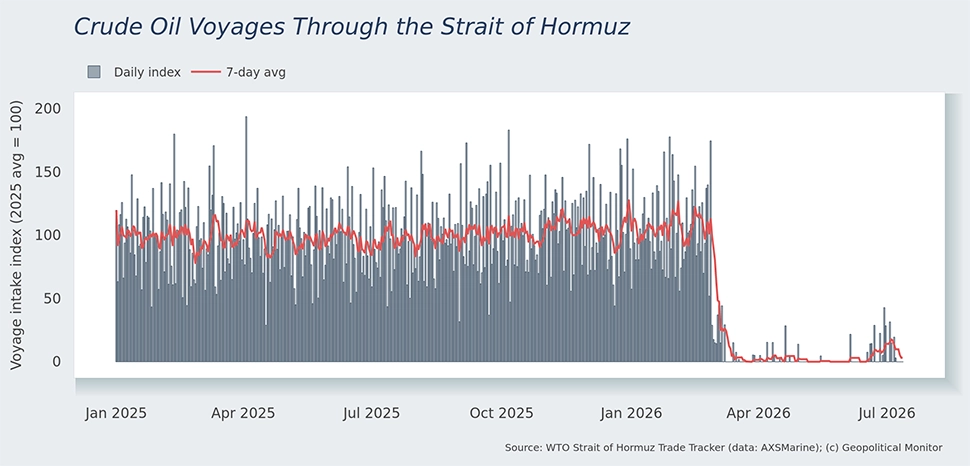
The spiral back toward war marks the unraveling of that original contradiction on Hormuz. The week began with the IRGC attempting to enforce its new regulatory regime, continued with Trump attempting to leverage NATO to pressure Iran to ‘fully respect freedom of navigation,’ and culminated with CENTCOM declaring the Strait open despite all evidence to the contrary. We know how this ends. Whether it’s Project Freedom or Washington’s attempt in March to step in as an insurance underwriter, commercial shipping interests have demonstrated that they won’t be easily swayed by US assurances so long as the risk of drone strikes and uncleared mines remains. Unsurprisingly, insurance rates are ticking upward once again amid the return of hostilities.
One interesting wrinkle is that the Iranian attacks of July 6 may have been authorized by rogue hardline elements within the Iranian regime hoping to derail the MOU talks. This checks with previous indications that Tehran was split on accepting the MOU in the first place. Whether intentional or not, the breakdown of the MOU process will be a boon for hardliners.
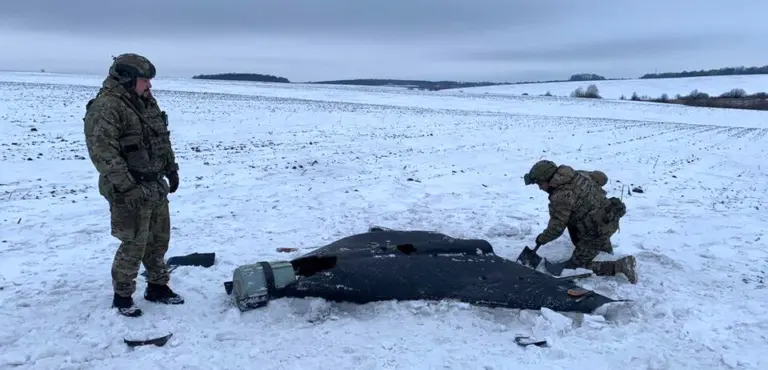
Entangled in a Trumpian knot. Whether it’s Hormuz or the nuclear issue, the same conditions that forced Trump into accepting an unfavorable MOU hold true. The war is expensive, the Strait is increasingly peripheral in US grand strategy, and drone technology allows Tehran to imperil its littoral waters at any point. If you ask the Iranian regime, domestic drone production tripled even as the country was being blanketed by US-Israeli strikes. And while this figure is likely not completely accurate, US intelligence has noted that Iranian drone production is bring reconstituted much faster than what they originally thought possible.
Geopolitics Weekly analyzes emerging geopolitical trends around the world, distilling the cacophony of global events into one easy reader. It lands in the inbox of Geopolitical Monitor subscribers every week.