As the US heads toward November elections and with Democrat Joe Biden seemingly enjoying an advantage, global speculation is mounting over whether the election will impact US foreign policy. One of the biggest questions pertains to US-China relations. Relations between Washington and Beijing have been deteriorating since Obama’s second term, and this downward tendency accelerated under Trump. With China now regarded as a ‘near-peer competitor,’ one that’s expanding its influence across the globe, responding to its rise will be a priority for the future administration. However, in spite of differences in style, a Biden victory is unlikely to alter the fundamental objectives underpinning Washington’s stance on the PRC.
Background
Biden’s views on China: from engagement to balancing
Years ago, Joe Biden had positive expectations about China’s role in the world and about the future of Beijing-Washington relations. In 2001, he supported and was directly involved in China’s accession to the World Trade Organization (WTO), a moment that marked its entrance into the globalized production chain. This was an important step in China’s transformation into the ‘world’s factory’ and it helped to trigger the country’s extraordinary economic development which, in the longer run, enabled its rise as a competing power to the United States.
In 2009, as Obama’s Vice President, Joe Biden contributed to setting up the US-China Strategic & Economic Dialogue as part of Washington’s engagement policy towards Beijing. Two years later, Biden stated “a rising China is a positive, positive development, not only for China but for America and the world writ large.” Biden’s view – widely shared in the early 2000s – was based on a liberalist perspective according to which involving China in multilateral organizations and making it part of the global trade flow would peacefully integrate it into the wider international community, democratize its political system, and ultimately turn it into a US partner.
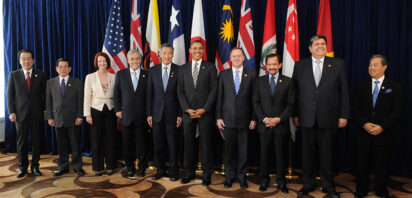
However, it soon became clear that this was a flawed assumption that failed to understand the determination of China’s leadership to resist political reform and restore the country’s status as a great power. The Obama administration – including Biden – came to understand these developments better during its second term. Adopting a ‘pivot to Asia’ policy, the Obama administration strengthened cooperation with partners in the region, it dispatched US warships to the South China Sea ub response to China’s claims and activities, it denounced Chinese cyber attacks and it promoted the Trans-Pacific Partnership (an ambitious free trade agreement involving 12 Pacific countries but not the PRC) as a geoeconomic tool to counter China’s economic power. Bilateral relations thus fell into a downward spiral that continued during Trump’s first term. China is now regarded as America’s main contender in the world, and Biden’s discourse has become markedly tougher than originally was – especially as presidential elections approached.
Biden’s China policy
Responding to the PRC’s rise will be one of the priorities of a Biden foreign policy should he prevail in November. Generally speaking, while Biden agrees with Trump on the nature of the problem, he promises a much different approach in solving it. He has abandoned his old view that China would smoothly integrate in the global supply chain and respect the rules of international trade, and like Trump he describes Beijing’s trade policies as unfair. However, he considers Trump’s sanctions as “self-defeating” and rejects the ‘phase one’ deal the President reached with China, considering it excessively favorable to the latter. Instead, Biden advocates for taking targeted measures and on exploiting trade norms in cooperation with allies. This approach lies somewhere in the middle between his old ‘pure’ liberalist view of integrating China in world trade and Trump’s protectionism: Biden still emphasizes the role of multilateral institutions, but stresses that the United States must be the rule-setter and (in a notable change from his previous stance) intends to use multilateralism to exclude rather than tame China. This was the logic underlying his support for the TPP, which he may revive if he is elected.