In late 2024, Chinese manufacturer Deye remotely disabled thousands of solar inverters in Pakistan, the United Kingdom, and the United States. This action demonstrated an unprecedented form of direct control over energy infrastructure that has received limited scholarly scrutiny. Although the manufacturer’s decision was driven by commercial incentives rather than political ones, urgent geopolitical and domestic implications emerge when considering China’s accelerating dominance in global clean-energy trade (earning its “electrostate” status by scholars) and the intensifying dynamics of contemporary multipolar economic competition. Such implications not only impact the Global South’s foreign policy, but will potentially tilt multipolar dynamics in China’s favor, owing to a political phenomenon known as asymmetric dependency (i.e., unequal bilateral state dependence). This asymmetric dependency, fueled by the booming Chinese clean-energy trade, causes lock-in in Global South countries such as Pakistan, interrupts their hedging strategies, and increases China’s soft power influence.
Rise of an Electrostate
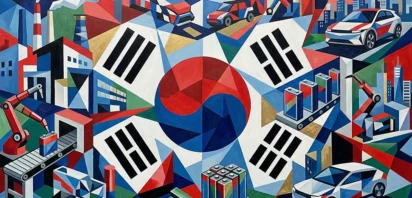
China’s growing dominance in the clean-energy market is by no means an implicit fact. Specifically, China’s clean-energy export sales (i.e., batteries, solar, wind, EVs, and grid) have reached a total of approximately 145 billion dollars in 2025, compared to around 32 billion in 2018. Altogether, Chinese factories accounted for 80% of total global solar panel production and 60% of wind turbine production, enabling them to manipulate global market pricing. This dominance extends to electric vehicles as well, with Chinese EV export sales rising 26% in 2025 over the previous year and a staggering 1600% since 2019. Furthermore, China also captured 69.4% of global power-battery installations and a 70.3% share in global EV sales in 2025 (excluding December). Among other strong indicators, these statistics justify why a majority of scholars designate China as an “electrostate” and clearly demonstrate China’s grip over global clean-energy supply chains.
Recent data indicates that clean-energy imports from China are increasing in Global South countries. While Europe/North America’s imports have “slowed,” those of the ASEAN region have risen a staggering 75% in the first half of 2025, followed by the Middle East at 72%, and both Latin America and the Caribbean at 11%. The shift in demand by the West stems from recent trade tensions with China, while the increase in demand in the latter likely centers on favorable pricing for emerging and/or low-income economies across the Global South. One of the main lurking variables to the surge in demand, however, is climate change increasing the frequency of heatwaves that prompted many Global South countries to require more energy in recent years (with the Belt and Road Initiative helping facilitate logistics). The new pivot in demand, lack of other affordable clean-energy options, and the additional fact that many Global South countries maintain a near-neutral stance in Chinese-Western politics (state hedging tactics) render the Global South vulnerable to change, which is what initially caught my attention.
Disquieting Dependencies
Some Global South states like Pakistan import Chinese clean-energy in excess, causing lock-in and transforming casual trade deals into dependent ones. For instance, in 2025, Pakistan imported a total of 51.5 gigawatts (GW) of Chinese solar modules (powering around 750,000 houses per GW). Additionally, 21.9% of Pakistan’s electricity derives from solar power in H1-2025, surging from a mere 4.4% in H1-2021. Such significant numbers indicate a new sense of dependence on China, as sophisticated products of this amount require consistent maintenance and part replacement from the same manufacturers (almost all of which are Chinese in Pakistan’s case). Moreover, Pakistan’s embedding of its state’s clean-energy sector with Chinese products makes switching to other suppliers around the world costly. In fact, it would be extremely challenging for Pakistan and other Global South countries to come close to finding a supplier that has the same capacity and competitive pricing that China possesses. This makes them suffer from lock-in, since they have no other feasible clean-energy trading partner but China.
Dependence can lead to future complications, but such complications are exacerbated when an asymmetric dynamic exists in the relationship. Asymmetric dependency is a term first theorized by Keohane and Nye in Power and Interdependence (1977), generally described as a phenomenon that strengthens the bargaining power of the less dependent state while incentivizing the more dependent state to comply. In this case, Pakistan, along with other Global South countries, are more likely to support or comply with many of China’s political demands compared with the absence of asymmetry (e.g, continued support for China’s Taiwan policy). While China does import from the Global South, these products are not as crucial as the clean energy it exports (with the exception of petrostates). In other words, if Chinese-Pakistan trade relations rupture, Pakistan would likely face severe domestic problems due to energy shortages that would take a substantial amount of time and resources to remedy, as opposed to China simply finding copper and textiles from alternative suppliers.
Hedging Blowback
Through a global lens, such asymmetry likely disrupts the hedging strategies of many Global South countries, which in turn strengthens China’s soft power influence across the world. Many Global South countries enjoy the benefits of hedging between the West and the East. More specifically, it allows countries like Pakistan to maintain military and diplomatic ties between the United States and China without full alignment, benefiting from both sides without straining relations with either major power. However, due to asymmetry and lock-in, Pakistan and other Global South countries will likely struggle to bargain their way out of choosing sides if they are pressured to do so later on. This is more probable when considering that China is capable of remotely disabling a big part of Pakistan’s energy sector (i.e., the solar inverter case). Not only could this hinder Global South countries’ ability to hedge, but it assists China in garnering more countries to support their political agendas without the need for hard power tactics. This all serves to perpetuate the initial soft power China has gained from the Global South through the Belt and Road Initiative.
The growing statistics and their repercussions mentioned above carry negative implications for world order and must be addressed. International organizations like the United Nations are proving to be ineffective and Western countries like the United States and Europe are currently turning against each other through trade conflicts and national security issues. In an unstable world, many hedging countries start choosing sides for security, and with Global South countries increasingly dependent on China, they will be more decisive than before. The balance of power seems to be under threat, with China’s aforementioned success causing a zero-sum game that could be pressuring major powers like the United States and Russia to close the gap (for example, via recent conflicts in Venezuela and Ukraine). To promote peace and avoid world instability, states must refrain from becoming overly dependent on others in order to avoid current or future alignment. The solution is for states to nurture strategic autonomy by slowly diversifying supply chains or anticipating and establishing new ones before complications arise.
The views expressed in this article belong to the author(s) alone and do not necessarily reflect those of Geopoliticalmonitor.com.