A new aggregate poll released by Pollytix Strategic Research puts Germany’s Greens ahead of Angela Merkel’s Christian Democratic Union (CDU) for the first time since 2019. The result reflects a marked turnaround in the fortunes of the green party since 2017, when it placed sixth with just under 9% of the vote. Should its popularity bump hold through to election day on September 26, Germany could be in for an eventful start to the post-Merkel era.
Analysis
The CDU’s loss has been the Greens’ gain over the past few months, and nowhere is this more evident than in changing attitudes toward the Merkel administration’s COVID-19 response. In one April poll, 64% of respondents said they were either dissatisfied or very dissatisfied with the federal government; back in November 2020 the result was essentially reversed, with 70% of respondents conveying their satisfaction.
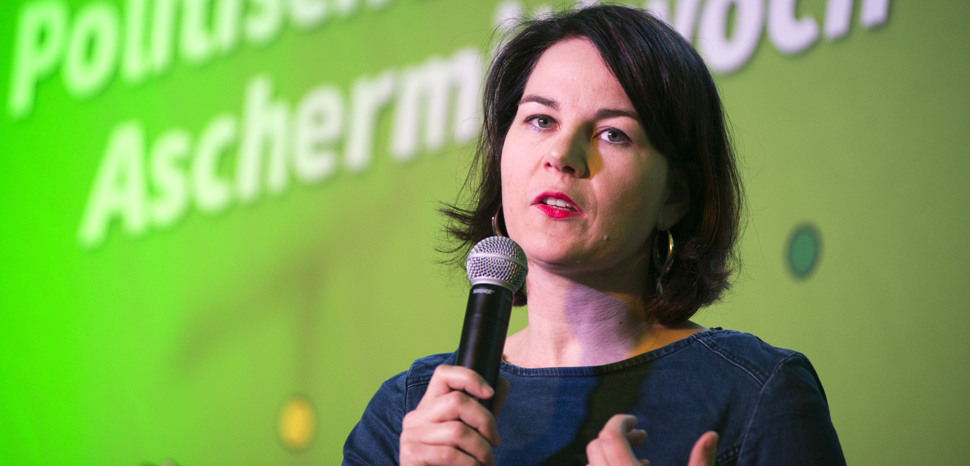
Where voters in the past might have jumped ship for the Social Democratic Party (SPD) or, more recently, the Alternative for Deutschland (AfD), this time they have been hitching their wagon to the Greens, an environment-focused, reformist party led by Annalena Baerbock, a 40-year-old MP from Brandenburg.
One poll put the Greens as much as six points ahead of CDU, with a total of 28% of the vote.
What would a Greens administration look like?
On the domestic front it would be largely as-advertised, focusing on core issues of climate change and environmental protection – though perhaps not as radically as one might assume. There’s a distinct centrist thread running through the Greens’ politics ever since the party began targeting disaffected left-leaning voters, many of whom tired of alternatives like Die Linke (too radical) or the SPD (too ineffectual). For example, the Greens policy manifesto Deutschland, Alles Ist Drin (‘Germany, everything is possible’) pledges to extend CO2 emission cuts to 70% by 2030, compared to the present 55%. Elsewhere, the manifesto makes vague pledges to invest in greenifying Germany’s heavy industries (creating a ‘social-ecological system’) and ‘commits’ to phasing out coal energy by 2030. On the much more contentious subject of phasing out combustion engine-based vehicles, the manifesto only notes its desire to achieve such a phase out by 2030 – a goal that is at once quixotic and excessively non-committal. Up to here, the manifesto could just as easily belong to the Democratic Party under Joe Biden; however, it diverges in advocating for a wealth tax, a targeted tax on tech companies like Google and Facebook, and a new domestic carbon pricing scheme (which has been panned as ‘toothless’ by members of the Greens’ own party).