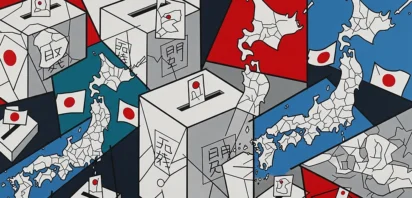
Just months after being selected by her party as leader and later the first woman to become prime minister of Japan, Sanae Takaichi announced the dissolution of parliament, which will trigger an election on February 8. The hope for her and the Liberal Democratic Party (LDP) is that she will move beyond the fragile political consensus that saw her gain power back in October to a public mandate.
Takaichi’s first few months as PM were fruitful, as recent polling showed her with high approval ratings, with more than 75 percent in a Sankei Shimbun poll and 73 percent in a survey by the Yomiuri Shimbun. The Prime Minister has also weathered political storms with China and her first encounter with US President Donald Trump, the latter of which was appeased with a golden golf club and promises to nominate the “Peace President” for a Nobel Prize.
At home however, Takaichi faces tough choices that will follow her well beyond a snap election where she’s bound to capitalize on her newfound popularity. Takaichi is following a policy script that is fraught with peril—one that aims to calm Japanese voters, but will put the country on a difficult fiscal path. In October, the LDP signed an agreement with the Japan Innovation Party to lower the consumption tax, which she characterized as a “long-held aspiration.”
Takaichi’s campaign gift for anxious Japanese voters is risky and lacks the radical honesty Japan requires. Estimates suggest that the cost of covering the suspension of food product taxation would be in excess of $31 billion, which could damage the battered yen and risk a flight from government bonds. Worse, other political parties in Japan have also made promises to increase domestic spending, which ultimately will increase Japan’s extraordinary public debt. That’s a heavy cost that both current bond holders and future generations will soon find unappealing.
For the LDP, the switch to an embrace of domestic spending is both reckless and disingenuous. The party’s pledge in October for “responsible proactive fiscal policy” now rings hollow, particularly as debt has passed 250 percent of GDP and contrary to a pledge to strengthen what is the weakest of the G7 economies. A more honest Takaichi should admit that this reversal will only drive up the cost of essentials, something that import-dependent Japan cannot afford. Eventually, the crutch of a weak yen that gives boost to exports will give way to damages a fragile economy cannot endure.
The LDP is also playing politics with the most convenient (and current) scapegoat—foreign workers. To its right, the nationalist conservative Sanseito Party has been pushing Takaichi to toughen immigration policy, particularly any expansion of immigrant labor. Nationalist sentiments lean on miscalculations of immigrant overstays and portrayals of “unruly” behavior, but fail to address the complexities of Japan’s labor market and the socioeconomic factors that workers and companies now face.
In 2024, Japan expected that by the end of the decade, it would take in more than 820.000 skilled workers in an effort to address labor shortages. But what a difference a year makes. In the heated debate caused by Sanseito’s “Japan First” rhetoric, social media was rife with misinformation about government plans for African immigrants, leading to the cancellation of exchange programmes with “sister cities” across the African continent. The LDP, which was a proponent of foreign labor and once advocated under former Prime Minister Shinzo Abe to attract more than 40 million visitors to Japan by 2020, is now handcuffed by a political arrangement with Sanseito. (Visitors to Japan in 2025 exceeded 42 million.)
The consequences of this lack of honesty can be brutal. One of the major weaknesses of the Japanese economy is low labor productivity—a term measured in GDP— and can only be improved by increasing the number of workers. In a demographic crisis that is causing a “greying” of Japan, how responsible is it to place stricter controls on foreign labor?
Caught in the middle of these reactionary policies are ordinary people. The Japan Times recently documented the plight of a Vietnamese laborer who spent a decade sandblasting ships, but is now caught up in the government’s crackdown on illegal workers. While politicians have criticized foreigners for not understanding or respecting the “Japanese way”, those seeking to integrate cannot find reasonable access to Japanese language education, where 38 percent of all municipalities lacked such capacity.
Of course, snap elections are a huge luxury for Takaichi. It would not be surprising if the LDP manages to wrestle back part of the majority it lost months ago. Snap elections also mean that Japanese voters do not have the luxury of weighing the long-term consequences of short-term policies aimed at their appeasement. But is it Takaichi, or is it Japan as a society that is uncomfortable with being honest with itself?
The views expressed in this article belong to the author(s) alone and do not necessarily reflect those of Geopoliticalmonitor.com.