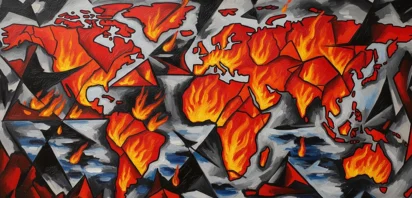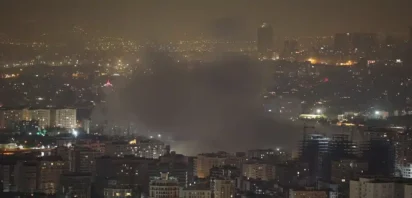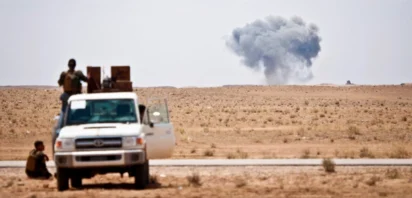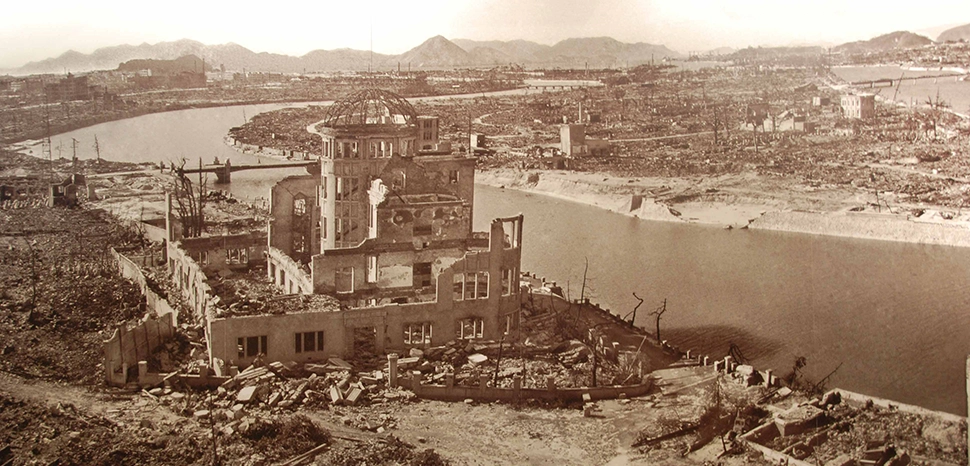
Eighty years after the atomic bombings of Hiroshima and Nagasaki, the world stands at a crossroads. What was once seen as a warning from history is rapidly becoming a blind spot in global policymaking—an absence of memory that threatens not just security frameworks but the public health and environmental systems that sustain civilization.
Memorials, speeches, and annual commemorations help preserve the emotional memory of these events, but memory itself must serve as a policy foundation if humanity is to avoid repeating its darkest chapter. In today’s geopolitical climate, where nuclear arms control frays, climate change destabilizes health systems, and nations expand their arsenals—the lessons of Hiroshima and Nagasaki must inform concrete action on multiple fronts.
Beyond the Blast: The Health and Community Legacy
The atomic bombings of Hiroshima on August 6 and Nagasaki on August 9, 1945, resulted in staggering loss of life. Estimates suggest approximately 140,000 deaths in Hiroshima and nearly 70,000 in Nagasaki by the end of 1945 from blast, heat, and acute radiation effects. In the decades since, survivors have borne the long-term health consequences of radiation, trauma, and social disruption.
Beyond individual effects, the bombings revealed how quickly formal health systems can collapse under extreme stress. Entire hospitals were destroyed, clinicians killed, and infrastructure obliterated, forcing survivors and communities to improvise care in the absence of organized response. In the immediate aftermath, neighbors became caregivers; improvised networks replaced institutional capacity. This makes clear an uncomfortable truth: public health systems can fail suddenly when catastrophe outstrips design, and when that happens, community resilience becomes the last refuge.
Climate, Health, and the Nuclear Threat
What made the Hiroshima and Nagasaki bombings distinct from other disasters was not just their destructive power but the global health and environmental aftermath. Unlike earthquakes or pandemics, nuclear detonations have the capacity to disrupt entire ecosystems, climate systems, and global food security.
Scientific evidence suggests that even a “limited” regional nuclear war—fewer than one percent of the world’s nuclear arsenals could inject enough soot into the upper atmosphere to significantly cool the planet, shortening growing seasons and triggering widespread crop failures in key agricultural regions. Such disruptions could lead to global famine and severe public health crises far beyond the blast zones, including increased disease susceptibility due to malnutrition and weakened immune systems.
Research on nuclear winter scenarios shows that smoke from fires ignited by nuclear explosions could remain aloft for years, blocking sunlight, reducing rainfall, and cooling surface temperatures; conditions that would challenge global food systems already strained by climate change. The resulting famine would not be isolated; it could imperil billions, overwhelming health systems that are already struggling with rising heat, infectious diseases, and disaster response.
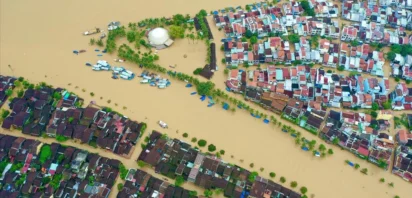
Climate change and nuclear risk are not separate threats; they are synergistic hazards. Heatwaves, droughts, and sea-level rise are already overburdening hospitals and emergency services around the world. Add even a modest nuclear conflict to that equation, and the collapse of public health systems becomes not just possible but likely.
The Policy Landscape: Erosion of Arms Control
Memory matters most when it influences policy. Over the past several years, major arms control frameworks that once anchored global stability have weakened or collapsed. The Intermediate-Range Nuclear Forces (INF) Treaty dissolved in 2019, and since then, multiple arms control norms have withered, raising fears of a new arms race.
The most consequential remaining agreement, the New START Treaty between the United States and Russia, is scheduled to expire in early 2026. New START limits each side to 1,550 deployed strategic nuclear warheads and provides verification mechanisms that reduce miscalculation risk. In September 2025, Russian President Vladimir Putin offered to extend the treaty for an additional year, underscoring how precarious this framework has become and how critical it remains to global stability.
Without New START or a successor, the world loses the last formal constraint on the two largest nuclear arsenals, undermining confidence-building and transparency. Arms control advocates warn that such a decline could embolden expansionist behavior and heighten the risk of accidental or deliberate use, risks that ripple outward to every nation, regardless of its nuclear status.
Adding to the erosion of cooperative norms, other nuclear-armed and nuclear-capable states are expanding their arsenals. Most recently, satellite imagery and expert analysis suggest that China is accelerating warhead production and modernizing facilities across multiple sites, increasing the potential for a broader and more unpredictable nuclear posture.
Meanwhile, some NATO allies are pursuing procurement decisions that critics argue may dilute disarmament commitments. For example, legal experts in the United Kingdom have contended that the planned purchase of fighter jets capable of delivering nuclear weapons could breach commitments under the Nuclear Non-Proliferation Treaty (NPT) and weaken broader nonproliferation norms.
Global Governance and the Struggle to Disarm
Despite these challenges, diplomatic efforts persist. The NPT—the most widely adhered to international nuclear agreement—remains a cornerstone of global nonproliferation, with nearly 200 state parties committed to limiting nuclear proliferation and pursuing disarmament.
Yet the NPT’s disarmament obligations have long been criticized as unrealized promises. Analysts argue that nuclear-armed states have not moved sufficiently toward comprehensive disarmament, prompting calls for concrete timelines and mechanisms to fulfil the treaty’s Article VI commitments. Some civil society organizations advocate for a framework that would reduce arsenals progressively, while shifting public investments toward public health, climate stabilization, and sustainable development.
In parallel, newer instruments like the Treaty on the Prohibition of Nuclear Weapons (TPNW), adopted in 2017, emphasize the humanitarian and environmental catastrophes of nuclear weapons and call for their total elimination. While nuclear-armed states have largely refused to engage with the TPNW, its meetings, including the Third Meeting of States Parties in 2025, continue to spotlight the shared humanitarian imperative of disarmament.
From Memory to Action: Public Health, Climate, and Community
The lessons of Hiroshima and Nagasaki are not merely historical. They are powerful evidence of what happens when technology outpaces ethics and when public systems are tested beyond their limits. They teach that formal health infrastructure can be obliterated in an instant and that communities, local, national, and global, must be the bedrock of survival, resilience, and moral advocacy.
Public health professionals have observed that even a small nuclear conflict could kill tens of millions outright and trigger cascading climate and food crises that put billions at risk, highlighting the limits of health systems that assume continuity rather than collapse.
Climate change has taught similar lessons: no health system is truly resilient if it ignores planetary boundaries. Nuclear conflict threatens to cross those boundaries in ways that modern health governance does not yet fully grasp.
Thus, preserving the memory of Hiroshima and Nagasaki is not about ceremonial remembrance alone; it is about anchoring contemporary policy in the concrete realities of human suffering, systemic breakdown, and climate vulnerability. It is about ensuring that global security is not divorced from human security.
Public health, climate stability, and nuclear disarmament are not separate policy silos. They are interlinked threads in the fabric of global survival. Forgetting Hiroshima and Nagasaki in this moment, as the last major arms control treaties falter and climate impacts grow ever sharper, would not only dishonor the past—it would imperil the future of every community on Earth.
The views expressed in this article belong to the author(s) alone and do not necessarily reflect those of Geopoliticalmonitor.com.