In an era dominated by artificial intelligence, data centers, and advanced manufacturing, Africa’s vast reserves of rare earth metals – lithium, cobalt, copper, etc. – are proving to be magnets of global interest and investment. Various countries, namely China, have long looked to African states for their resources, and until recent months, the United States seemed to have similar ambitions. However, under the banner of ‘America First’ policy, the Trump administration has disengaged, both economically and politically, from Africa, abbreviating what looks to be an ever-important relationship. This alteration risks undermining US relevance on the continent at a critical moment in the global race for technological and strategic superiority. By retreating, the United States effectively hands China and other international actors a timely advantage to deepen their foothold in Africa’s resource-rich landscape.
US-Africa Relations: Past, Present, and Future
US-Africa relations have customarily been resolved on African needs rather than American wants. In 2024, the United States provided nearly $13 billion dollars to African nations via a panoply of aid initiatives such as USAID and PEPFAR, with the principal aim being to provide relief rather than to expect returns. Even more transactional gambits, like the Lobito Corridor, which sought to increase US access to critical mineral supply chains by way of building vital infrastructure, are not replicative of the infrastructure-for-resources deals often made by China – indicating that US interest in the continent had been centered on aid rather than on long-term partnership. But even that traditional, development-focused model is now under threat. Recent actions by the Trump administration have begun the withdrawal of political and economic investment into the continent, gradually eroding US-Africa relations.
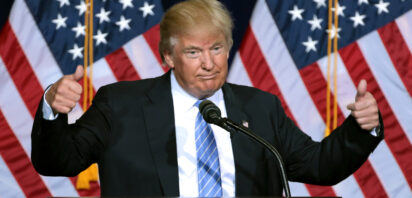
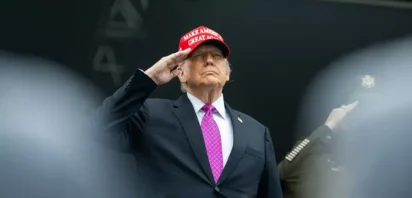
In March of 2025, Washington announced its formal decision to gradually end USAID and its subsidiary programs, resulting in tens of billions of dollars in aid to Africa being cancelled. Much to the harm of US-Africa relations, the consequences of effectively ending USAID-funded initiatives are both actualized and perceptional. Take, for example, the removal of funding for the US President’s Emergency Plan for AIDS Relief (PEPFAR), a program begun by President Bush in 2003. The end of PEPFAR is expected to cause an additional 2-3 million HIV-induced deaths in the next five years alone. This necropolitical move presages a new age of foreign involvement in Africa – one that abolishes symbiotic relationships at the cost of developmental advancement. Perceptionally, African leaders have recognized the forthcoming of this new age, with Zambian President Hakainde Hichilema stating that “Trump has slapped us on both cheeks, we are on our own.” His feelings of forsakenness have been echoed by various African leaders, admonishing the United States for its “aid traps” and “brutal” drawdown. Many African nations are losing the economic support of the United States and are coming to the realization that Washington may not be on their side.
Beyond the curtailment of financial aid, political disengagement may signal to African leaders that the United States has no vested interest in their continent. Executive Order 10949, signed by President Trump in June 2025, fully restricts citizens from Chad, Republic of the Congo, Equatorial Guinea, Eritrea, Libya, Somalia, and Sudan from entering the United States under any visa category, including student, tourist, or immigrant visas. This restriction drew immediate opposition from the African Union, which appealed the ban on the basis of “the long-standing partnership between the United States and Africa.” This protest, however, was to no avail, and the Trump administration has indicated no initiative to reverse the travel ban in the near future.
Rare Earth Elements
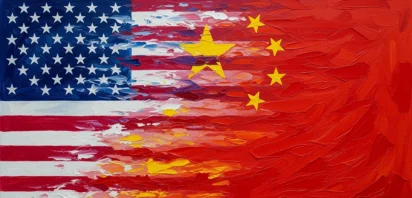
US-Africa relations have evidently moved into an era of uncertainty and diminishing strength, and this is no parochial matter. Any voluntary inhibition of international aid by the United States will most certainly have domestic implications, not least in the economic sector. As of late, the United States and China have found themselves locked in a strategic limbo over the trade of rare earth elements, or REEs. REEs have immense civilian and military utility, being essential for technologies like smart phones, computer hardware, radar, satellites, and missile guidance systems. This is where strong relations with Africa afford their utility.
Africa houses roughly 30% of the world’s REEs, and the continent is expected to singlehandedly constitute 10% of global exports by 2029, cementing its role as an emerging player in global mineral markets. As the United States and China compete over rare earths globally, Africa is emerging as an increasingly viable supplier. However, as of 2024 estimates, Chinese entities receive roughly 40% of Africa’s current REE exports, showcasing their already dominant role in Africa’s mineral economy. If the United States wants to have a stake in Africa’s mineral bonanza, it must act with expediency in improving relationships and contesting Chinese economic superiority in the region. US retreat from Africa will only exacerbate Washington’s disadvantage, an ostensibly counter-intuitive move at an inopportune time.
China in the African Theater
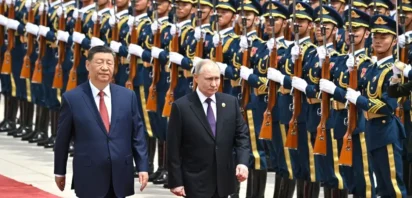
Contrary to American proceedings, the People’s Republic of China, currently Africa’s largest trading partner, has shown no intention of slowing down, continuing to pledge billions for investment, infrastructure, and progress. The quest for African rare earth metals is one that China knows all too well. In 2004, they surprised the rest of the world by striking an infrastructure-for-resources deal with the war-torn Angolan government. China would build roads and hospitals, while the Angolese government would provide them with reduced-price oil. The modality of this deal laid the groundwork for China’s Belt and Road Initiative, which China has expanded to every country in Africa with the exception of Eswatini. Beijing is now central to trade and commercial transactionalism in Africa; 52 out of 54 African countries trade more in total (imports and exports) with China than with the United States, a worrying statistic for proponents of US soft-power.
In June 2025, China offered a zero-tariff trade policy to 53 out of 54 African nations in what can only be regarded as a reactionary move. This expansion built on top of the reduced-tariff policy proposed in late 2024, and enables low- and middle-countries alike to participate in the world’s third largest consumer market cost-free. Not only is this policy meant to increase the flow of Chinese goods to Africa and establish China as a prominent customer of the African market, it directly combats the isolationist economic position of the United States. It beckons to African partners that China is there for them, no strings attached.
Additionally, amongst the African middle class, the U.S. is losing ground to China in the struggle for hearts and minds. A 2025 poll by Afrobarometer showed China as having surpassed the United States in its popularity on the continent, with 60 percent of respondents describing Chinese influence in their country as “somewhat positive” or “very positive.” Comparatively, only 53 percent of those surveyed said the United States had the same socio-political influence.
Conclusion
By slashing billions in aid and instating visa restrictions and travel bans – curbing US-Africa engagement – The Trump administration is reforming US-Africa relations in a way that is set to decrease US influence in the continent at a crucial point in the race for technological superiority. The erosion of this relationship creates a vacuum for foreign players like China to step in and make gains. By turning inward, Washington may soon find that the world has moved on without it.