After decades of near total dependence on the United States, Canada is now working to diversify its defense relationships. But what can the pivot realistically hope to deliver? Canadian defense, including its industrial base, was not built next to the American system but inside it. The NORAD continental command, the 1959 Defence Production Sharing Agreement (DPSA), and the US International Traffic in Arms Regulations (ITAR) all have shaped the broad Canadian defense infrastructure in ways that no political alignment with Brussels can quickly unravel.
NORAD and the Limits of Operational Diversification
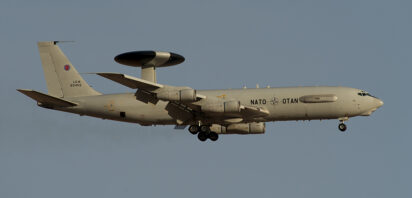
NORAD is a binational military command between Canada and the US, established in 1958 and renewed in perpetuity in 2006. Canadian and US officers operate under one commander, share a single operations center, and execute air defense missions on either side of the border. The arrangement also requires continuous classified data exchange between the two air forces. The intelligence and data-sharing that support this real-time cooperation is narrower and more sensitive than the Five Eyes alliance.
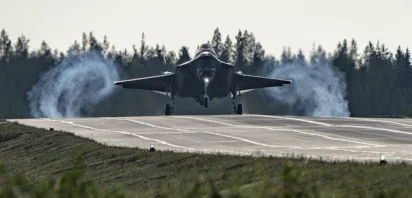
It was this very constraint that ended the European fighter bids in Canada’s CF-18 replacement competition. Dassault withdrew the Rafale in November 2018, citing the impossibility of meeting the security and intelligence-sharing specifications under NORAD. Airbus, together with the United Kingdom MoD, withdrew the Eurofighter Typhoon in 2019, identifying NORAD security requirements as imposing prohibitive integration costs on platforms whose manufacture and repair chains sit outside the US-Canada bilateral community. The interesting thing is that the Eurofighter operates across the Five Eyes alliance and is fully integrated into its intelligence ecosystem. What it could not do, at an acceptable cost, was integrate into the narrower “2-Eyes” channel. The competition was ultimately won by Lockheed Martin’s F-35, and a contract for 88 aircraft was signed in early 2023.