Copper’s vital role in AI growth arguably renders it as America’s single most strategic mineral. Yet as copper demand soars, falling exploration and an industry-wide focus on mine acquisition as opposed to mine construction threaten to create massive supply shortfalls within the next five years—posing a critical threat to US AI expansion. Without copper to build data centers, the accelerating pace of American AI innovation will become fatally paralyzed, falling behind China’s rival efforts to rapidly scale AI technology.
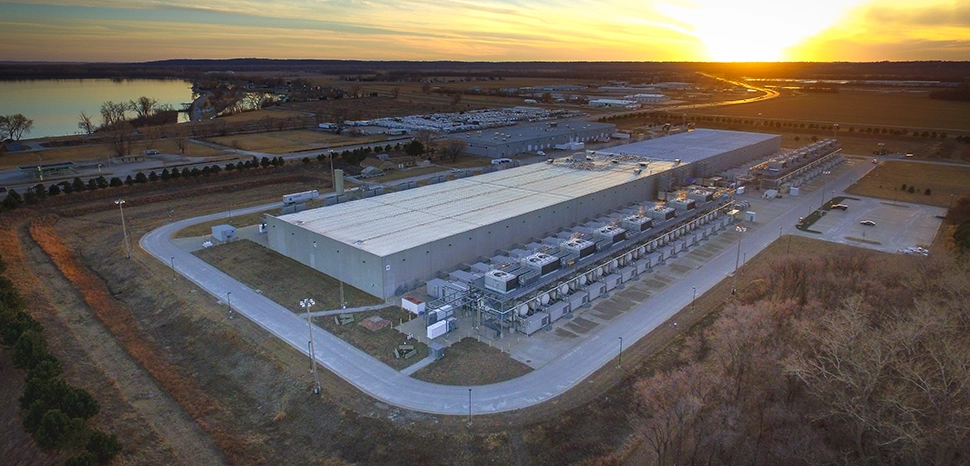
Hyperscale data centers—massive hubs designed to handle the enormous data storage required by AI firms and other tech giants—require up to 50,000 tons of copper, three to ten times as much as most data centers. Driven by AI and cloud storage demand, hyperscale data centers are the fastest growing data center variant, and are poised to fill 61 percent of the sector’s market by 2030. By 2030, data centers will likely require up to 500,000 tons of copper annually. Copper’s use in high speed, short-distance data transmission, liquid cooling, and high-efficiency power delivery make it an indispensable element to AI’s physical infrastructure.
Scaling US AI growth depends on data centers, and slowing construction is already affecting the industry. Permitting delays, logistical bottlenecks, and local political opposition has resulted in at least $156 billion across 48 data center projects being stalled in 2025 alone. Capital expenditure from the industry’s largest data center developers in 2026 is projected to fall to 58 percent of last year’s growth. This has led to unease on Wall Street, where investors are concerned that slowing construction may impact possible AI firm overvaluations.
Copper Shortages Loom
Yet the impact of these existing delays pales in comparison to the looming crisis likely to strike AI due to copper shortages by the early 2030s. The International Energy Agency (IEA) predicts that global copper markets could face a 30 percent supply deficit by 2035. Rising project expenses in an already notoriously capital-intensive industry push risk-averse mining firms away from building new mines, a trend compounded by long permitting timelines. Of all copper discoveries in the 35 years, only five percent have been made in the past decade, despite rising demand.
Although copper demand is expected to increase 50 percent to 42 million tons annually by 2040, production will plateau at 33 million tons annually in 2030, leaving an enormous shortfall. Rapidly scaling production is difficult when the average copper mine takes 17 years to move from discovery to production—a number standing at 31.8 years in the US.
The central problem to rapidly scaling copper production is mining firms’ pervasive risk aversion to building new mines, an aversion that directly stems from the industry’s exceptionally high capital costs. While increased attention to copper’s geoeconomic relevance is driving investment in the sector, mining firms are directing capital towards acquiring existing assets—not building the new mines necessary to match global copper demand. By focusing on proven assets and avoiding the expense associated with new projects, mining majors please risk-averse shareholders while overall production stagnates. Smaller private firms with the risk tolerance for building new mines often face capital challenges—already endemic in an industry where 83 percent of major projects face cost overruns.
Expanding production in existing mines faces similar difficulties. The average expenditure to expand an existing mining asset skyrocketed 65 percent since 2020, reflecting a 40 percent decrease in the grade (mineral concentration) of the average copper mine since 1991.
A Path out of the Copper Squeeze
To halt an impending AI crisis by the early 2030s, the US must pursue commercially-focused diplomacy aimed at securing strategic copper supplies in Sub-Saharan Africa, Latin America, and Asia. While projects such as the joint Rio Tinto-BHP Resolution copper mine in Arizona offer promise for reviving US domestic mining, reforming the US’s notoriously slow permitting system is unlikely. Instead, pursuing investment abroad, where emerging markets often allow faster permitting, offers a surer path to quicker production.
Sub-Saharan Africa has been the leading center of global copper discoveries, accounting for 56 percent of the world’s newly discovered copper between 2014 and 2024. A substantial portion of this amount stems from Canada-based Ivanhoe Mines’ discoveries within the DRC’s Western Forelands region, such as its massive Kamoa-Kakula mine. However, political risk and infrastructural challenges continue to deter mining investment throughout much of Africa, including the DRC. To bypass this obstacle, the US government can facilitate increased investment in stabler copper-rich African states such as Botswana and Zambia.
Investor momentum is also shifting towards Latin America, which mines 46 percent of the world’s copper and holds nearly 40 percent of global reserves. Most production originates from Peru and Chile, which collectively mine 35 percent of global copper. Chile in particular is an attractive investor destination for its strong infrastructure and political stability.
But Latin America’s copper exports remain heavily oriented towards China. China buys 71.4 percent of Chilean copper and 75.2 percent of Peruvian copper. Similarly, 94 percent of Mexico’s copper exports are routed to China. To shift Latin American copper markets towards US investment, the US government cannot simply facilitate market entry by US miners. It must also encourage these miners to enter into long-term offtake agreements with non-Chinese copper processors.
In Argentina, which possesses vast untapped copper reserves, US mining investors have a unique opportunity to create new Western-aligned copper supply chains by concluding offtake agreements with non-Chinese firms as they enter an emerging market.
Further opportunities are present in Asia, where Indonesia’s copper production is rising, driven by the massive Grasberg mine. While Indonesia has banned raw copper exports since 2023 in an effort to boost its refining capacity, US firm Freeport McMoran owns the Grasberg mine and co-owns the country’s largest smelter with Indonesia’s government. By allowing a US firm to retain a key foothold in copper, Indonesia’s government seeks to counterbalance China’s stranglehold on the country’s nickel industry.
Elsewhere, in Mongolia, Rio Tinto’s Oyu Tolgoi mine is turning Mongolia into an emerging copper hub. Australia, which holds the world’s third-largest copper reserves, continues to rapidly expand its production, buoyed by its status as a base for some of the world’s largest mining firms and a center for mining tech development. The US must continue to deepen its commercial and security ties with Australia, and should continue to encourage investment in Australia’s copper sector by both US firms and regional partner nations such as Japan. By strengthening the AUKUS alliance and expanding on existing initiatives such as the US Export-Import Bank’s support for Australia’s rare earths industry, the US can further cement its critical resources cooperation with Australia.
The US government has multiple tools to pursue a diplomatic strategy aimed at securing critical copper supplies. Through loans from the US-Export-Import Bank and US Development Finance Corporation, the US government can build public-private partnerships with the US and Western-aligned investors seeking to build mines and smelters in emerging markets. Trade and mineral-focused Memorandums of Understanding brokered by the State Department with copper-rich nations can further reinforce these projects. Separately, the US can deepen its cooperation with potential partners by offering to assist in geologically mapping new mineral deposits—a major challenge for many mineral-rich nations seeking to develop their resources.
As part of this strategy, the US must invest in building both local and US smelting capacity. Half of global copper is smelted in China—while the US has only two major smelters and Peru has only one. Poor smelting capacity in both the US and emerging Latin American markets threatens to keep the Americas’ copper supply chains dependent on China—even if US companies increase their share of mining production. Any US strategy aimed at securing sufficient copper supplies must prioritize smelting together with mining—a commonly overlooked aspect of building US copper supply chains.
Failure to secure strategic copper supplies places America at risk of falling behind China in the race to scale AI. Without expanding physical infrastructure to support growth, AI’s rapidly compounding development will soon face a hard ceiling. In an era where tech and geopolitics are ever more closely intertwined, ensuring continued US AI competitiveness requires strong US investment in copper supply chains.
The views and opinions expressed in this article are those of the author alone and do not represent those of Geopoliticalmonitor.com