On 5 May, the Thai Cabinet formally authorized the state’s unilateral withdrawal of the Memorandum of Understanding 2544 (MOU 44) signed in 2001. This provoked an immediate Cambodian response; shortly after Thailand’s official notification, Phnom Penh declared its intention to initiate compulsory conciliation proceedings under UNCLOS, adding that Thailand’s withdrawal ran counter to the “spirit and political will” of the two countries when they signed the agreement in 2001. From the Thai perspective, the withdrawal and the move to UNCLOS dispute resolution is a calculated and necessary sacrifice. This might pave the way for bilateral negotiations between the two countries without the maximalist positions that they had adopted earlier.
Rise and Fall of Memorandum of Understanding 2001 [2544 B.E.]
MOU 2001 [2544 B.E.] was signed during the ‘golden period’ of Cambodian-Thai relations to address the Overlapping Claims Area (OCA), a contested maritime zone covering roughly 27,000 km² in the Gulf of Thailand that is widely speculated to hold significant oil and gas reserves. The territorial dispute dates to 1972 when Cambodian Prime Minister Lon Nol issued two presidential decrees resulting in Cambodia’s current unilateral maritime claim. Thailand reciprocated in 1973 with its own counter claim. MOU 44, via Article 2, was designed to link hydrocarbon exploitation to settlement of the OCA. MOU 43 is the predecessor framework for political negotiations and technical work to demarcate the 798 km land boundary.
Thailand’s justification for MOU withdrawal centers on Articles 56.1.b and 56.2 of the Vienna Convention on the Law of Treaties, which allow for denunciation or withdrawal by the nature of a treaty. This is evidenced by a couple of notable facts. First, the MOU 44 Joint Technical Committee has only met twice, during the tenure of FM Surakiart Sathirathai (2001-2005), 40 years after the signing of the agreement. There have been numerous unofficial meetings but only two formal ones. Second, Cambodia refused to meet despite many invitations during the tenure of Prime Minister Prayut Chan-o-cha (2014-2023). Thailand’s legal justification will center on the argument that negotiations have rarely taken place and no progress has been made on the OCA; therefore, the MOU has by its very nature been breached.
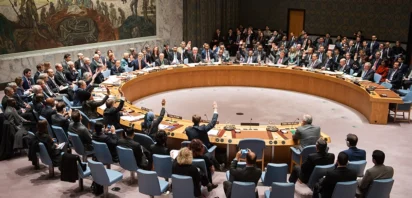
Both Cambodia and Thailand have made declarations to UNCLOS stating that they “do not accept any of the procedures provided for in Section 2 of Part XV.” Both declarations pertain to the rejection of compulsory jurisdiction of international arbitration or tribunals found in Article 298. In lieu of arbitration, a five-person conciliation committee will provide a report in no more than 12 months. However, the “report of the commission, including its conclusions or recommendations, shall not be binding upon the parties.”
The formation of the committee is unlikely to provide a definitive answer to the underlying claims. It will instead strike a reasonable, neutral position, which will benefit Bangkok as its claim is based on the international norm of equidistance. Regardless, both parties – if they wish to settle the dispute – will eventually revert to bilateral negotiations, since they have rejected international arbitration and the fact that the committee’s conclusions will be non-binding. However, this time the starting framework will be one of larger convergence without the politically inflammatory Cambodian claim line running through Koh Kut Island.
Bangkok’s Possible Positions: Confusion, Threats, and Limits
Thailand’s position regarding to MOU 2544 is a confusing one. Bangkok had indicated its intention to withdraw from MOU 44 officially on May 5. However, when FM Sihasak met with his counterpart FM Prak Sokhonn at the United Nations on May 26, he did not hand the official withdrawal notice to the Cambodian side. Instead, Bangkok has insisted on pursuing bilateral negotiations. This brings a major contradiction to the surface. Why withdraw from a bilateral MOU to enter into bilateral negotiations under a UNCLOS framework? Both countries are already UNCLOS signatories so negotiations under the MOU are by definition under an UNCLOS framework. Below are a couple of readings as to the inconsistency emanating from Bangkok.
First, Thailand could be withdrawing to score political points at home. Bangkok’s withdrawal from MOU 44 allows Prime Minister Anutin to get a domestic ‘political win’ and hail a ‘promises made, promises kept’ posture to the domestic Thai audience. In parallel, Cambodian Prime Minister Hun Manet can sell to a Cambodian audience that he has taken a ‘non-compromise’ stance towards Thailand and hail internationalization by taking Thailand to an ‘international court.’ Since both countries have rejected arbitration and conciliation efforts would not lead to definitive outcomes, both countries would likely see themselves reverting to negotiations without the previous maximalist positions of the 1970s. This is a best-case scenario: Bangkok is allergic to internationalization but will be pressured to do it anyway if Cambodia triggers conciliation.
Second, reverting to bilateral negotiations would allow a separation of talks for resources and territory in the future, which was the core of MOU 44. It would allow for the linking of future negotiations to current conditions at the land border if Bangkok chooses. PM Anutin needed to sacrifice one of the MOUs (MOU 44) to satisfy Thai nationalists and appear to take a hard line. Compared to MOU 43, which concerns the land border, MOU 44 offers lower risk. The ‘mood’ in Thailand is not conducive to reconciliation, and moving to normalize relations with Cambodia quickly would be politically toxic for the government. MOU withdrawal allows PM Anutin to walk away from peripheral foreign policy issues and focus on immediate concerns of the land border, economic problems, and solidifying his domestic position.
The reality is, at the moment, Bangkok has no trust in Phnom Penh, and its focus is on the land border. The demise of MOU 44 may have two silver linings. It may provide needed political space and time to mend relations and a reset based on neutral third-party recommendations. With MOU 44 gone, the resource-to-territory linkage will have been broken, allowing both countries to pursue a joint development agreement (JDA) and hydrocarbons exploitation without the need to assert sovereignty.
As of this writing, it would appear that Cambodian PM Hun Manet has either grown tired of Bangkok’s bluster or is calling PM Anutin’s bluff. On June 2, 2026 Cambodia informed the UN and Thailand that it has formally launched conciliation proceedings. This will now force Bangkok into one or a combination of three tracks of action. One, accept conciliation and engage in good faith legal arguments towards an objective end. Two, reject conciliation and have the UN Sec-Gen appoint its conciliators to be engaged in absentia. Three, engage in twin tracks of UN conciliation and escalatory hardening along the land border to pressure Phnom Penh.
Given the fact that the Thai military is in full control of border and security affairs in PM Anutin’s government, this author is betting on option three. Hopefully, Cambodia’s pursuit of the legal option will draw Bangkok away from its current hardline approach and towards finding a diplomatic exit from the conflict trap of 2025.
William J. Jones, PhD is Assistant Professor of International Relations at Mahidol University International College. His research focuses on international relations and security, ASEAN regionalism and contemporary politics of Thailand.