On January 9, 2021, China’s Ministry of Commerce issued a decree that stopped no one. No television coverage, no furious diplomatic statements, no editorials in Western newspapers. The decree passed as bureaucratic documents pass — in silence. It carried a long, forgettable name: “Rules on Counteracting Unjustified Extraterritorial Application of Foreign Legislation and Other Measures.” Lawyers filed it in their folders. Academics wrote about it in specialist journals. Then it went into the drawer.
It stayed there for five years, three weeks, and twenty-three days.
On May 2, 2026, it woke up.
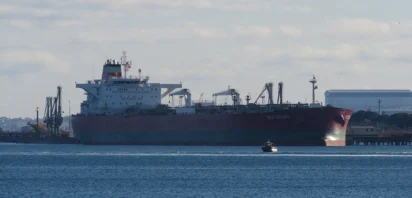
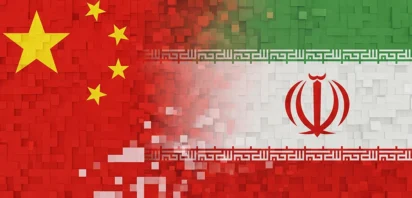
On that day, China’s Ministry of Commerce issued an order under its Blocking Statute compelling all Chinese companies and individuals not to comply with US sanctions imposed on five Chinese oil refineries for purchasing Iranian crude. The five refineries are: Hengli Petrochemical in Dalian — which the US Treasury described as “one of Tehran‘s most important customers” — and four independent “teapot” refineries in Shandong and Hebei.
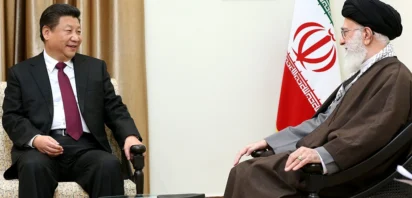
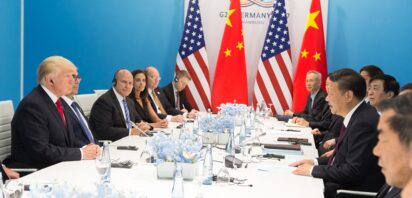
Everyone read the order as a reaction to the Hormuz crisis – a defensive counter-move, or an escalation timed before the Trump-Xi summit on May 14.
All of that is true. And all of it misses the point.
A Law Built for the Future
China’s Blocking Statute was not born from the Iran crisis. It was born from the Russia lesson.
When Russia invaded Ukraine in February 2022, Beijing watched what a coordinated Western sanctions architecture could do when deployed at speed: expulsion from SWIFT, frozen central bank reserves, near-total financial isolation. Russia, despite its size, lacked sufficient legal instruments for an institutional response. It had a counter-sanctions law from 2018, but a blunt tool — a retaliatory measure, not a systematic legal architecture.
China read that scene and asked: What do we need when our turn comes?
The answer was the Blocking Statute of January 2021 — carefully designed in the image of the EU Blocking Statute of 1996, but with broader powers and wider discretion for Chinese authorities to determine what constitutes “unjustified extraterritorial application” of foreign law. The EU statute explicitly listed the laws it blocked. The Chinese statute did not — it deliberately chose generality to give Beijing flexibility: use it whenever, however, against whichever foreign law it judges appropriate.
But a law without a precedent of application has no strategic value. It needs a moment.
And China, in its well-known patience, waited five years for the right one.
Why Now
The European Union issued its Blocking Statute in 1996 in response to the US Helms-Burton Act and ILSA, legislation whose combined effect was to impose secondary sanctions on foreign companies operating in Cuba, Libya, and Iran. In the 25 years that followed, the EU statute remained largely decorative — barely applied, never enforced against a major firm, never producing the seismic effect it promised. Beijing studied this failure and understood its cause: a law that is never used teaches the other side that it will never be used.
China would not repeat Europe’s mistake. But neither would it use the statute at the wrong moment.
The right moment required four conditions simultaneously:
First, international legal and moral cover. Sanctioning Chinese refineries for purchasing Iranian oil during an active war appears to non-aligned international opinion as an excessive extension of US power — precisely what Beijing explicitly named as “long-arm jurisdiction.”
Second, an expendable target. Teapot refineries are private, independent operations, far less exposed to the US financial system than state giants like Sinopec or CNOOC. If the confrontation escalates, China loses five private refineries and keeps its structural backbone intact.
Third, Washington to be in a position where immediate escalation is costly. The Trump-Xi summit scheduled for May 14 makes any sharp American response in the two weeks that follow a miscalculated risk — Trump wants the summit, and any serious confrontation would jeopardize it.
Fourth, a chance for China to appear “responsible” at the same time. On the very day the Blocking Statute awoke, Chinese Foreign Minister Wang Yi was meeting his Iranian counterpart in Beijing, calling for an immediate ceasefire and the reopening of Hormuz. Beijing was pressing Iran and challenging America on the same day. The image projected: a responsible power opposing legal overreach, not opposing the West as a bloc.
These four conditions did not converge during the Ukraine war. Nor during previous trade wars. They converged now, under the Hormuz crisis, in the week before the most significant summit between the two powers in years.
China did not respond to the Hormuz crisis. It used the Hormuz crisis.
The Impossible Choice
The Statute places every multinational company operating in both Chinese and American markets in direct legal contradiction: comply with US sanctions on the five refineries and lose the Chinese market while facing prosecution in Chinese courts; or refuse compliance and face US secondary sanctions and the risk of exclusion from the dollar-based financial system.
This is what I call the Engineered Impossible Choice. It is not a side-effect of the statute, but its primary purpose. Beijing does not want to protect five oil refineries. It wants to force HSBC, Standard Chartered, Deutsche Bank, and every global financial institution operating in Shanghai to choose. Whichever choice each institution makes will be a step in shaping the financial architecture toward which US-China relations are heading.
Naimeh Masumy, a PhD candidate at Maastricht University who has studied China’s counter-sanctions measures, said what few Western-institution researchers say plainly: “The law’s most significant long-term effect could be to inspire other powers such as Russia and the European Union. A Chinese model — even an imperfect one — of codified counter-sanctions law gives these states a template and, perhaps more importantly, a degree of political legitimacy for doing the same.”
Here the compounding effect appears, unaccounted for in most analysis: China is not attacking the US sanctions architecture alone — it is building a model that can be replicated. Russia, Iran, the Global South states living under the weight of US secondary sanctions. All are watching. And a model that succeeds once is a model that can be repeated.
Iran Was the Rehearsal, Taiwan Is the Play
There is a question every Western analysis avoids: What is China actually preparing for with all of this?
In 2024, Beijing purchased over eighty percent of Iran’s oil exports. This mutual dependency means any serious US-China conflict will inevitably include sanctions on energy, on trade, on financial institutions. China has known this for years and has been building, methodically, a financial and legal resilience architecture for that scenario.
The Blocking Statute, combined with China’s cross-border payments system CIPS, renminbi-settled oil transactions, and strategic petroleum reserves that have exceeded one billion barrels — all of this together forms the infrastructure for a scenario no Chinese official statement ever names: a potential Taiwan conflict.
When Washington one day decides to respond to a Chinese action in Taiwan with a comprehensive sanctions architecture — modeled on what was done to Russia — it will find that China does not begin from zero. It will begin with a statute tested in 2026, a payments system tested on Iranian oil, and legal precedents consolidated in last week’s confrontation.
A Question Left Open
The Chinese order does not clarify whether it extends to cover Hong Kong — where a considerable share of Chinese-Iranian oil deal settlements are processed. This deliberate ambiguity is not an oversight. It is a margin of maneuver. Hong Kong is the bridge between the two financial systems, and keeping it outside the order’s explicit scope leaves a back door open in the financial war.
Markets are watching. Banks are recalculating. Washington is weighing its options amid the most significant summit in years. And somewhere in Beijing, people are looking at what they did on May 2 and waiting to see how it is absorbed.
Hormuz 2026 will be written in history as an energy crisis, a regional war, an inflection point in US-Iran relations. All of that is true.
But there is another chapter not yet written: that Beijing used this war to register a legal precedent that will serve it when the harder test arrives. On a day when five refineries are not the issue. And when Iran is not the arena.
Translation from Arabic by Claude (Anthropic). Original manuscript by the author.