Antimony, a silvery-grey metalloid with applications spanning ammunition, flame retardants, and lead-acid batteries, has become the most acutely disrupted critical mineral in the current cycle of great power competition.
China’s announcement of export licensing requirements in August 2024, followed by an outright ban on shipments to the United States in December of that year, sent prices to an all-time record of approximately $59,750 per tonne by mid-2025.
The episode exposed a vulnerability that defense planners had long flagged: the United States has not mined antimony domestically since the early 1990s, yet the metal remains an essential input for military munitions.
Washington’s response, totaling nearly $400 million in defense investments and stockpile contracts, represents the most concentrated federal mobilization around a single critical mineral in recent memory.
Background & Context
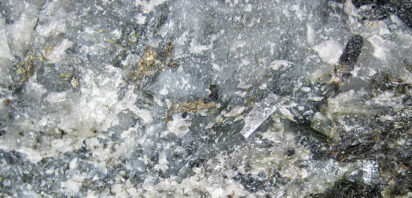
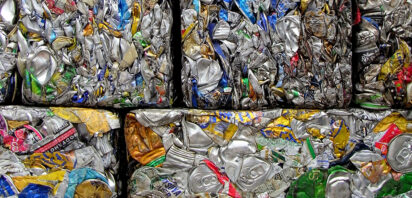
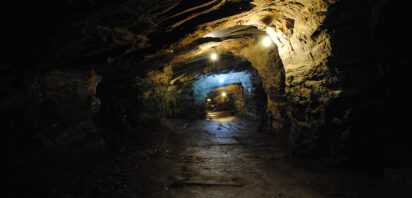
Antimony occurs naturally in the mineral stibnite and is extracted primarily through conventional underground and open-pit hard rock mining. Once mined, stibnite ore is crushed, concentrated through flotation, and smelted to produce antimony metal. Antimony is also recovered as a byproduct of gold and lead-zinc mining operations, and through secondary recycling of spent lead-acid batteries.
The metal’s core value lies in three properties: it hardens lead alloys, it functions as a flame retardant when combined with other compounds, and it is friction-sensitive, meaning it ignites on impact. That last property is what makes it indispensable in ammunition primers. Across all three roles, substitutes exist but carry significant performance trade-offs.
US consumption divides roughly into thirds. Metal products, principally antimonial lead for ammunition and battery grids, account for approximately 40 percent. Flame retardants used in plastics, textiles, and electronics account for 39 percent. The remaining 21 percent goes to ceramics, glass, and rubber.
The defense exposure is substantial: a Govini supply chain analysis identified more than 80,000 individual weapons parts incorporating antimony, gallium, germanium, tungsten, or tellurium across 1,900 weapon systems, meaning nearly 78 percent of all DoD weapon systems are potentially affected by Chinese export controls on these five minerals.
Global Antimony Production and Supply Chain Dynamics
Global antimony mine production totaled an estimated 100,000 metric tonnes in 2024, with China commanding 60 percent of world output. The concentration is stark: the top three producers (China, Tajikistan, and Russia) collectively account for 90 percent of global supply. The United States produced zero mined antimony. One facility in Thompson Falls, Montana, operated by United States Antimony Corporation (USAC), smelts imported feedstock, and secondary recovery from lead-acid battery recycling provides roughly 3,500 tonnes annually.