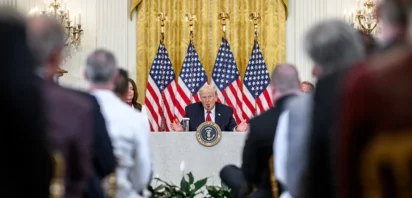
Donald Trump’s renewed Greenland push is no longer the kind of odd headline that can be waved away as a vanity project. In late January 2026, he moved past the old “buy Greenland” fixation and began talking about something more operational: a “framework” that would deliver US sovereignty—or sovereignty-like control—over areas hosting US military facilities. In an interview reported on January 24, Trump described a plan to get “everything we want,” including sovereignty over base areas, modeled on the concept of sovereign base areas.
That shift matters. It turns an unserious proposal into a political signal with real consequences, because it normalizes an old assumption: that strategic convenience can be negotiated over the heads of the people who live on the territory in question.
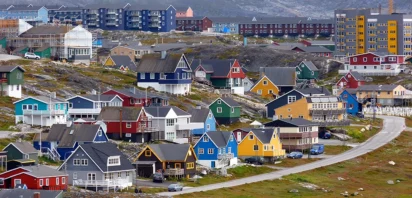
Greenland is not an empty square on a NATO map. It is an autonomous territory within the Kingdom of Denmark, with its own elected institutions and an active independence debate. The legal and political reality is straightforward: any durable change in Greenland’s status requires Greenlandic consent—politically and, in practice, democratically. Yet the “framework” conversation has been driven primarily by Washington, with Nuuk often reduced to a backdrop rather than treated as a negotiating party with agency.
You can see the pattern in how the story has been framed. Trump’s justification leans heavily on security and access—especially the strategic relevance of the US presence at Pituffik Space Base (formerly Thule) and the broader Arctic defense picture. That strategic logic is not imaginary. As the Arctic becomes more accessible and more contested, the United States has valid reasons to seek reliable basing and surveillance arrangements. But “valid reasons” is not the same thing as a license to repackage sovereignty as a deal term.
The strongest defense of Trump’s approach goes like this: Greenland’s possible future independence creates uncertainty around the long-standing US access regime, so Washington is trying to lock in permanent rights now. Reuters has reported that the administration has explored financial inducements—discussing lump-sum payments to Greenlanders as part of a strategy to encourage a political break from Denmark and a possible reorientation toward the United States. From a hard-nosed, transactional perspective, that can be presented as bargaining rather than coercion: an offer, not an invasion.
But that argument collapses under scrutiny for two reasons.
First, it treats sovereignty as a commodity and consent as something that can be purchased or pre-empted. It replaces democratic legitimacy with transactional leverage. Even if no force is used, the logic is recognizably colonial: the people most affected are spoken about as objects to be “swayed,” not as political subjects who set terms.
Second, it misreads the strategic environment. If the United States wants stable Arctic access, the most durable path is not a sovereignty shortcut—it is a negotiated, transparent arrangement that explicitly includes Greenlandic authorities, not just Copenhagen and Washington. When Trump publicly flirts with sovereignty claims, he does not strengthen deterrence; he injects distrust into relationships that Arctic security actually depends on.
This is already visible in the diplomatic blowback. Reporting around Davos indicates that the “framework” idea has been met with skepticism and concerns that Greenland is being sidelined. Greenlandic and Danish officials have repeatedly drawn a red line against transferring sovereignty, and the issue has triggered wider allied pushback and public debate about the integrity of the rules-based order in the Arctic.
There is also a second-order effect that Washington should not ignore: Trump’s Greenland rhetoric gives rivals an easy narrative. The United States routinely positions itself as a defender of sovereignty and self-determination. When a US president talks in territorial terms that sound like “ownership”—even if dressed up as “base area sovereignty”—it becomes harder to argue that US principles are anything more than conditional branding. Allies hear it too, and so do non-aligned states deciding how much trust to place in US commitments.
The Arctic has, until recently, been a space where cooperation and institutional habit restrained militarization. Trump’s approach accelerates the opposite dynamic: it encourages hedging. It nudges Denmark and Greenland to look harder toward European backing, it encourages other actors to politicize Arctic forums, and it creates incentives for Russia and China to cast US policy as expansionist rather than defensive.
If Trump’s Greenland “framework” becomes the new normal—if sovereign control can be floated as a bargaining chip whenever strategic geography is attractive—then the long-term cost will not be measured in whether Greenland ever changes hands. It will be measured in credibility lost, alliances strained, and a harsher Arctic security environment in which every access arrangement becomes a referendum on US restraint.
The United States does not need a sovereignty workaround to protect its Arctic posture. It needs the opposite: a disciplined commitment to consent, clarity, and negotiated access that treats Greenland as a political community, not a strategic asset with residents attached. Trump’s latest Greenland gambit is dangerous precisely because it moves in the other direction—and because it asks the world to accept that direction as ordinary.
The views expressed in this article belong to the author(s) alone and do not necessarily reflect those of Geopoliticalmonitor.com.