Alice Johnson

Alice Johnson is a policy analyst and writer focused on global affairs, peacebuilding, and social impact. She explores the intersection of diplomacy, human rights, and civic movements, aiming to highlight stories that bridge understanding across nations. She can be contacted at [email protected] and followed on Twitter, @ImAliceJohnson.

A Fine Balance: Dependence and Autonomy in US Alliances
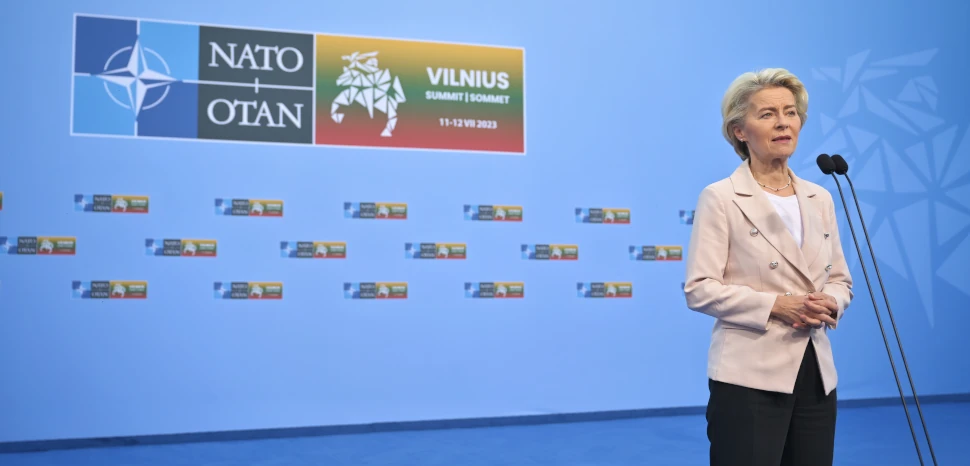
cc Dati Bendo/European Commission, modfied, https://commons.wikimedia.org/wiki/File:NATO_Summit,_Vilnius.P061598-631772.jpg

Alliances are not neutral, and bases are not passive infrastructure. They are instruments of strategy. The sooner that policy reflects this, the more resilient alliances will be when the next crisis hits.

From Hormuz to Households: The Inflation Tax of Washington’s Iran War

President Donald J. Trump delivers remarks on the Joint Comprehensive Plan of Action, modified, cc the White House, https://commons.wikimedia.org/wiki/File:Trump_Withdraw_Iran_Deal.jpg

The Iran war is not just a military gamble, but an inflation tax of Washington’s own making.

The Iran War Is Fracturing the West’s Sanctions Front
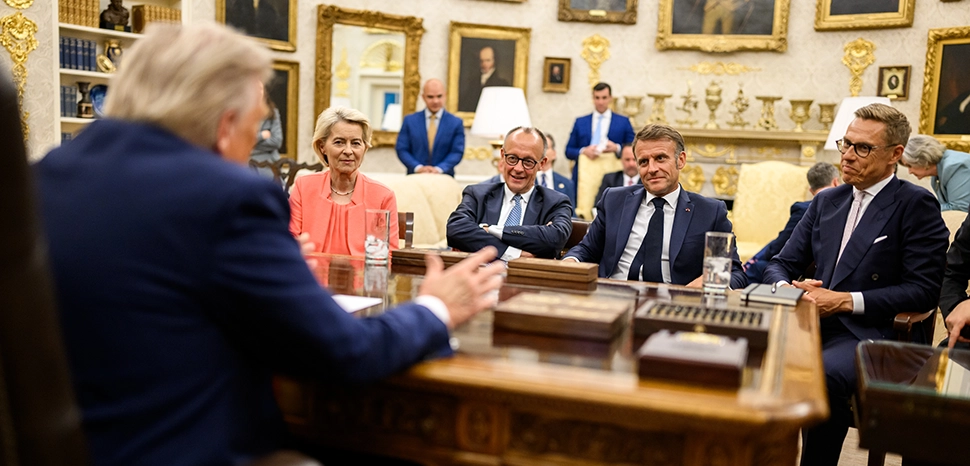
cc The White House, modified, President Donald Trump meets with U.K. Prime Minister Keir Starmer, Italian Prime Minister Giorgia Meloni, European Commission President Ursula von der Leyen, German Chancellor Friedrich Merz, French President Emmanuel Macron, Finnish President Alexander Stubb, Ukrainian President Volodymyr Zelenskyy, and NATO Secretary General Mark Rutte after his call with Russian President Vladimir Putin, Monday, August 18, 2025, in the Oval Office. (Official White House Photo by Daniel Torok) / https://commons.wikimedia.org/wiki/File:President_Donald_Trump_Meets_European_Leaders_%2854730975647%29.jpg

What began as a US-Israeli war against Iran is now exposing a second front that Washington did not advertise: the slow breakdown of Western sanctions discipline.

Washington’s Coercion Creep: When Foreign Policy Starts Taxing Global Commerce

cc NASA/Tim Kopra, modified, Earth observation of the coast of Oman taken during a night pass by the Expedition 46 crew aboard the International Space Station. NASA astronaut Tim Kopra tweeted this image out with the message:

New tariff authority tied to Iran-linked trade and renewed US maritime guidance near the Strait of Hormuz show a familiar pattern: Washington is turning “national security” tools into daily friction for commerce. These costs are easy to trigger and harder to unwind.

Trump’s Greenland Push Revives an Old Question: Who Gets to Consent?

A North American Aerospace Defense Command F-35 Lightning II fighter aircraft from the Wisconsin Air National Guard’s 115th Fighter Wing sit on the tarmac at Pituffik Space Force Base, Greenland, Oct. 9, 2025. Operating in the Arctic provides the flexibility and adaptability needed to overcome logistical hurdles in a dynamic and unforgiving environment. Greenland as part of the Kingdom of Denmark has long played an important role in the defense of North America, which strengthens NORAD's ability to protect the continent from today’s threats and emerging challenges from all approaches. (U.S. Air Force photo by Staff Sgt. Maxim Dewolf)

The United States does not need a sovereignty workaround for Greenland. It needs the opposite: a disciplined commitment to consent, clarity, and negotiated access that treats Greenland as a political community, not a strategic asset with residents attached.

More Stories
Back to Top
Keep Pace with a Changing World
Sign up to our mailing list for weekly reports and discounted subscription rates.
Use Code:
0
0
0
0
Act now for a limited-time deal on an annual subscription.
GPM99
: